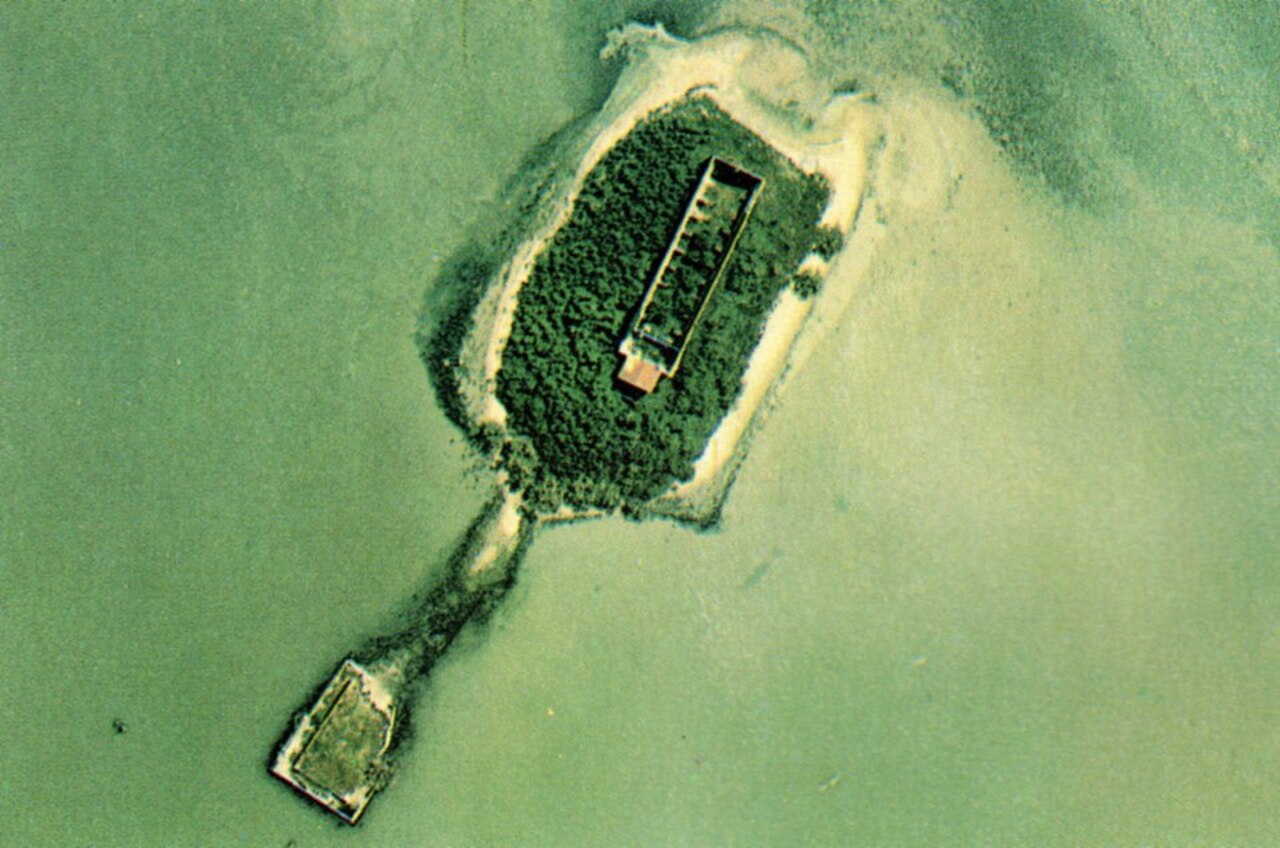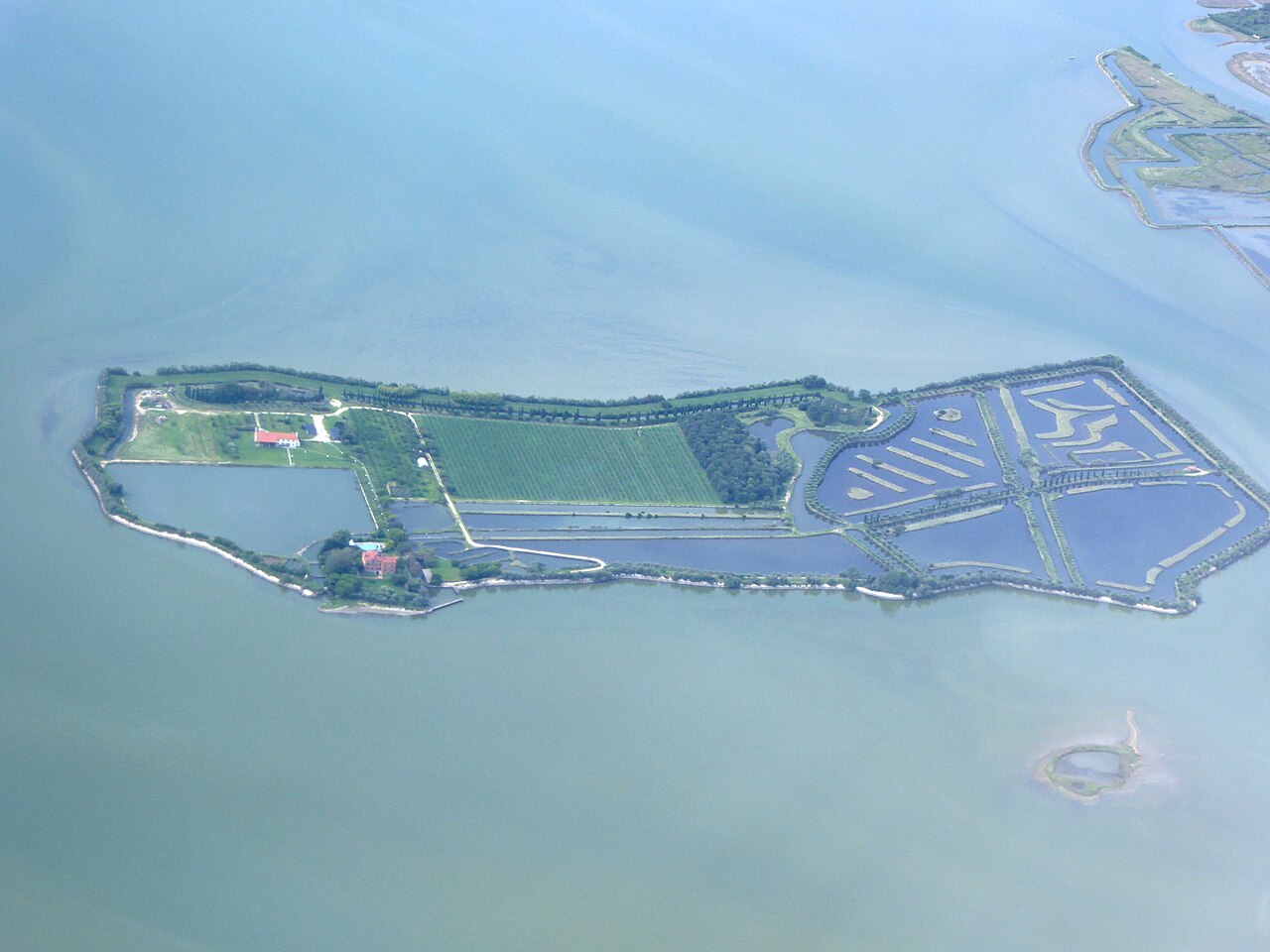
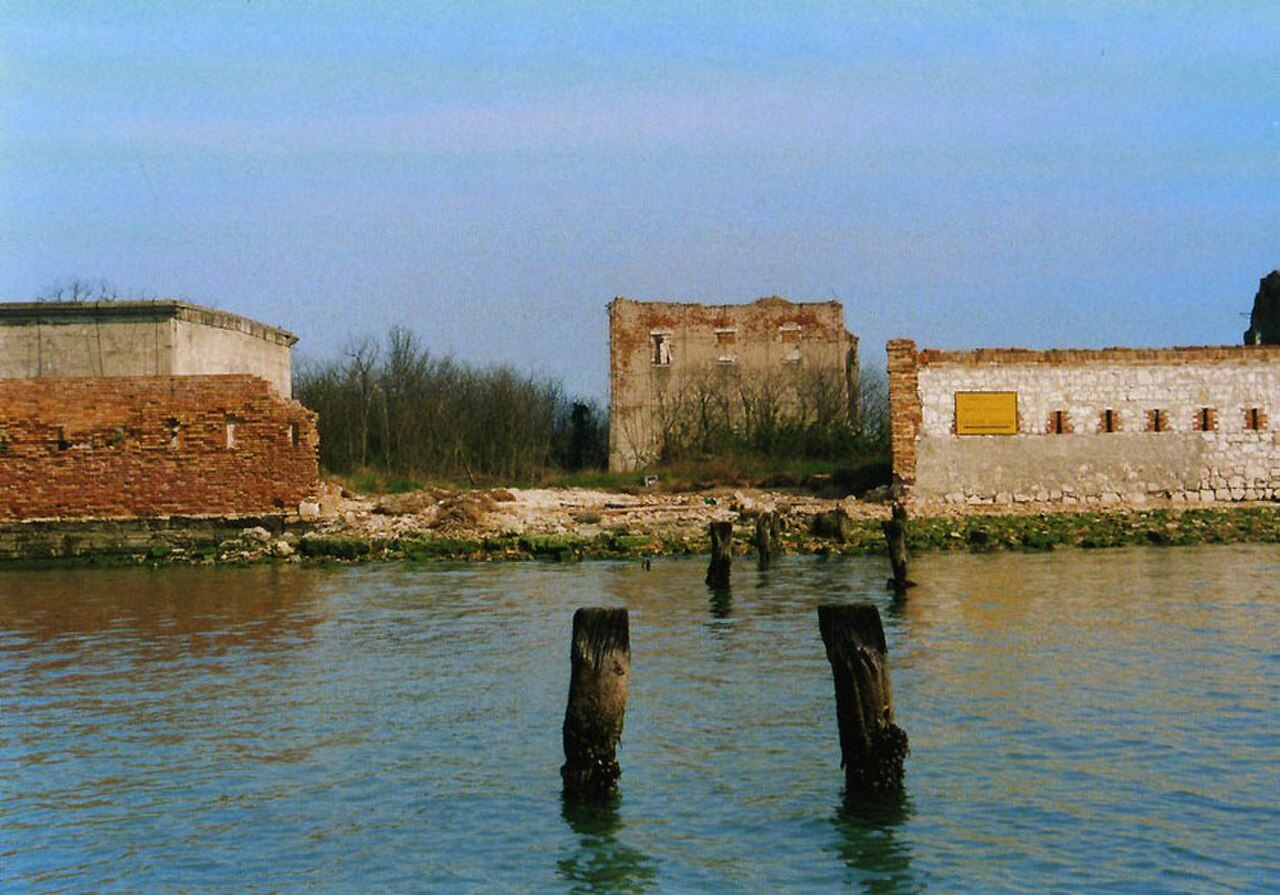
Santo Spirito was a monastic island of the Venetian Lagoon, famous for paintings by Titian. After the religious suppression in the nineteenth century it was used for military storage. Today the abandoned island is not a regular public attraction.
Early communities
Canons Regular were documented around 1140, followed by other religious communities.
Titian and the Renaissance
In the sixteenth century the church was connected with works of Titian, now conserved at the Basilica of Santa Maria della Salute in Venice.
More about the island
The history includes several religious communities and later military use.
Military conversion
After 1806 the island was used for military purposes.
Renaissance painting
The church was rebuilt during the sixteenth century, traditionally linked with Jacopo Sansovino. Titian created the ceiling canvases David and Goliath, Cain and Abel, and Abraham and Isaac, dated around 1542–1544. The works are now at the Basilica of Santa Maria della Salute in Venice, not on the island.
1656 and the change of communities
The Augustinian Hermits were suppressed in 1656 during the War of Candia. Important furnishings and paintings were transferred to other Venetian churches. After the Ottoman conquest of Crete in 1669, Franciscan Observants found refuge on Santo Spirito and maintained religious life until the Napoleonic period.
Military use and abandonment
After the suppression of the monastery in 1806, its buildings were adapted to barracks and military storage. The island later served as a powder magazine, including in the twentieth century. Military activity ceased and the ruins gradually deteriorated. Historical reports describe a sale to private owners in 2002–2003.
Why its art matters today
The original paintings and their survival demonstrate how a small lagoon monastery participated in the most ambitious Venetian Renaissance commissions. Titian’s celebrated works are now conserved at the Salute, with the original relationship between paintings and church lost. The island itself must therefore be interpreted through documents as well as ruins.
Can Santo Spirito be visited?
It is not an ordinary ACTV stop and the privately owned ruins do not offer guaranteed public entry. Viewing the island from navigable waters may be possible, but landing requires explicit authorisation and the buildings may be unsafe.
Explore from the water
Discover other island stories in History of the Venetian Lagoon Islands or contact us for a private boat itinerary. Any route and possible landing depend on conditions and permissions.
Comparing Santo Spirito with other lagoon islands
The island’s story can be compared with San Clemente, which was reused for healthcare and later hospitality, and San Giorgio in Alga, another former monastery turned military site. Although all three were shaped by religious communities and state intervention, the survival of major Titian artworks makes Santo Spirito exceptional. These changes show how the function of a lagoon island could be transformed without its name or its historical significance disappearing.
More images
1656: suppression and relocation of the paintings
In 1656 the Augustinian Hermits were suppressed as part of the decisions taken during the War of Candia. The important artistic works from the island were transferred to the Basilica of Santa Maria della Salute, where the paintings of Titian continue to illustrate the artistic significance of Santo Spirito. The move was a turning point: precious objects survived even when the institution for which they had been commissioned disappeared.
Franciscan friars after the fall of Candia
After the Ottoman conquest of Crete in 1669, displaced Franciscan friars found accommodation on Santo Spirito. Their arrival tied the small Venetian island to the larger political history of the eastern Mediterranean. Religious life continued until the suppression of the convent under Napoleonic rule in 1806.
From monastery to military island
After 1806 the religious buildings were converted to military use and substantially altered. Parts of the church and monastery were lost, while storage and barracks took their place. In the twentieth century the island served as a powder magazine before being abandoned. According to historical studies of the Venetian Lagoon, its disuse became definitive in the later 1960s.
Ruins, ownership and access
Much of the former convent has disappeared, and the buildings visible today reflect more recent military use rather than an intact Renaissance monastery. The island has been privately owned in recent decades and ordinary public access cannot be assumed. Old structures and unstable masonry must not be entered without permission and appropriate safety arrangements.
Explore Santo Spirito by boat
A private boat offers a view of Santo Spirito from the navigable waterways without presenting an unauthorised landing as a tourist activity. Compare the island’s story with San Clemente and San Giorgio in Alga, or contact us to discuss a personalised tour. The route depends on navigation conditions.
Titian, Saint Mark and the memory of the plague
Among the artworks made for Santo Spirito was Titian’s Saint Mark Enthroned with Saints, often dated around 1510–1512. The saints include Roch and Sebastian, traditionally invoked against plague, and Cosmas and Damian, the physician saints. Their presence links the painting to Venice’s experience of epidemic disease. The Basilica della Salute explains that the work was moved there after the abandonment of Santo Spirito and still preserves the link between faith, health and the city’s cultural memory. This is a particularly valuable detail because the name Santo Spirito alone does not reveal the importance of the island’s former artistic commissions.
Venetian artists beyond Titian
Historical accounts mention works by other painters, including Palma il Vecchio, Bonifacio de’ Pitati and Giuseppe Porta, called Salviati. Not all these works have the same documented history or present-day location, so identifying them requires comparison with museum catalogues and archival descriptions. Together they indicate that the church and refectory once possessed an artistic programme of considerable scope. The island’s appearance today can give a misleading impression: the surviving ruins tell only a fraction of the history of Renaissance Santo Spirito.
How a lagoon island disappears without sinking
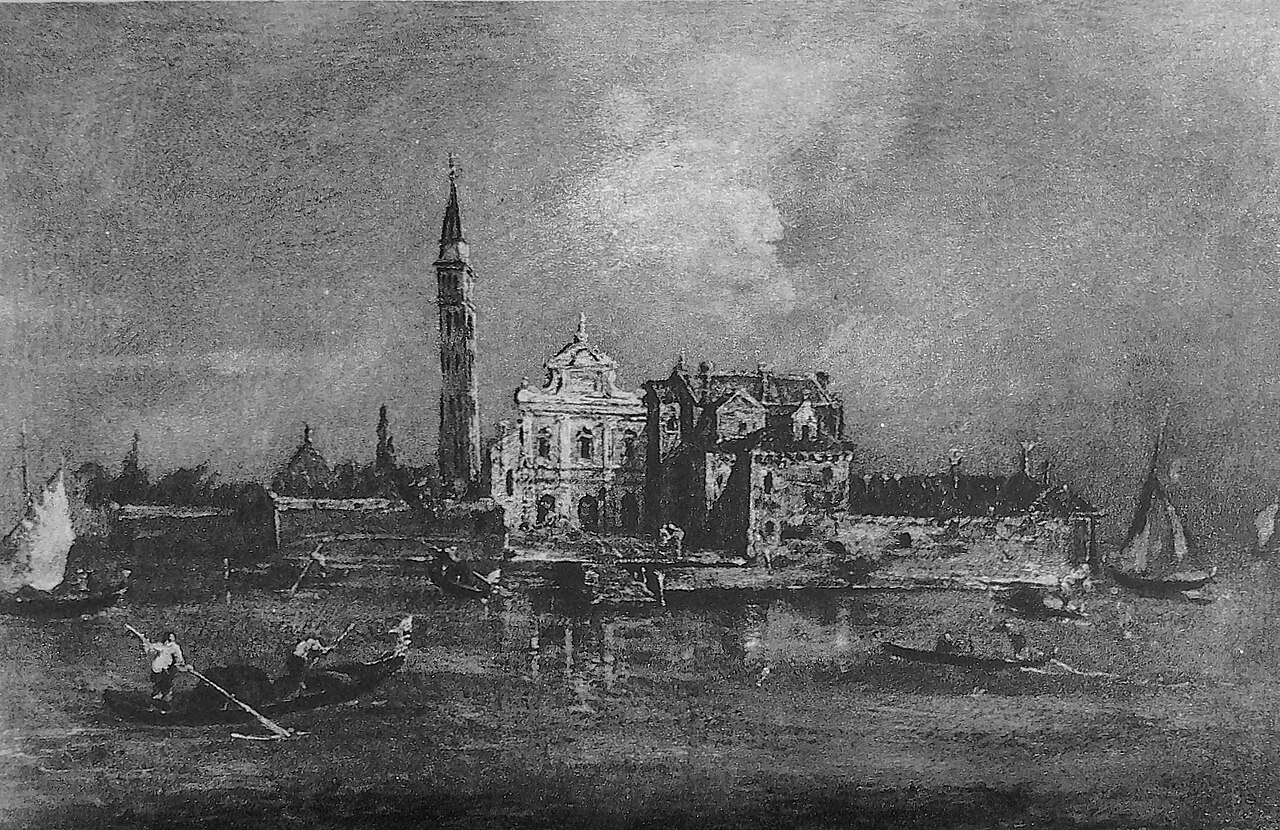
The decline of Santo Spirito was primarily institutional and architectural. Communities were dissolved or transferred; buildings were reused by the military; artworks and materials were removed; and later structures deteriorated without permanent occupation. This form of disappearance is different from the erosion that destroyed many northern lagoon settlements. The land remains visible, but the cultural world that made it important has gone. Historical paintings and documentary sources therefore play an essential role in reconstructing the former monastery.
Frequently asked questions
When was Santo Spirito founded?
A religious community was documented around 1140; the island may have been used earlier.
Where are Titian’s paintings?
The important paintings were transferred to Santa Maria della Salute in Venice.
Why was the island abandoned?
After the suppression of the convent, it became a military facility and later fell into disuse.
Can you land there?
Ordinary public access is not established. A view from a boat does not authorise a landing.
Explore the lagoon by boat: discover our private boat tour in the Venetian Lagoon. Routes are customisable; stops and island access depend on permissions and navigation conditions.
Historical sources
Basilica della Salute; Fondazione Zeri; Treccani. Cover: Maspez / Wikimedia Commons, CC0.