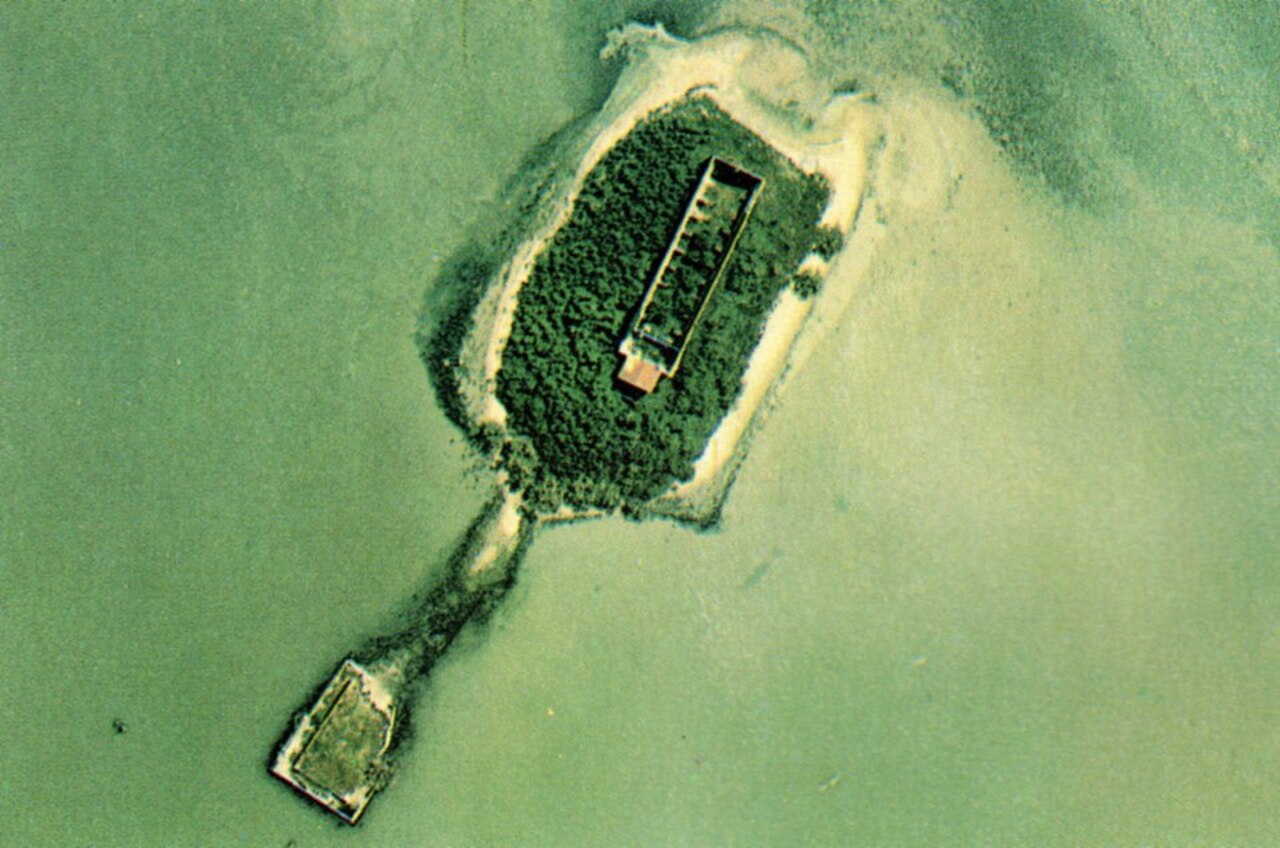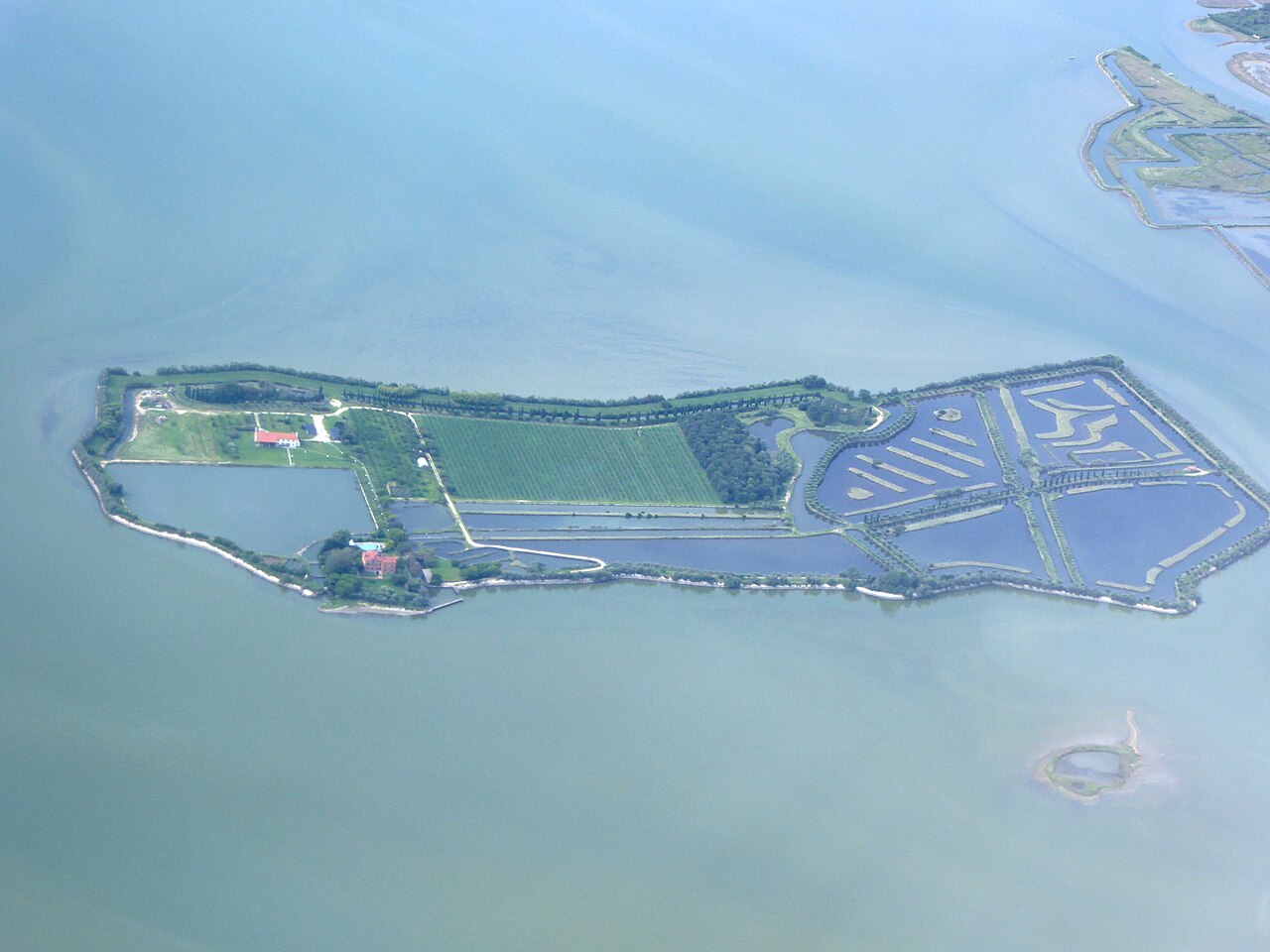
San Clemente is a small island in the Venetian Lagoon with a history that reaches far beyond its tranquil gardens. It has served religious communities, sheltered travellers, housed a psychiatric hospital and, today, become a privately managed luxury hotel. Each transformation tells us something about the changing needs and values of Venice.
The story of San Clemente island is particularly revealing because its most important chapter is not always visible from the water. Behind the elegant buildings are centuries of religious life, social history and architectural change.
Where is San Clemente?
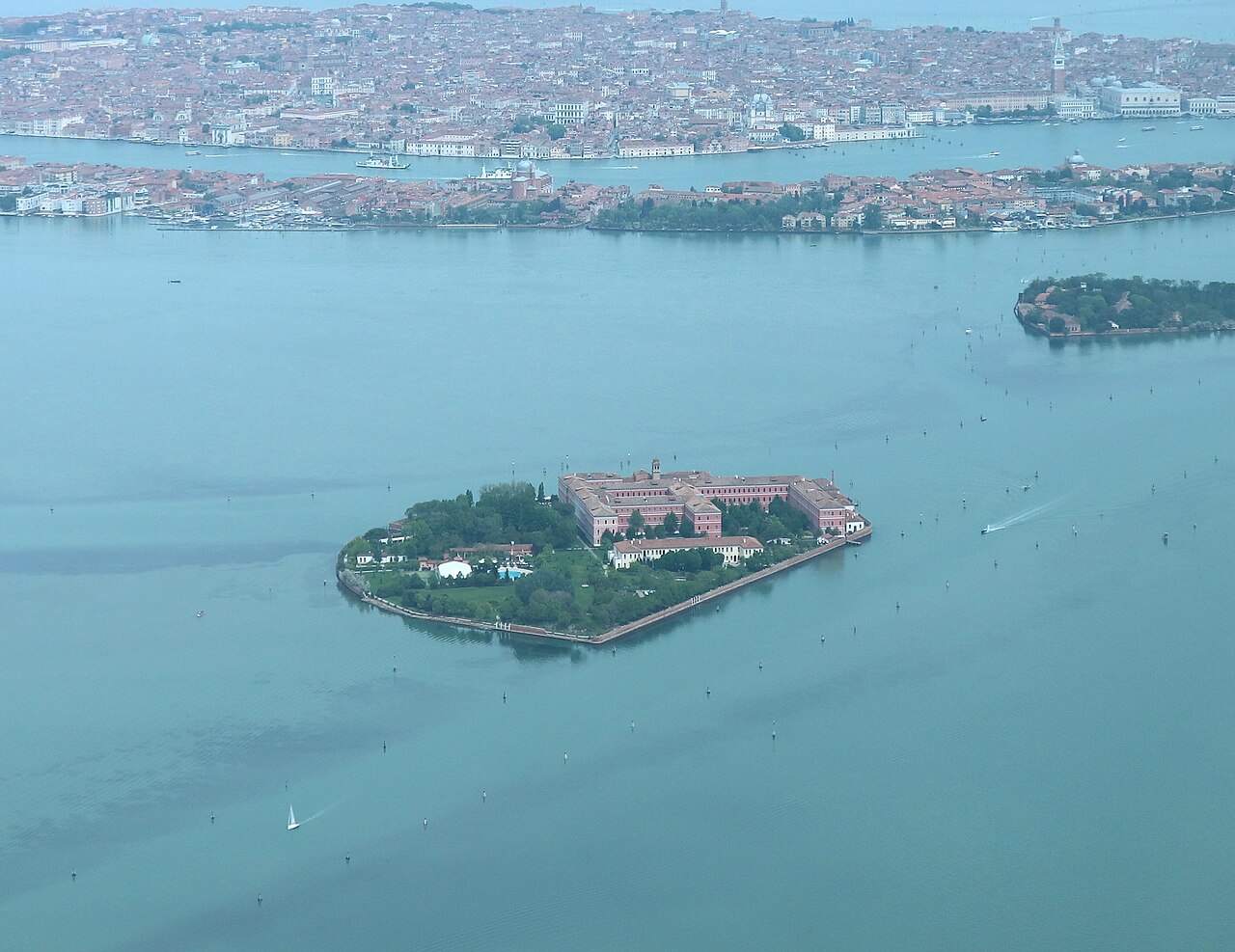
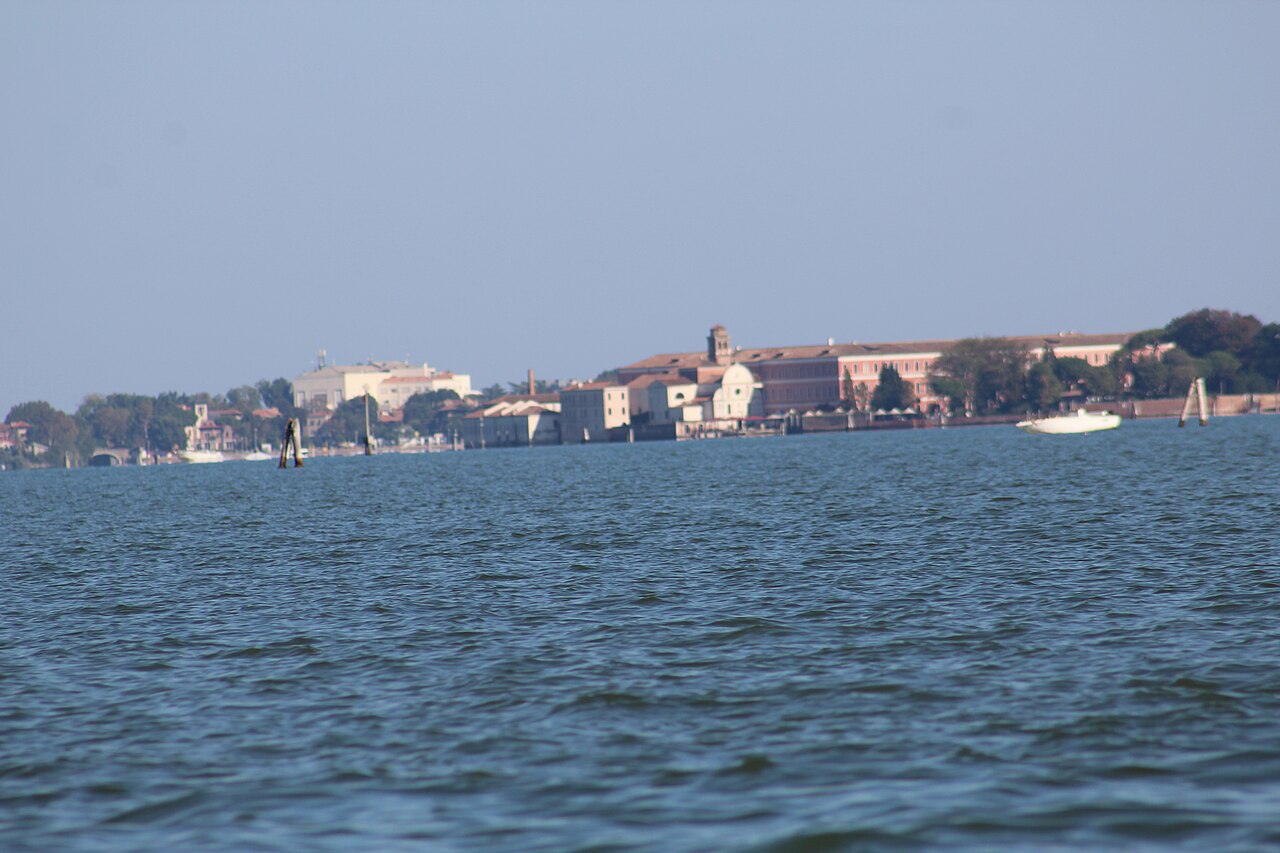
San Clemente lies in the central Venetian Lagoon, southeast of the historic centre, between the waters near the Giudecca and the approaches towards the Lido. Its long buildings, church and wooded grounds make a distinctive outline when seen by boat.
It is important to understand that San Clemente is not a public island with freely accessible streets. Today its land and buildings are managed as a private hospitality estate. Visitors may admire the exterior from navigable waters, while landing and access to the grounds require permission.
A twelfth-century church and a refuge for pilgrims
The island’s earliest documented buildings belong to the first half of the twelfth century. Historical descriptions mention a church dedicated to Saint Clement and a small hospitale, or hospice, where travellers and pilgrims could find shelter. Sources cite 1131 or 1141 for the earliest references, so a single exact foundation year should not be assumed.
The religious community was associated with the Augustinian canons. Like other lagoon monasteries, it relied on boats for people and supplies, while its buildings offered a setting for religious practice and hospitality.
The Lateran Canons and the arrival of distinguished visitors
In the fifteenth century, under Pope Eugene IV, the island passed to the Lateran Canons of Santa Maria della Carità. Supported by donations from Venetian families, the community restored the church and enlarged its buildings.
San Clemente also became a place for welcoming important visitors before they continued into Venice. That earlier role as an island of hospitality provides an intriguing historical contrast with the privately managed hotel of today.
The island’s connections with Venice’s plague history
In the seventeenth century, San Clemente was sometimes used for healthcare during epidemics. Research describes its role as a subsidiary to the Venetian lazaretto system, including care for aristocratic patients.
It was not the same as the two better-known plague islands. Lazzaretto Vecchio originated as a hospital for people affected by plague in 1423, while Lazzaretto Nuovo became a preventive quarantine station in 1468. San Clemente had a different and more varied institutional history.
1645: the Camaldolese hermits reshape San Clemente
In 1645, the Camaldolese Hermits of Monte Corona acquired the island. Their religious life combined communal worship with contemplative solitude, and they created separate dwellings as well as spaces shared by the community.
The monks rebuilt and enlarged parts of the monastery and church, changing the landscape around them. During the second half of the seventeenth century, land reclamation and shoreline works added usable space. These alterations contributed to the island’s modern physical shape.
The church, the Holy House of Loreto and Venetian noble families
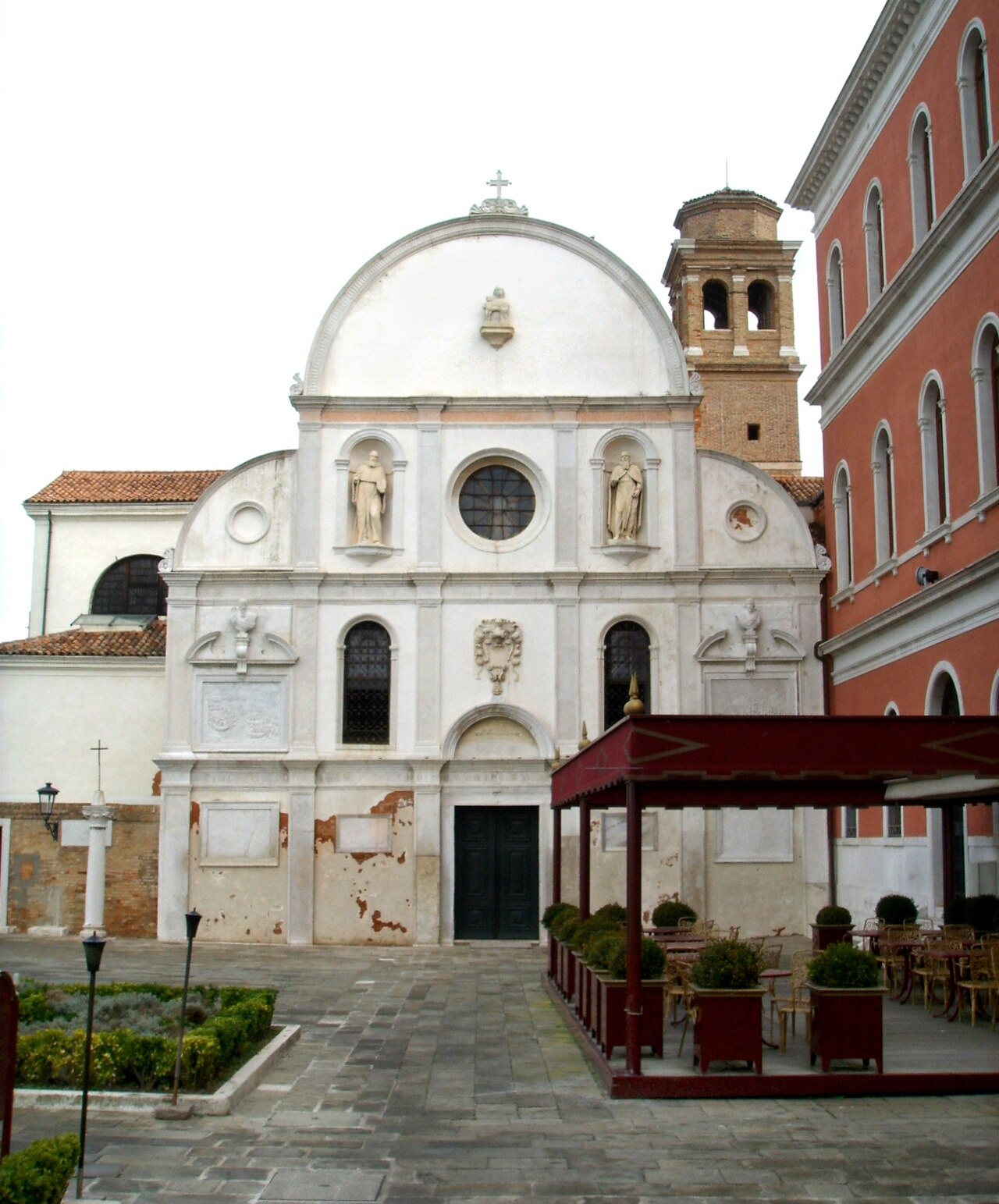
The church of San Clemente preserves an unusual devotional tradition. Following the plague of 1630, a chapel modelled on the Holy House of Loreto was commissioned in fulfilment of a religious vow. It is one of the island’s most interesting historic features.
Wealthy families supported artistic and architectural works. The Morosini family commissioned important memorials, and the architect Andrea Cominelli was connected with the renewal of the church facade. The building therefore reflects more than one period of Venice’s religious and artistic history.
1810: Napoleonic suppression ends monastic life
In 1810, the Camaldolese community was forced to leave as religious orders were suppressed under Napoleonic administration. San Clemente became state property, its church lost some furnishings and its buildings entered a period of uncertain use.
The next major transformation began during the Austrian administration of Venice, when the island was selected for a large institutional building.
The new psychiatric hospital, opened in 1873
In 1855, Austrian authorities chose the island as the site for a female psychiatric hospital. Medical specialists studied hospital architecture in other European cities, and the resulting design included wards, practical facilities and extensive accommodation.
The institution opened officially on 1 July 1873. Much of the old monastery was demolished to make room for the new complex, although the church remained. The architectural project reflected the period’s ideas about medical care, supervision and the separation of patients from the city.
Originally the hospital admitted women. From 1935, following changes to the provincial hospital system, it began receiving patients of both sexes.
Life in the institution: healthcare and confinement
San Clemente offered medical care, but its isolation and institutional rules also reflected historical attitudes towards mental illness and social exclusion. Clinical records, registers and administrative documents help researchers reconstruct the experiences of the people who lived and worked there.
These stories deserve respectful treatment. Rather than repeating frightening legends, historical research examines the context, the methods of care and the limits on patients’ independence in different periods. The surviving archive is an important source for studying changes in healthcare and human rights.
1978 and 1992: the reform did not close every hospital immediately
Italy’s Law 180 of 1978, associated with psychiatrist Franco Basaglia, transformed the national approach to psychiatric care and began the gradual closure of traditional psychiatric hospitals.
San Clemente remained operational beyond that date. Its hospital finally closed on 22 April 1992, as documented in the Italian Ministry of Culture’s archival records. This should not be confused with nearby San Servolo, whose hospital closed in 1978.
After the closure, important documentary materials and library collections were transferred to San Servolo, helping preserve the history of the psychiatric institutions of Venice.
The transformation into San Clemente Palace Venice
The former hospital underwent extensive restoration and conversion for hospitality. Historic external facades and the church remained part of the complex, while interior spaces were significantly reconfigured.
Today the island is home to San Clemente Palace Venice, a private five-star hotel with landscaped gardens, historic spaces and facilities for accommodation and events. This dramatic change from a place of confinement to a private retreat raises important questions about architecture, heritage and historical memory.
Can you visit San Clemente today?
Only with permission from the private operator. The island is not a public park with unrestricted access. Hotel boat transfers serve authorised visitors and guests, not the general public as an ordinary waterbus service.
The grounds, church, restaurants and event spaces can only be accessed under the property’s current arrangements. Even if a boat can travel near San Clemente, that does not mean its passengers may land there.
Discovering San Clemente from the lagoon
The island’s profile can be appreciated from the water as part of a route through the central lagoon. Its history is especially interesting when compared with San Servolo and the other smaller Venetian islands that shifted between religious, medical and cultural functions.
To explore these stories, discover the private boat experiences among the Venetian Lagoon islands offered by Venice Tour by Boat, or contact the team to discuss a personalised route. Navigation and stops depend on conditions and permissions; access to San Clemente is not automatically included.
Find more historical articles in the collection History of the Venetian Lagoon Islands.
For more context on Venice’s historic healthcare islands, read about San Servolo and its psychiatric hospital, Lazzaretto Vecchio and Lazzaretto Nuovo.
Discover our private Venetian Lagoon boat experiences or contact us to discuss a customised route. Private boat tours do not automatically include landing on San Clemente.
Explore more articles in History of the Venetian Lagoon Islands.
Frequently asked questions
When did San Clemente become a psychiatric hospital?
The hospital opened on 1 July 1873, after planning began under Austrian administration in 1855.
Was the hospital only for women?
Initially, yes. From 1935 it admitted patients of both sexes.
When did the psychiatric hospital close?
San Clemente closed on 22 April 1992, years after the psychiatric reforms introduced in 1978.
Can tourists freely visit San Clemente island?
No. It is a private hotel island, and landing or entering the grounds requires authorisation from its operator.
Historical sources
Italian Ministry of Culture, archival history of the San Clemente psychiatric hospital; University of Camerino, The Spaces of Madness; Valentina Raimondo, study of the architecture of the San Clemente female psychiatric hospital; San Clemente Palace Venice, official hotel information.
Featured photograph: Pottercomuneo / Wikimedia Commons, CC BY-SA 4.0, photographed in 2021 and resized for web.
Historical and visitor references: Italian Ministry of Culture, San Clemente historical archive; University of Camerino, The Spaces of Madness; official San Clemente Palace Venice website.