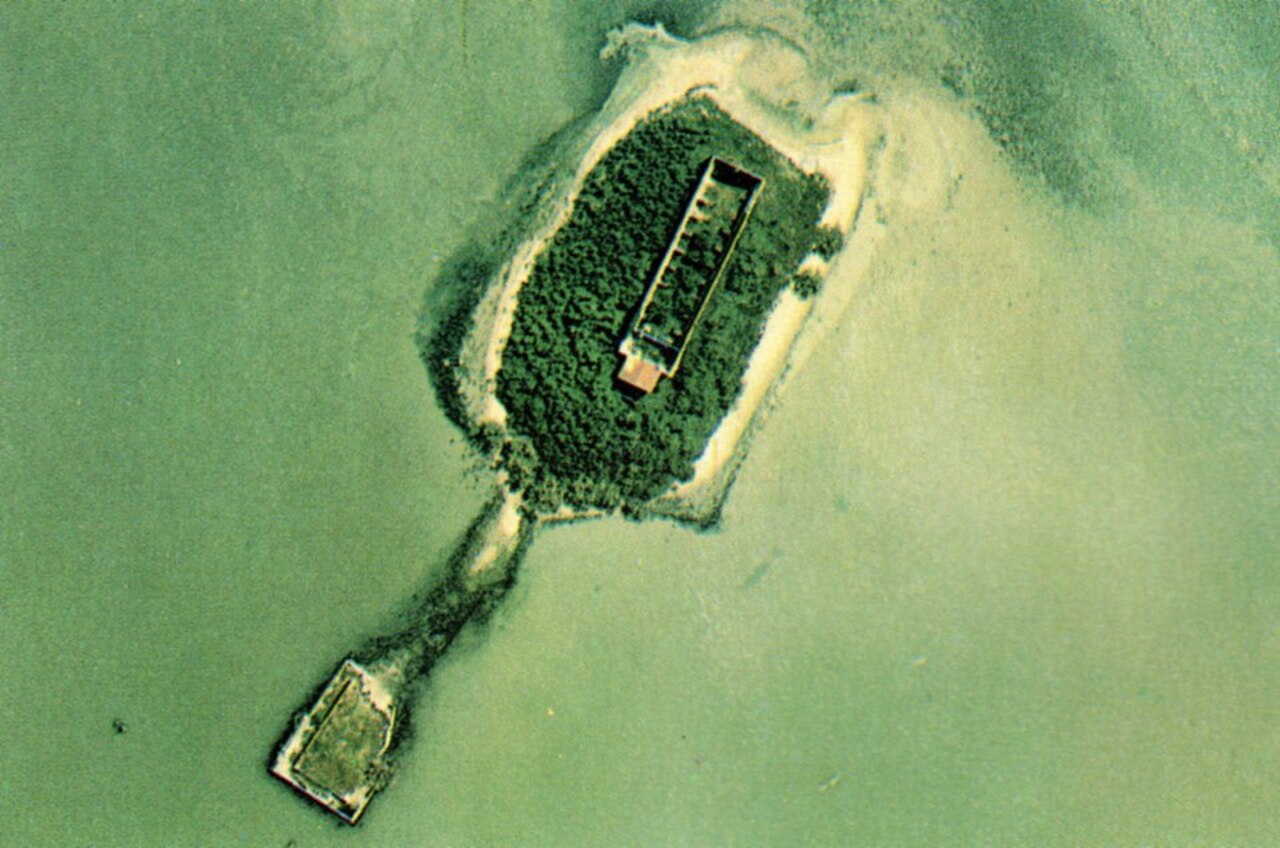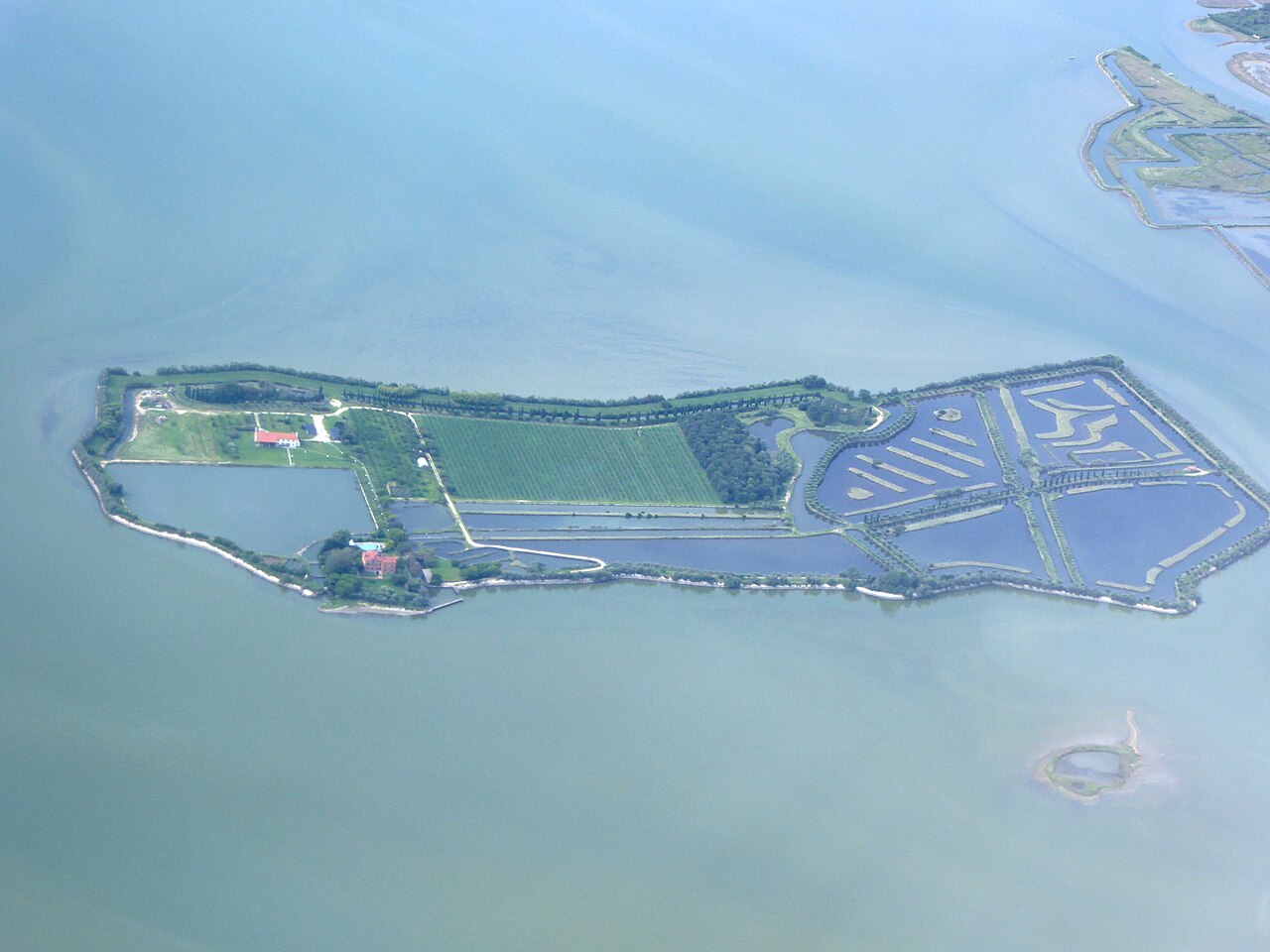
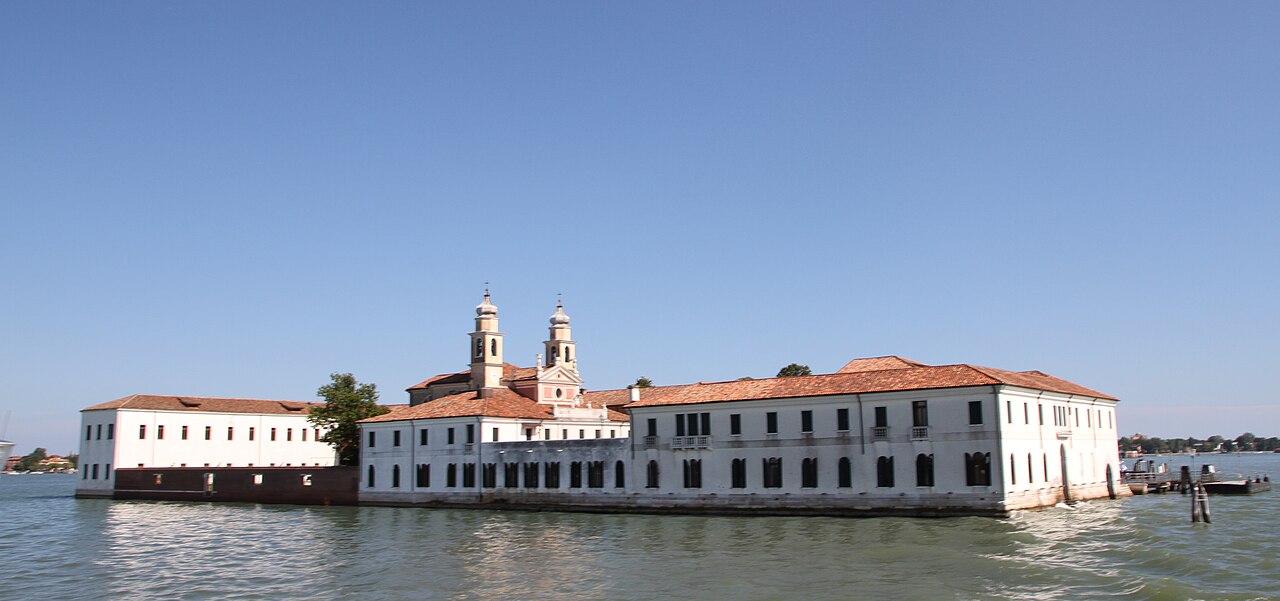
Just a short boat ride from St Mark’s Square, the island of San Servolo holds a thousand years of Venetian history. Monks and nuns once lived here, a hospital treated wounded soldiers, and for more than two centuries San Servolo became closely associated with psychiatric care. Today, the same island welcomes students, researchers, conference guests and museum visitors.
Its story is more complex than the familiar image of an “abandoned asylum”. San Servolo is not abandoned: it is a living part of Venice, where a difficult medical past is preserved alongside a new role in education and culture.
Where is San Servolo in Venice?
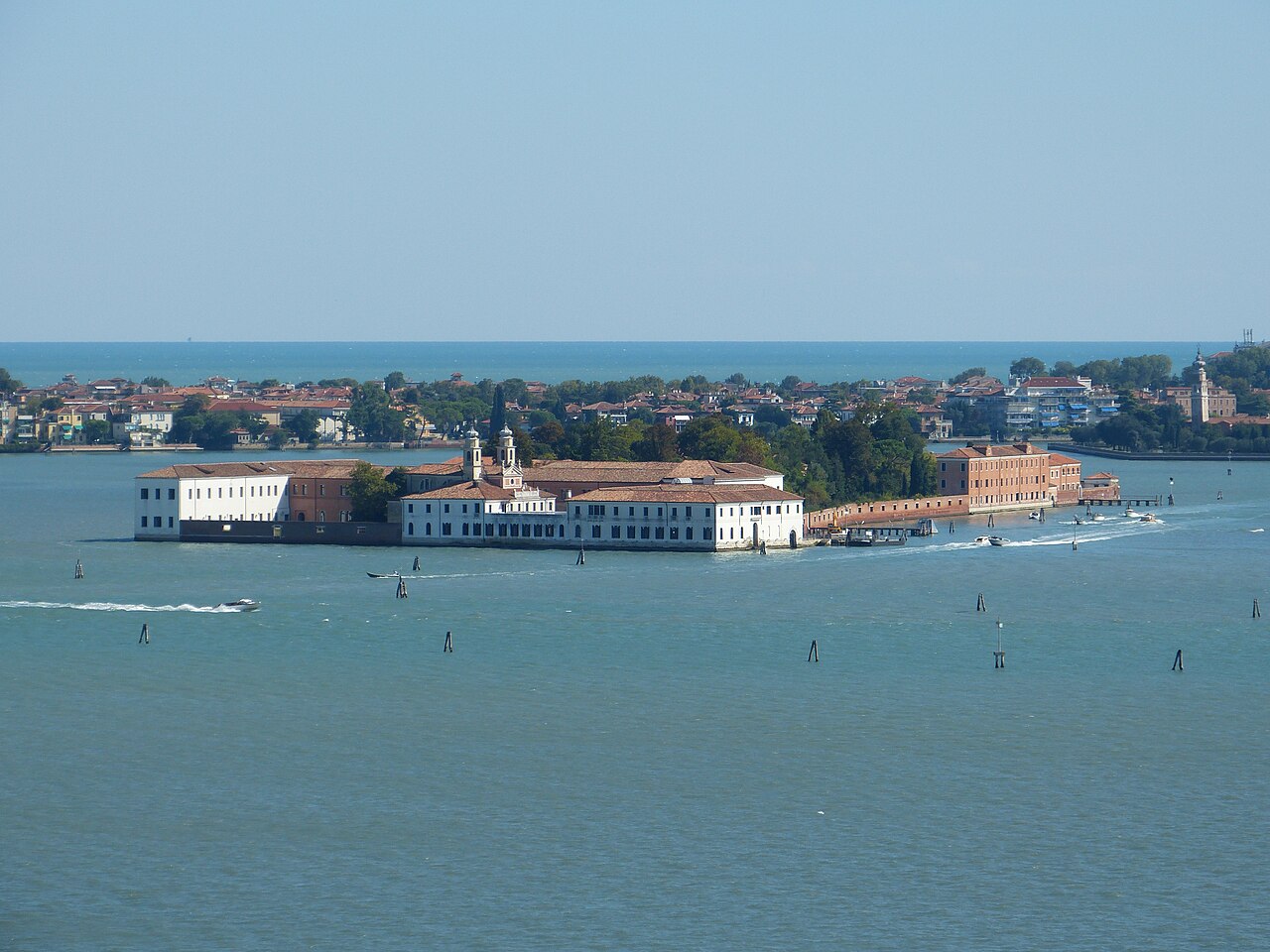
San Servolo lies in the Venetian Lagoon, southeast of the historic centre and within sight of St Mark’s Basin and the Lido. It is small enough to explore on foot, yet its buildings, courtyards, gardens and trees make it feel surprisingly spacious.
The island can be reached by the ACTV line 20 waterbus from the San Zaccaria M.V.E. stop, with a journey of approximately 8–10 minutes according to the island’s official visitor information. Check the current service timetable before travelling.
For centuries, this position offered Venice an important combination: close contact with the city by water and a degree of separation from its crowded streets.
The first religious communities: a monastery in the lagoon
San Servolo’s earliest history is tied to religious communities. Local historical accounts place a Benedictine settlement around the end of the seventh century, although the earliest stages cannot be dated with complete certainty. The monks are said to have built a small church and monastery dedicated to San Servolo, a Christian martyr associated with Trieste.
From the early twelfth century, Benedictine nuns from Malamocco lived on the island, continuing their presence until 1615. In those centuries, the lagoon’s smaller islands served as places of prayer, labour and relative seclusion, connected to Venice by boats and channels.
In 1647, the island received religious women who had arrived from Candia, today’s Crete, during the conflicts between Venice and the Ottoman Empire. They belonged to different communities, including Benedictines, Dominicans and Franciscans. The final two nuns from Candia were transferred in 1716, bringing the island’s long monastic phase to an end.
1716: the island becomes a military hospital
On 4 June 1716, the Venetian Senate arranged for the last religious residents to leave and repurposed the former monastery as a military hospital. The Republic needed facilities for soldiers injured during the wars against the Ottoman Empire.
Medical care was entrusted to the Hospitaller Brothers of Saint John of God, known in Italy as the Fatebenefratelli. Their presence marked the beginning of a new chapter that would shape San Servolo for more than two centuries.
The hospital was not just a collection of wards. It required a pharmacy, kitchens, places of worship, service buildings and a system for transporting people and supplies across the water. This made the island a self-contained medical community with strong links to the city.
1725: the beginning of psychiatric care
The historical archive records the admission of the first psychiatric patient on 25 October 1725. Over time, the island increasingly became associated with the treatment and confinement of people experiencing mental illness.
Its hospital activities changed through the eighteenth and nineteenth centuries. The military hospital closed on 31 December 1808; in 1809, the institution known as the Hospital of the Sixty Wounded, created for impoverished people with chronic conditions, was transferred to San Servolo. That establishment remained until 1874.
These changes reflect a long period in which the boundaries between medical assistance, poverty, disability and the institutionalisation of psychiatric patients were very different from those recognised today.
Life inside the psychiatric hospital
San Servolo’s history has to be told with care. The hospital provided a place of medical attention, but psychiatric institutions also operated within systems of social exclusion and confinement. For many patients, life was governed by strict rules, limited freedom and treatment methods that modern medicine and ethics would assess differently.
The island’s archive preserves medical records, registers and administrative documents. The surviving objects and patient-made works show that everyday life included therapies, workshops and attempts at occupational activities, alongside procedures of restraint.
These are not simply curiosities. They are evidence of how Venice, like other European cities, understood mental health at different times, and of the often difficult experiences of the people who lived within those institutions.
A remarkable pharmacy, a church and historic collections
One of San Servolo’s less obvious historical treasures is its old pharmacy. In 1719, the pharmacy was officially entrusted with providing medicines for Venetian military forces. Its products were recognised for their quality by medical authorities. The pharmacy remained active until the closure of the psychiatric hospital.
Visitors to the museum can see the historic pharmaceutical setting, with wooden shelving and vessels once used in the preparation and storage of medicines.
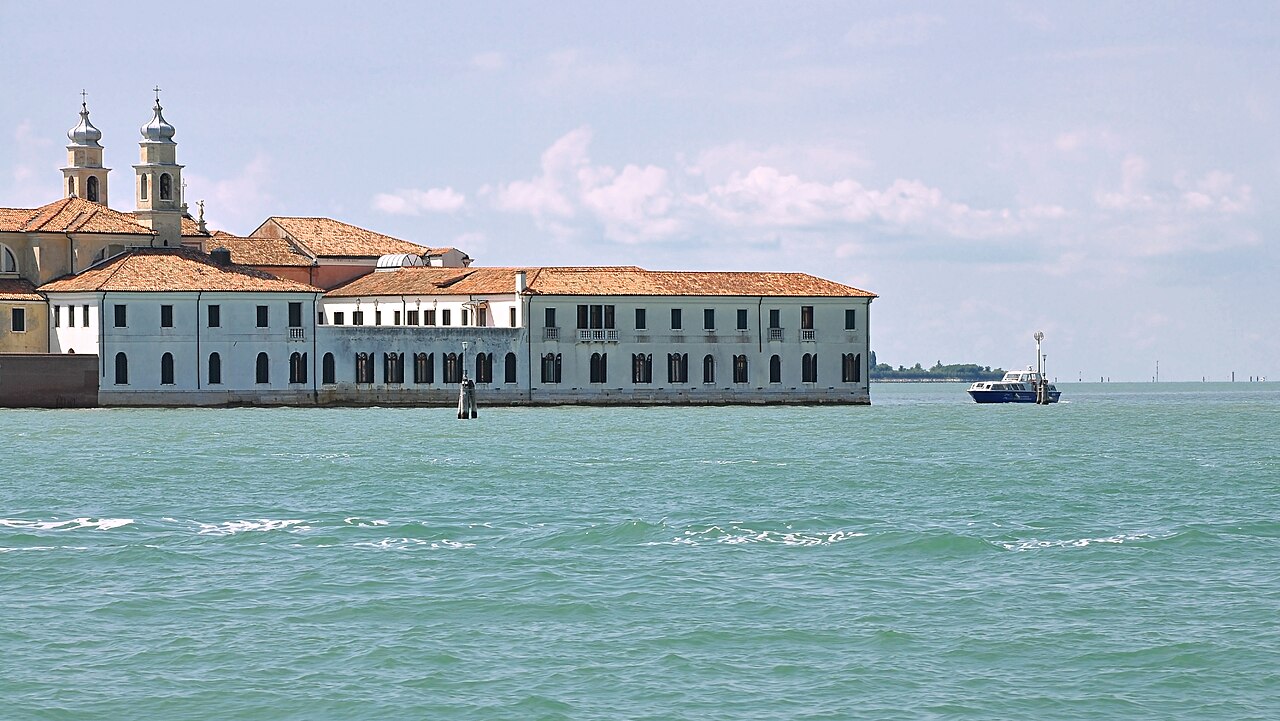
The church of San Servolo also reflects the island’s transformations. The rebuilding commissioned by the Fatebenefratelli began with a foundation stone laid in 1759, and the exterior was finished in 1761. Its distinctive façade and twin bell towers make the church one of the island’s most recognisable features.
The historic library collections are another important legacy, preserving medical, philosophical, religious and scientific texts that connect the island’s institutions with wider Venetian intellectual life.
1978 and the Basaglia reform: the closure of the asylum
A turning point came in 1978 with Italian Law 180, commonly known as the Basaglia Law, which transformed the country’s approach to mental health care and led to the gradual closure of psychiatric asylums.
On San Servolo, the last patients were transferred on 13 August 1978. The hospital’s closure ended a long institutional history, but it did not erase the memories, clinical records or personal stories left behind.
Those records have since become an important source for researchers studying the history of medicine, social attitudes towards mental illness and the relationship between care and exclusion.
The Museum of the Asylum: remembering “Madness Locked Away”
San Servolo’s Insane Asylum Museum, whose exhibition is titled Madness Locked Away (La follia reclusa), opened on 20 May 2006. The museum does not celebrate the old asylum: it documents the institution and invites visitors to reflect on the segregation experienced by psychiatric patients.
The permanent displays include historic clinical instruments, documentary reproductions, photographic materials, examples of therapeutic practices, restraints and objects created by patients. The museum itinerary also includes the church, the old pharmacy and the anatomical room.
The exhibition provides a valuable opportunity to consider how ideas about illness, dignity and patients’ rights have changed over time. For an island so closely linked with medical history, keeping this memory accessible is a meaningful part of its present identity.
San Servolo today: a cultural and university island
From 1995, the Province of Venice, today the Metropolitan City of Venice, began a major restoration programme. Former hospital buildings were gradually adapted for new purposes without abandoning the island’s historical character.
Today the complex functions as a study, residential and conference centre, with university and cultural activities, exhibitions, events and green public spaces. Venice International University is among the institutions based here. The island also offers accommodation and venues for meetings.
This transformation illustrates a different future for Venice’s smaller islands: keeping historic buildings in use while making their difficult past part of public knowledge.
Can you visit San Servolo and its museum?
Yes. Unlike many privately owned or restricted islands, San Servolo has a public waterbus connection and visitor activities. The museum’s official website lists public opening periods and the possibility of booking guided visits, including in English.
Opening hours can vary with the season and special events. Before travelling, check the museum’s official visiting information and the directions to the island. Museum admission and tour arrangements are managed independently from private boat excursions.
Discover Venice’s island stories from the water
Approaching San Servolo by boat reveals its historic buildings and green spaces against the lagoon. Its story is also a reminder of how Venice used different islands for religion, healthcare, defence and education, often reinventing their purpose over the centuries.
If you would like to explore more of the lagoon, discover our private island boat experiences or contact us about a tailored route. Navigation and landing options depend on permissions and local conditions; private boat tours do not automatically include museum tickets or visits.
For more historical stories, visit our collection History of the Venetian Lagoon Islands.
Frequently asked questions
Was San Servolo always a psychiatric hospital?
No. San Servolo was a religious island for centuries, became a military hospital in 1716 and admitted its first psychiatric patient in 1725. Its psychiatric institution closed in 1978.
What is on San Servolo island today?
The island hosts educational and cultural activities, a residential and conference centre, gardens and the museum dedicated to the history of its psychiatric hospital.
How do you get to San Servolo?
ACTV waterbus line 20 connects the San Zaccaria M.V.E. stop with San Servolo. The official journey time is approximately 8–10 minutes; check the latest timetable.
Can you visit the former asylum?
Yes, through the San Servolo Insane Asylum Museum, subject to its opening arrangements. Guided visits can be booked in advance through the official museum channels.
Historical sources and photography
Historical information: San Servolo – Island History, Hospital History, and the Museum’s official website. Featured photo: Bjoertvedt / Wikimedia Commons, CC BY-SA 4.0, resized to 1280 px; additional photographs credited above.