In the Venetian Lagoon, a small island has protected Armenian language, books and cultural memory for more than three centuries. San Lazzaro degli Armeni, just west of the Lido, is home to the Armenian Catholic Mekhitarist monks. Behind its brick walls and quiet gardens are a monastery, remarkable manuscripts, an important history of printing and a story connecting Venice to Armenia and the wider world.
Its past is especially surprising: before becoming a centre of Armenian scholarship in 1717, San Lazzaro had been a religious settlement and a place of care for people affected by leprosy. Today it remains an active monastery and can be discovered through guided visits.
Where is San Lazzaro degli Armeni?
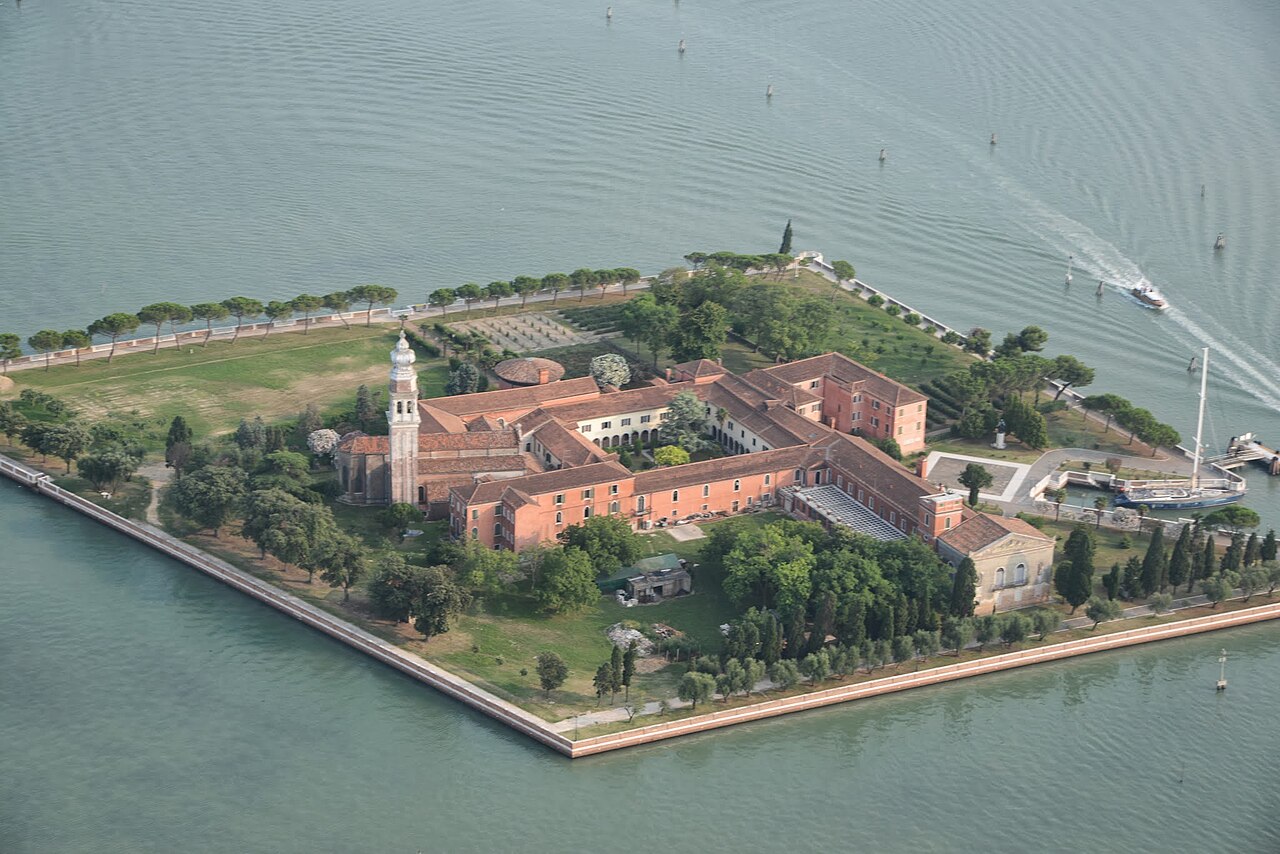
San Lazzaro degli Armeni is a compact island in the central Venetian Lagoon, about two kilometres southeast of Venice’s historic centre and west of the Lido. Its familiar outline, red-tiled monastery roofs, bell tower and gardens are visible from the water.
Despite its modest size, it has been enlarged over the centuries through land reclamation and now covers roughly three hectares. The island is reachable by ACTV waterbus line 20 from San Zaccaria, subject to current schedules. Unlike many minor islands, it is both a functioning religious community and a place that receives visitors under specific arrangements.
Before the Armenians: monks, a hospital and the origin of the name
The island’s story begins long before the eighteenth century. Earlier religious communities, including Benedictines, lived or worked here. From around the twelfth century, San Lazzaro was associated with the isolation and care of people affected by leprosy, away from Venice’s densely inhabited districts.
This explains its name: Saint Lazarus was traditionally connected with those suffering from leprosy, and the island was used as a place of care. It should not be confused with Lazzaretto Vecchio or Lazzaretto Nuovo, the better-known Venetian plague and quarantine islands created in the fifteenth century.
After periods of changing use and eventual abandonment, San Lazzaro stood ready for a new chapter—one that would give it an identity extending far beyond the lagoon.
1717: Mekhitar of Sebaste and the Armenian monks arrive
In 1717, the Republic of Venice granted the island to Mekhitar of Sebaste (also spelled Mechitar), an Armenian Catholic monk who had founded a religious congregation devoted to spiritual life, education and the preservation of Armenian culture. Mekhitar and his companions had left territories affected by conflict and persecution under Ottoman rule.
The monks restored the old religious buildings, developed the monastery and began building a scholarly community. Their ambition was not limited to prayer: they wanted to study, translate, publish and teach, making knowledge available to Armenians living across different countries.
That mission transformed San Lazzaro into one of the best-known centres of Armenian cultural and religious heritage outside Armenia. Although the monastery is in Venice, its work has connected generations of scholars, readers and communities throughout the Armenian diaspora.
The library: thousands of books and rare Armenian manuscripts
The monastery’s library is among San Lazzaro’s greatest treasures. It preserves a large collection of books, historical documents and more than 4,000 Armenian manuscripts, including illuminated works and texts dating back many centuries. The exact number of volumes varies between catalogues and descriptions as collections grow and are counted differently.
These manuscripts are more than valuable objects: they preserve language, religious thought, literature, scholarship and parts of Armenian history that might otherwise have been lost or dispersed. For researchers, the monastery represents an exceptional bridge between Armenia and Western Europe.
Visitors should not assume unrestricted access to the entire archive. Collections are conserved within an active monastery, and guided tours follow the route made available by the community.
A printing house that helped Armenian ideas travel the world
Another distinctive feature of the island is its historical printing house. Developed in the eighteenth century and expanded after Mekhitar’s death in 1749, it became a remarkable centre for the production of religious, literary, scientific and educational works.
During the nineteenth century, the monks published books in dozens of languages and several alphabets. The City of Venice records production in 36 languages and ten alphabets—an extraordinary accomplishment for such a small island.
Printing allowed the Mekhitarists to preserve Armenian texts while also translating ideas from other cultures. San Lazzaro was therefore not simply a refuge for a community: it became an intellectual meeting point between East and West.
Why did Napoleon spare San Lazzaro?
At the beginning of the nineteenth century, numerous religious institutions in Venice were suppressed under Napoleonic rule. The Mekhitarist monastery escaped the fate of many other communities because of its exceptional scholarly and publishing activity.
Accounts from the City of Venice describe how it was recognised as a literary academy. This unusual distinction helped protect the work of the monks and their collections, allowing the island’s cultural mission to continue.
It is a revealing episode: centuries of painstaking work with books, language and education helped preserve the monastery itself.
Lord Byron and the Armenian language
One of San Lazzaro’s most famous visitors was the English poet Lord Byron. During his stay in Venice, in 1816–1817, Byron visited the monastery to study Classical Armenian with the monks.
He was fascinated by the language and the intellectual world he encountered. His connection with the Mekhitarists contributed to the wider European awareness of Armenian scholarship and is still remembered as one of the monastery’s remarkable cultural encounters.
The episode also illustrates how an apparently secluded island could play a part in international literary life.
The cloister, church, museum and extraordinary collections
San Lazzaro is not only a library. Its church, cloister and historic rooms speak of daily monastic life, while the museum preserves paintings, archaeological objects and artworks from several regions of the world. The collections include Armenian, Egyptian, Greek and Indian material, reflecting centuries of travel, study and gifts received by the community.
Among the most unusual objects is an ancient Egyptian mummy, traditionally identified as Nemen Khet Amen, preserved with its sarcophagus. It is an unexpected sight on a quiet island dedicated to Armenian religious scholarship.
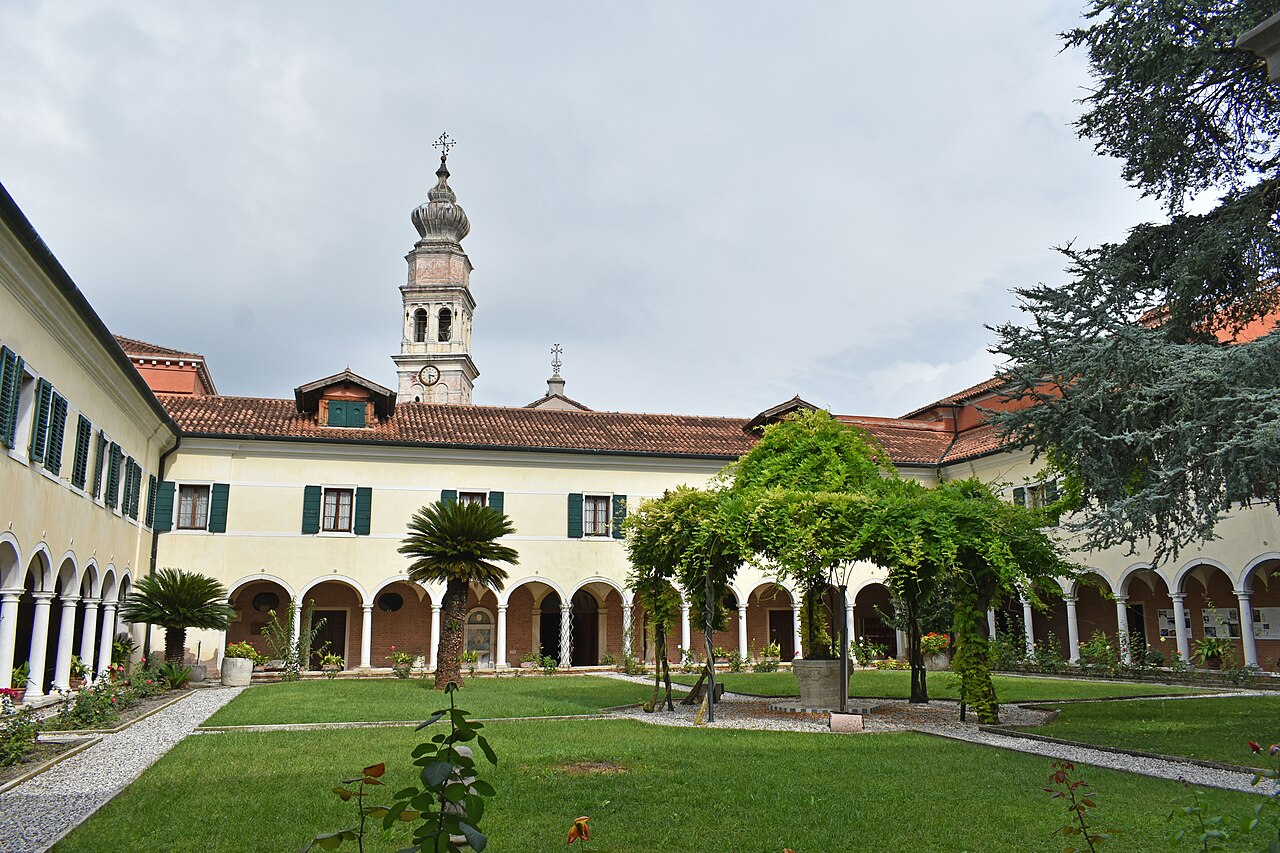
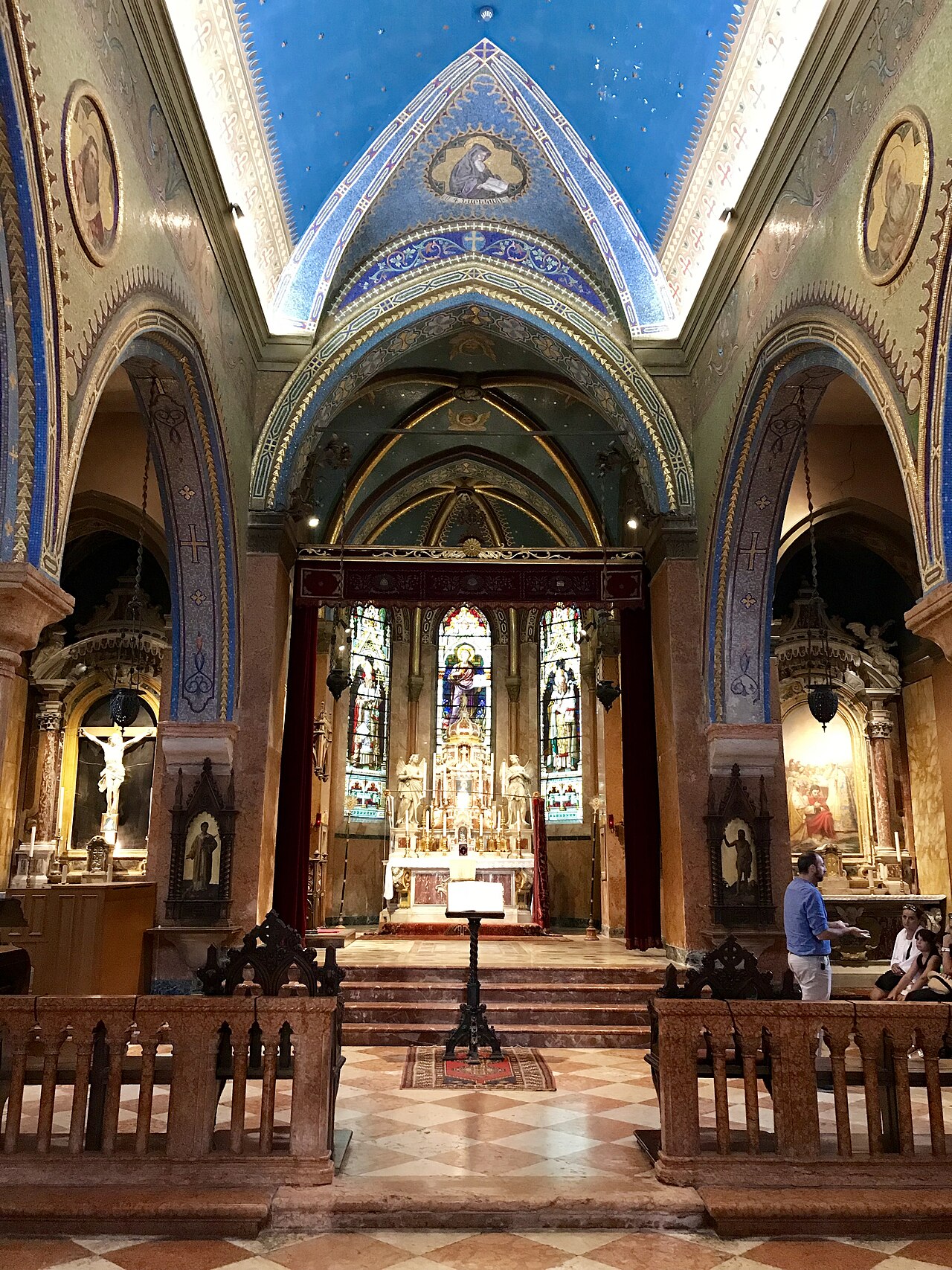
The monastery church forms the spiritual heart of the complex. Its architecture and interior decorations reveal the relationship between the Armenian community and its Venetian surroundings.
Roses and Vartanush: a taste of Armenian tradition
Even the gardens tell a cultural story. The monks cultivate roses and are known for making Vartanush, a fragrant jam prepared from rose petals according to Armenian tradition. Lord Byron is said to have enjoyed it, although this detail belongs more to local anecdote than to the securely documented part of his visits.
The gardens, trees and peaceful paths also show how a relatively small island has been carefully managed and enlarged to support a living religious community.
San Lazzaro today: an active monastery and cultural landmark
More than three centuries after Mekhitar’s arrival, San Lazzaro remains the home of a community of Armenian Catholic Mekhitarist monks. Their monastery continues to preserve manuscripts and historical collections, serving as an important symbol of Armenian identity and the relationship between Venice and the Armenian diaspora.
It is not an abandoned monument or a conventional museum with unrestricted access. Religious life, research, conservation and guided visits coexist on the island, and visitors are asked to respect the community’s arrangements.
Can you visit San Lazzaro degli Armeni?
Yes, through guided tours arranged with the monastery. Venice’s official visitor service currently specifies reservation for guided visits. ACTV line 20 serves the island from the San Marco–San Zaccaria area; boat times, admission arrangements and tour languages can change.
For reliable information, consult Venezia Unica’s official island page or contact the monastery directly at visite@mechitar.org or +39 041 526 0104. The monastery organises its own admissions and guided visits independently of private boat operators.
Explore the lagoon’s cultural islands by private boat
Seeing San Lazzaro from the water reminds us how Venice’s islands have connected communities and cultures for centuries. Its story can be considered alongside nearby San Servolo, another island that changed from religious to institutional use and then developed a new cultural role.
Interested in exploring the Venetian Lagoon with a personalised itinerary? Discover our private boat experiences among the islands or contact us. Routes and stops depend on navigation conditions and permissions; a boat tour does not automatically include admission to the monastery.
Continue exploring the collection History of the Venetian Lagoon Islands.
Frequently asked questions
Why is San Lazzaro called the Armenian island?
Because the island has hosted the Armenian Mekhitarist monastic community since 1717 and became an important centre of Armenian learning, printing and cultural preservation.
What can you see on San Lazzaro degli Armeni?
Guided routes may include the monastery church, cloister, historic collections, museum and spaces associated with its library and printing history, according to current access arrangements.
Did Lord Byron really study Armenian there?
Yes. The English poet attended the monastery to study Classical Armenian during his time in Venice in 1816–1817.
How do you reach San Lazzaro degli Armeni?
ACTV waterbus line 20 serves the island from San Zaccaria. Visits to the monastery require arrangements with the monastic community; check current services and booking details in advance.
Sources and photo credits
Historical and visitor information: Venezia Unica; City of Venice – San Lazzaro degli Armeni; Lazzaretti Veneziani – The Domestic Archipelago. Featured image: Anton Nossik, aerial view (2013), Wikimedia Commons, CC BY 3.0, resized to 1280 px. Other images credited above.