A few hundred metres from the Lido, one small island changed the way Venice responded to epidemics. In 1423, the Republic established a hospital dedicated to isolating people affected by plague on what is now known as Lazzaretto Vecchio. For centuries, its buildings witnessed sickness, care, death and the extraordinary efforts of a maritime city to protect its inhabitants.
But the island’s story did not end with the plague. It became a military depot, later housed a municipal dog shelter, and is now undergoing restoration for the future National Archaeological Museum of the Venetian Lagoon. Looking at its changing roles helps explain how Venice used its islands for much more than trade and travel.
Where is Lazzaretto Vecchio?
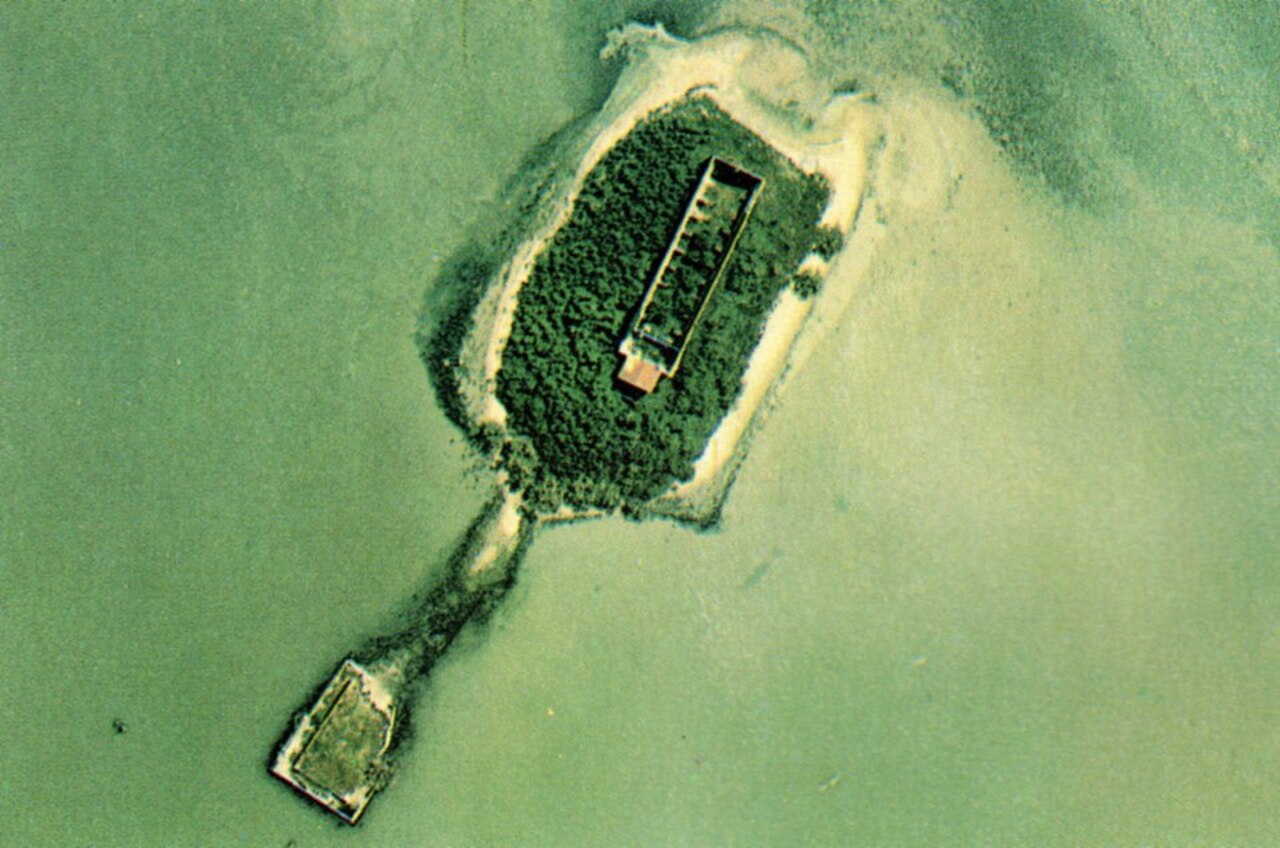
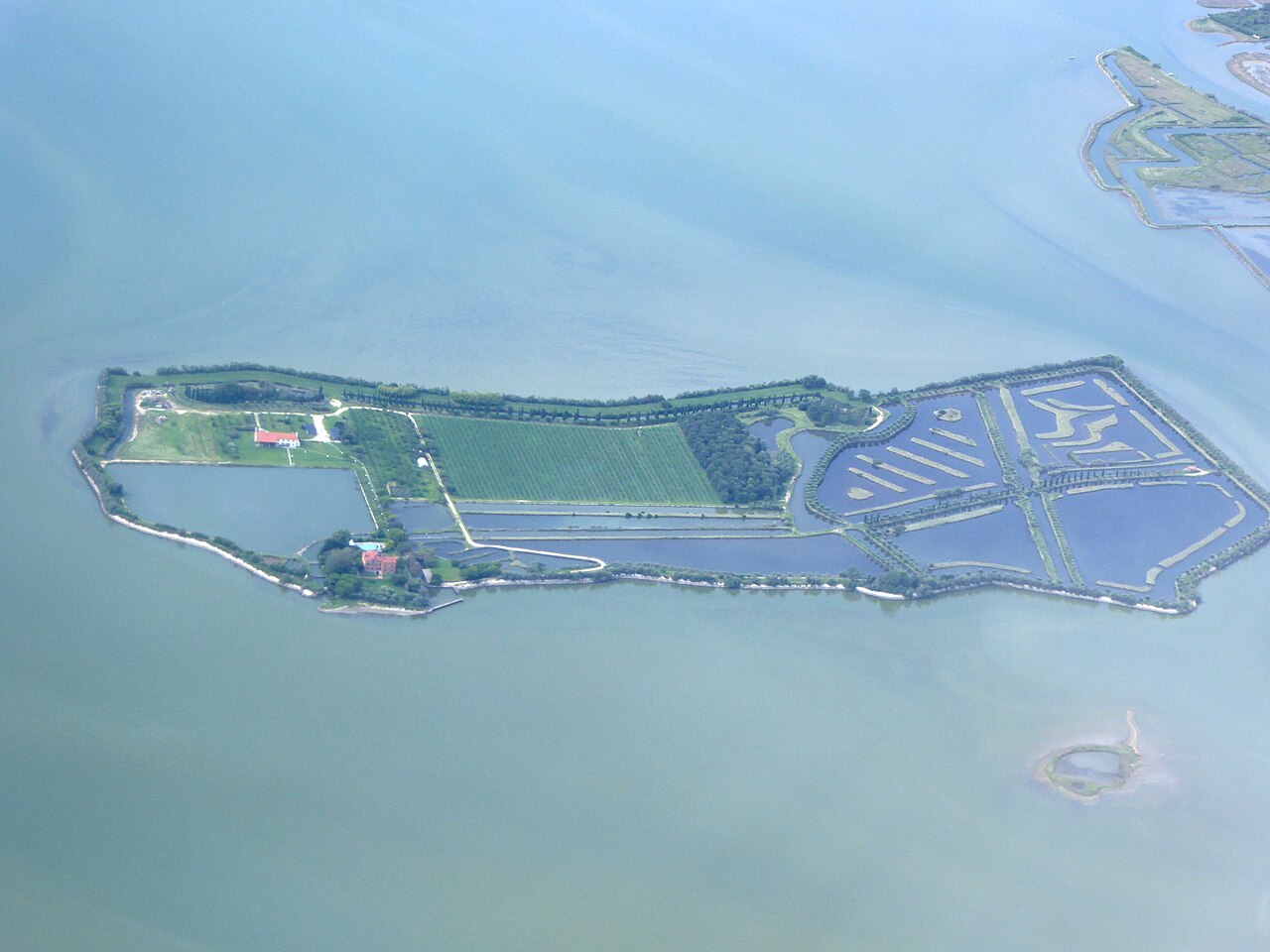
Lazzaretto Vecchio is in the central Venetian Lagoon, close to the inner shore of the Lido of Venice and opposite the waters of St Mark’s Basin. The island extends over approximately two and a half hectares and includes around 8,500 square metres of buildings, according to the Lazzaretti Veneziani association.
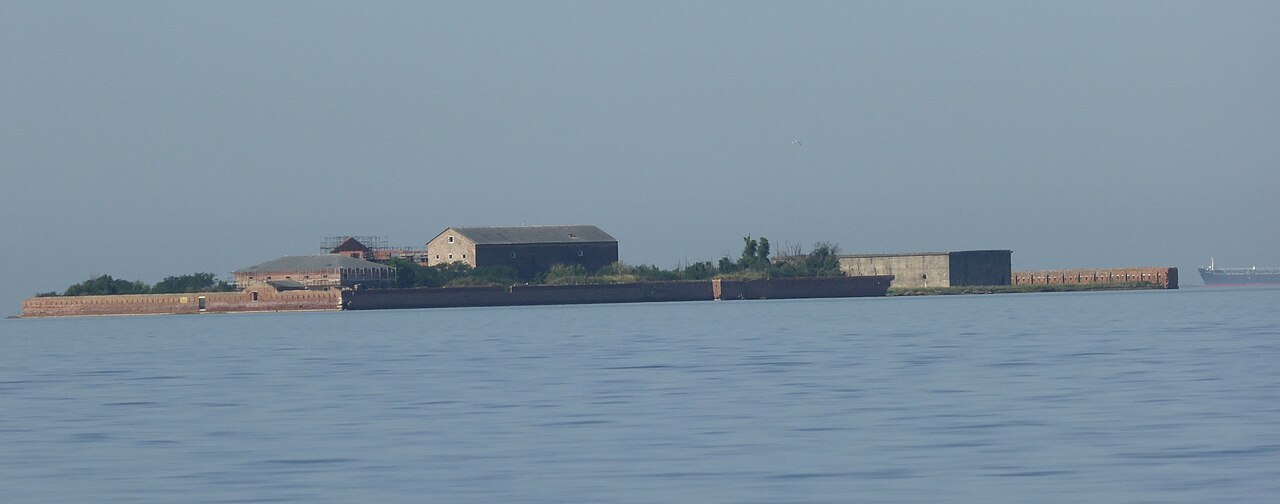
Its position made it accessible by boat while keeping those admitted away from the densely populated city. From the water, the low brick buildings and perimeter walls still suggest the organised complex that grew here over several centuries.
Before the plague hospital: Santa Maria di Nazareth
The history of the island predates the arrival of the plague. In 1249, Augustinian hermits established a religious settlement, with a church dedicated to Santa Maria di Nazareth and a bell tower. Part of the former convent can still be identified in later structures, although the medieval church no longer survives.
Monastic communities were a familiar presence on the islands of the lagoon. Their buildings offered places of prayer and work, but they were also adaptable. When Venice faced the challenge of recurrent epidemics, this existing religious complex provided a starting point for a radically different use.
1423: the foundation of Venice’s plague hospital
In 1423, the Venetian Senate chose the island for a hospital where people suffering from plague could be separated from the rest of the population and cared for. The institutions responsible for the island describe it as the first hospital specifically organised for plague isolation, an early landmark in the history of public health.
This was more than simply moving sick people outside the city. The Republic invested in dedicated facilities, staff and rules to manage illness in a location connected to Venice by water yet separated from its crowded neighbourhoods.
The building complex developed over time, especially as new outbreaks demanded more room. Land reclamation enlarged the island, while wards, covered spaces, service areas and accommodation reflected its evolving functions.
Why is it called “Lazzaretto Vecchio”?
The island was originally associated with the dedication to Santa Maria di Nazareth. The name Nazaretum is part of the historical explanation for the evolution of the word lazzaretto, which later came to describe institutions used to isolate people during epidemics.
It became the Vecchio (“Old”) Lazzaretto after Venice created another sanitary station in 1468, called Lazzaretto Nuovo (“New”). Although their names sound similar, the two islands performed different roles within the same protective system.
The difference between Lazzaretto Vecchio and Lazzaretto Nuovo
Understanding this difference is essential to appreciating Venice’s response to contagious disease.
- Lazzaretto Vecchio (1423): primarily a hospital for isolating and treating people who were already affected by plague.
- Lazzaretto Nuovo (1468): primarily a preventive station where arriving travellers, crews and goods could be held for observation before entering the city.
The second institution made it possible to distinguish the care of the sick from the prevention of possible infections. Together, the two islands formed part of a coordinated approach to maritime public health. You can explore the other part of this story in our article about the history of Lazzaretto Nuovo.
Archaeology: what the island’s burial grounds reveal
The most poignant discoveries at Lazzaretto Vecchio have come from archaeological excavations. Researchers uncovered communal graves containing thousands of burials, associated with plague outbreaks during the sixteenth and seventeenth centuries.
These remains are a stark record of the human cost of epidemics. They also offer important evidence about the history of disease, burial practices and how the hospital organised its spaces when it faced large numbers of patients.
Rather than turning these discoveries into legends or sensational stories, they deserve to be understood as historical and archaeological testimony. Behind each burial was a person who lived in a Venice very different from the city visitors know today.
From hospital to military depot and municipal kennel
The island’s role changed again in the nineteenth century. From the 1850s it was used for military purposes, with warehouses and adaptations to the existing buildings. During that period, the old church, its Romanesque bell tower and other medieval remains were demolished.
After military activities ended in the 1960s, the complex entered another unexpected phase. Between the late 1970s and the 1990s it was used as a municipal dog shelter. New alterations and a long period of limited maintenance contributed to the deterioration of its historic buildings.
This succession of uses explains why the island looks so different from a medieval monastery, even though portions of its earlier history survive within its walls.
The buildings that still tell its story
Despite later alterations, Lazzaretto Vecchio preserves a remarkable collection of structures. The Generalato or Priorato retains elements linked to the former convent and the administrative life of the hospital. Elsewhere, historic tezoni and service buildings bear witness to the practical organisation of the institution.
On some sides, the buildings look towards the Lido and St Mark’s Basin; within the complex, walls and courtyards recall a working environment designed for separation, movement and supervision.
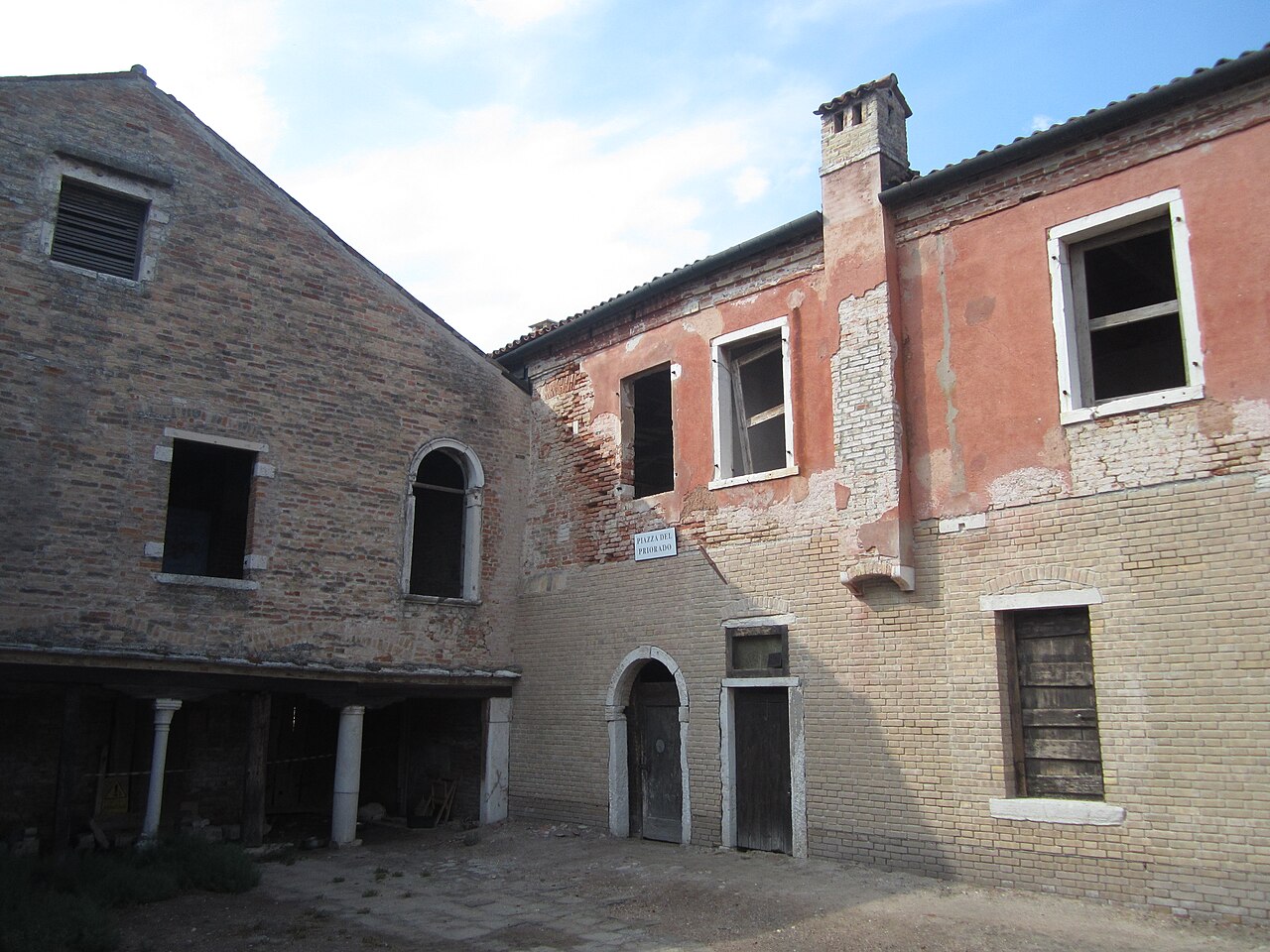
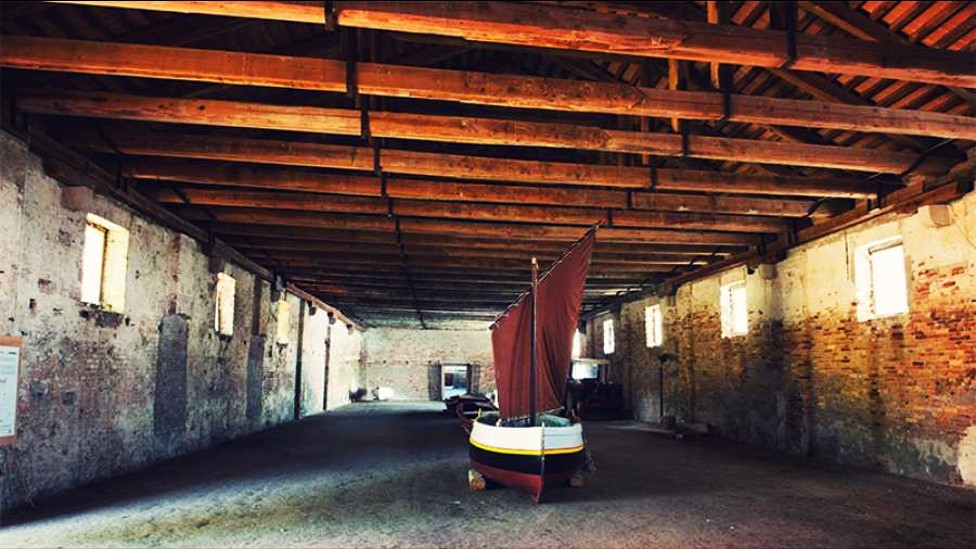
One of the historic warehouses, the Tezon Vecchio, is also central to conservation and restoration work. Its survival makes it possible to follow changes in architecture and use across different periods of Venetian history.
What is Lazzaretto Vecchio becoming today?
Since 2000, the island has been designated as the future home of the National Archaeological Museum of the Venetian Lagoon. The project aims to tell the story of the lagoon, from early settlement and the Roman-era world of Altino to the smaller island communities that contributed to Venice’s origins.
Structural restoration took place between 2004 and 2008, followed by further work and renewed planning. The project is ambitious because it involves preserving an extensive historic complex, not simply opening a single exhibition room.
As of November 2026, the museum is not yet open for regular visits. Official information confirms that restoration and exhibition preparation remain in progress. The island should therefore be described as a future museum site, not an established museum with daily opening hours.
Can you visit Lazzaretto Vecchio?
Public access is currently restricted because of the ongoing work. The museums authority states that visits are possible only on specially organised days, with dates announced through its official channels. Between 2014 and 2023, extraordinary openings enabled members of the public to explore parts of the site; those past events do not establish an ordinary visiting timetable today.
Before planning to go ashore, check the National Archaeological Museum of the Venetian Lagoon’s official page for updated access information.
Seeing the island from the water
Even without landing, the view of Lazzaretto Vecchio helps explain why this particular island was chosen to keep sick people apart from the city yet remain within reach of medical staff, supplies and transport. Its history gains another dimension when compared with the preventive station at Lazzaretto Nuovo and the other islands with specialised roles.
Would you like to discover the Venetian Lagoon through a personalised itinerary? Explore our private island boat experiences or contact us to discuss what interests you. Routes and any stops are subject to navigation conditions and access permissions; a private boat excursion does not automatically include entry to Lazzaretto Vecchio.
Continue exploring our collection: History of the Venetian Lagoon Islands.
Frequently asked questions
When was Lazzaretto Vecchio established?
Venice established the plague hospital in 1423, adapting a religious complex that had existed on the island since the thirteenth century.
What is the difference between Lazzaretto Vecchio and Lazzaretto Nuovo?
Vecchio originally isolated and cared for people with plague. Nuovo, created in 1468, was primarily used to observe travellers and handle goods considered at risk before they entered Venice.
Is Lazzaretto Vecchio open to the public?
Not on a regular daily schedule. Restoration and museum preparations continue, and public visits are limited to specially announced dates.
Historical sources and image credits
Historical and visitor information: Lazzaretti Veneziani – History of Lazzaretto Vecchio; Italian Ministry of Culture – island and buildings; official museum project and access information. Featured photo: Abxbay / Wikimedia Commons, CC BY-SA 4.0, resized for web; inline photos: Powermelon and Maspez, CC0 1.0.