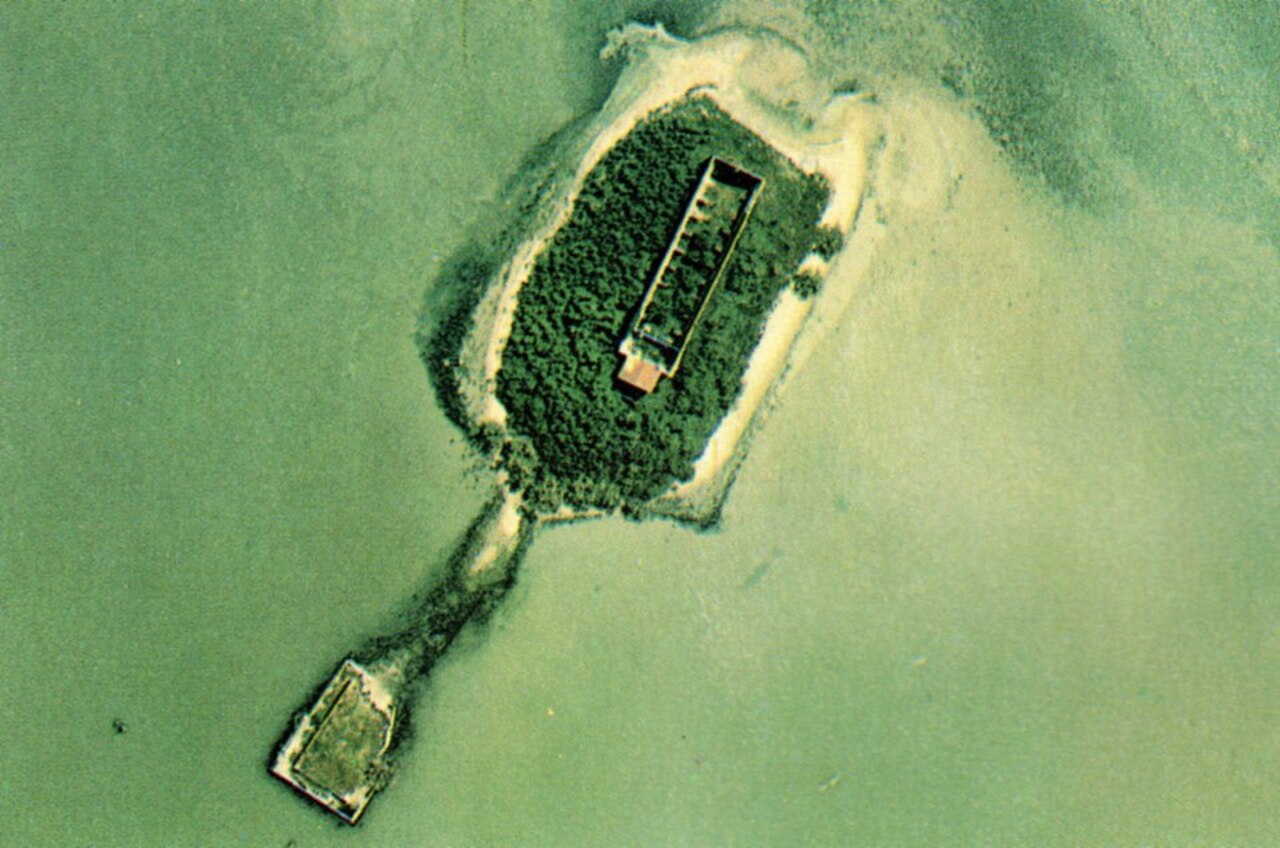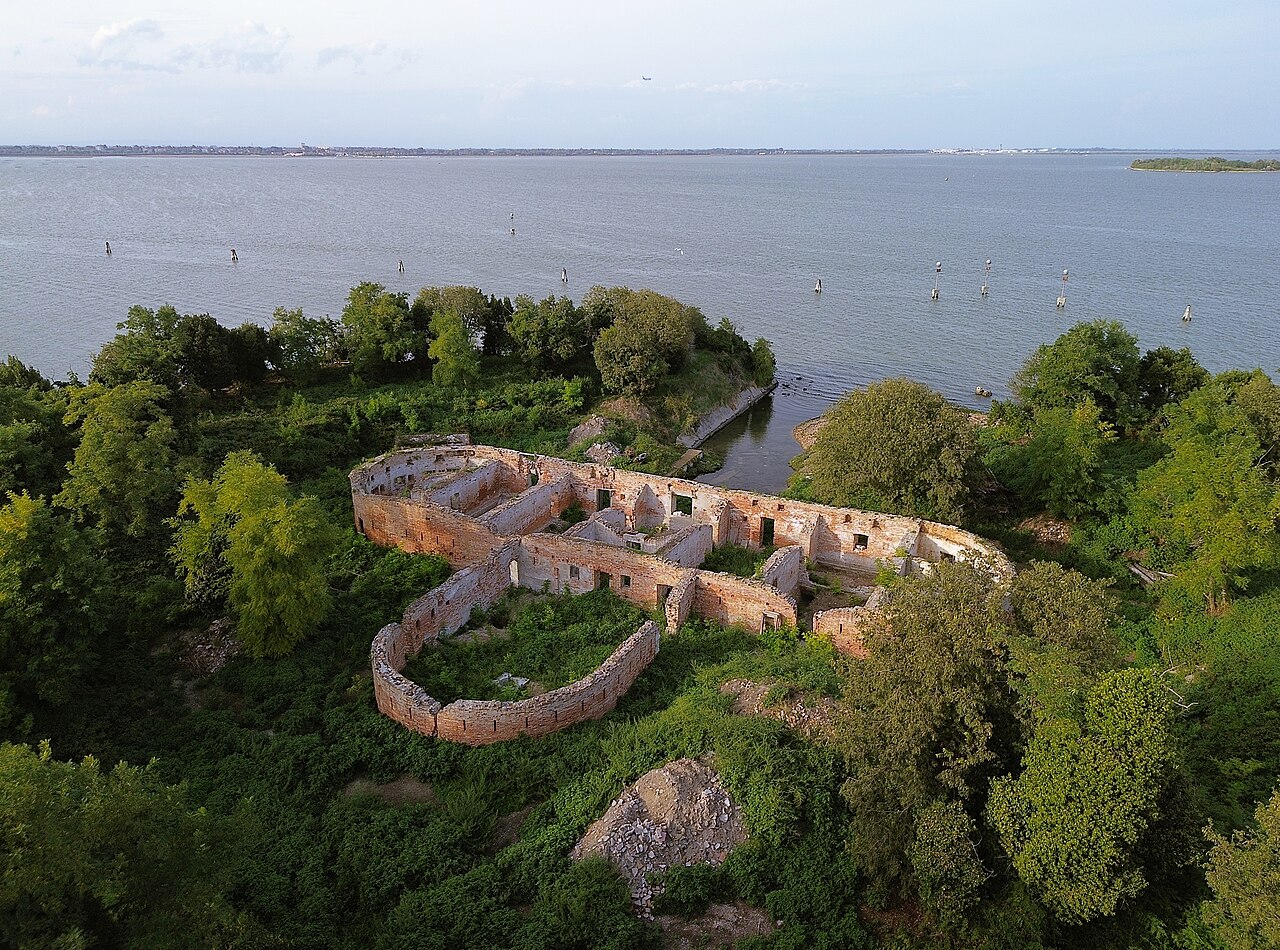
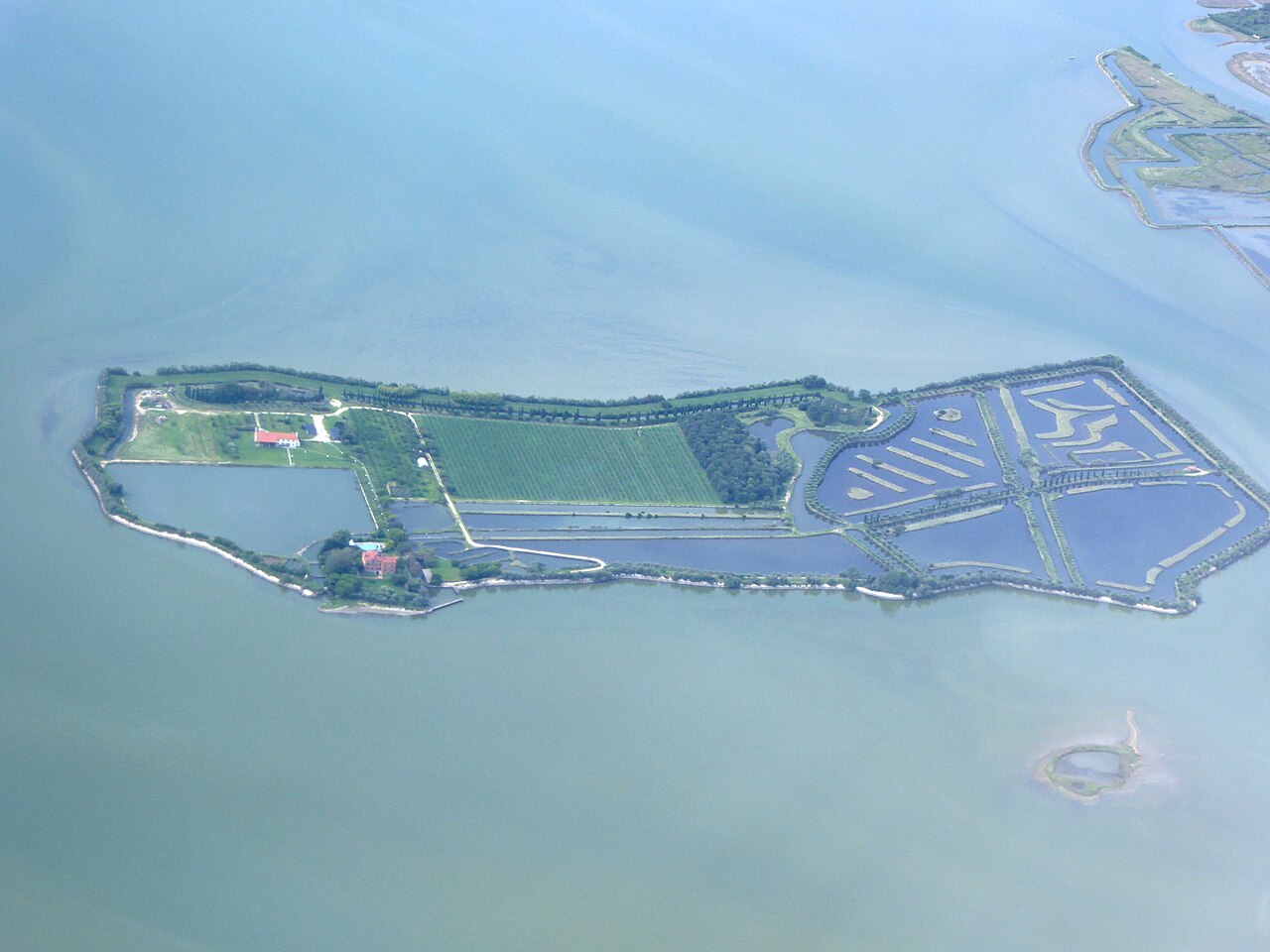
Santa Cristina is a green survivor of the lost Ammiana archipelago. Discover its Benedictine history, the relics that gave it its name and its modern private conservation.
Santa Cristina and the lost archipelago of Ammiana
Santa Cristina is a private green island in the north-eastern Venetian Lagoon. It survives from Ammiana, a much larger group of early settlements and monasteries whose territory was gradually transformed by erosion and changing waterways. Today the island has cultivated fields, gardens and fishing waters, while its medieval buildings have disappeared.
The monastery of San Marco
Historical studies place a Benedictine convent dedicated to San Marco on this part of Ammiana in the early Middle Ages. It was associated with the Venetian Falier family and belonged to a network of religious foundations around Torcello. The convent depended on boats, farmland and support from noble patrons.
1325: the relics of Saint Christina
A major change in the island’s identity came when relics of Saint Christina of Tyre were brought from Constantinople, traditionally in 1325. The monastery and the island became known by the saint’s name. The movement of sacred relics was a way for Venetian monasteries to strengthen devotion and prestige.
The decline of Ammiana
Changes in waterways, erosion and declining settlement made life increasingly difficult. In 1340 the nuns attempted to move to Santa Maria degli Angeli on Murano but were ordered to return. The religious settlement was finally abandoned during the fifteenth century; sources differ between 1432 and 1452 for specific administrative phases.
The relics leave the island
The relics of Santa Cristina were moved to religious houses connected to Torcello and subsequently to the church of San Francesco della Vigna in Venice. Their journey links Santa Cristina with the broader history of northern lagoon monasteries and shows how a religious memory could survive when its original island community disappeared.
Farming and fishing after the monastery
Historical maps record the continuation of houses, gardens and cultivated plots after the convent disappeared. By the eighteenth century the island was associated with the Donà family and an agricultural landscape of fields, gardens and fishing grounds. These productive activities depended on careful management of the waters surrounding the land.
A modern private green island
Today Santa Cristina is privately managed, with vineyards, orchards, gardens and areas connected to fish farming. The Italian national tourism portal highlights its valuable natural environment and an unusual source of fresh water. The island illustrates how conservation, agriculture and hospitality can coexist on a relatively small piece of lagoon land.
Ammiana, Torcello and the northern lagoon
Santa Cristina’s story is part of the early lagoon history of Torcello. Its green landscapes can also be compared with Sant’Erasmo, the much larger agricultural island of Venice. Such comparisons reveal how some historic islands became abandoned while others developed new uses.
Can you visit Santa Cristina?
Santa Cristina is private property. It is not a public park or a place where boats may freely land. Any stay, tour or access must be agreed with the owners and authorised operators. The island can be viewed from permitted waterways, but seeing it from the boat is not permission to disembark.
Private boat tours in the northern lagoon
A custom boat experience can introduce the waterways and historic island landscape near Santa Cristina without assuming access to its private grounds. Explore the wider lagoon and its history or contact us to discuss a personalised itinerary, subject to navigation conditions and permission for any landings.
From religious settlement to agricultural landscape
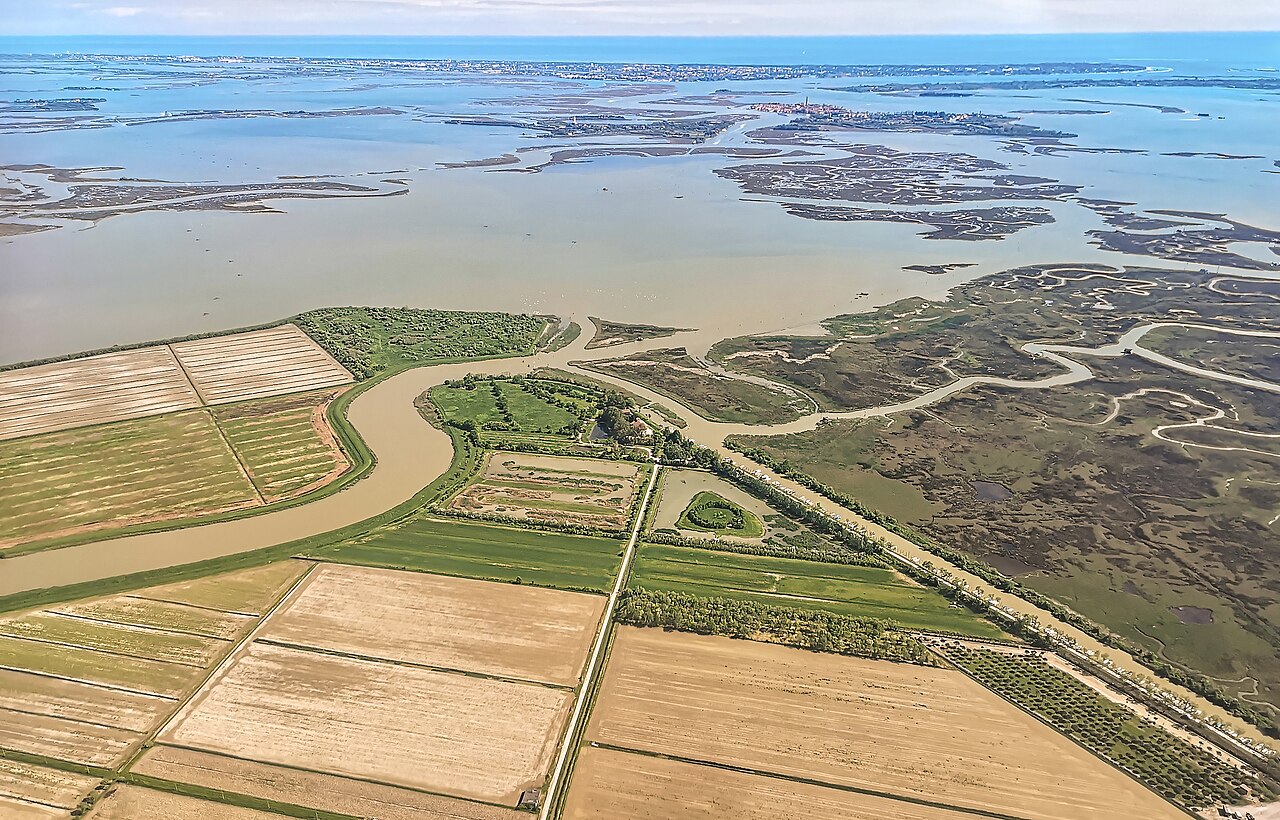
The end of the monastery did not mean the island ceased to exist or lost every economic role. Sixteenth-century cartography still records settlement and land use in the Ammiana area, while eighteenth-century documents show how agriculture and water management continued. Islands with fertile plots could be valuable even after the religious communities had moved away. Santa Cristina’s later history must therefore be read as a transformation of use, not as a sudden disappearance. The important contrast is with other parts of Ammiana where erosion gradually removed nearly every trace of the original settlement.
Why the island’s freshwater matters
The surrounding lagoon is influenced by the mixing of salt water from the Adriatic and freshwater from rivers. A local source of relatively fresh water is unusual and historically important for cultivation. Modern island management has benefited from careful control of water, sheltered cultivated fields and a landscape that provides space for birds and other wildlife. However, ecological value does not automatically mean public access: the environmental characteristics of a private island need appropriate protection and responsible management.
Santa Cristina in historical maps
Old maps are particularly helpful for understanding a place whose medieval convent has vanished. The records preserved by the Venice State Archives describe former monasteries of Ammiana and the progressive disappearance of islands and channels. They provide evidence of a once much denser network of settlement than appears in today’s green landscape. The original dedication to San Marco and the later name Santa Cristina allow researchers to connect different phases of the same place.
Frequently asked questions
Is Santa Cristina private?
Yes. Landings need the owner’s authorisation.
Where did the name come from?
The relics of Saint Christina arrived in 1325 according to local records.
What was Ammiana?
An early lagoon settlement with numerous churches and monasteries, much of which disappeared.
Are the medieval buildings still standing?
The old convent no longer survives; the modern island has cultivated land and private facilities.
Explore more: discover the history of the other Venetian Lagoon islands.
Explore the lagoon by boat: discover our private boat tour in the Venetian Lagoon. Routes are customisable; stops and island access depend on permissions and navigation conditions.
Sources
Italia.it; Archivio di Stato di Venezia. Cover: Abxbay / Wikimedia Commons, CC BY-SA 4.0.