Madonna del Monte is an almost forgotten island where a medieval Benedictine convent gave way to a Rosary church and finally a military powder magazine. Its ruins reveal the changing purposes of Venice’s smaller lagoon islands.
Madonna del Monte in the northern Venetian Lagoon
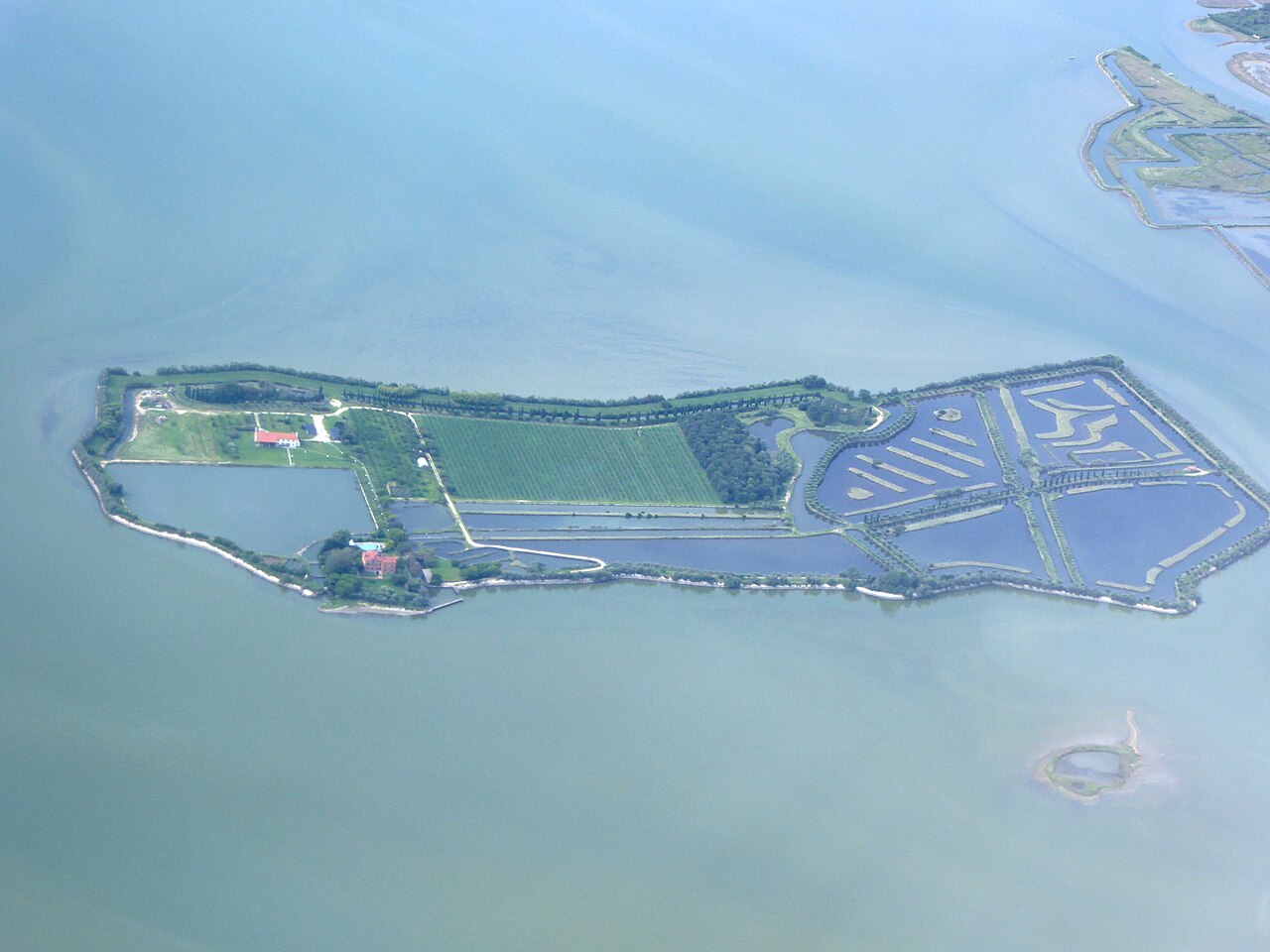
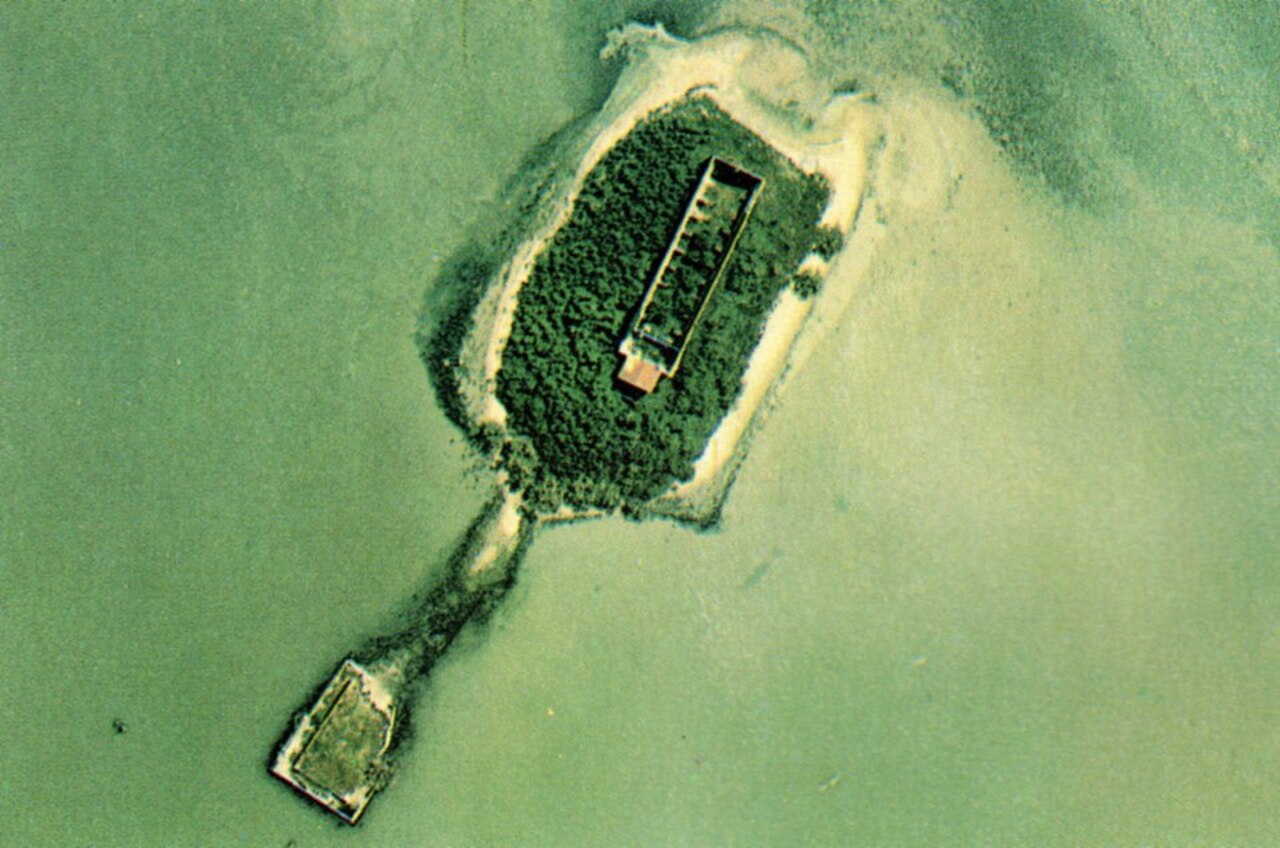
Madonna del Monte is a small and largely abandoned private island between San Giacomo in Paludo and Mazzorbo, beside a lagoon channel used on the route towards Burano. It consists of two close areas of land, historically connected, whose shape has been affected by erosion. Today its visible remains are mostly associated with military storage rather than the medieval monastery that first gave it importance.
1303: the monastery of San Nicolò della Cavana
In 1303, a small Benedictine nunnery was founded here, dedicated to Saint Nicholas, patron of sailors. Its original name was San Nicolò della Cavana, referring to a sheltered place for boats. Traditional histories describe four nuns and a modest community supported by fishing routes and donations. Its setting between northern lagoon waterways made it useful to travellers but also difficult to maintain.
Poverty and the end of the convent in 1432
The monastery struggled financially and attracted few new members. By around 1430, the community had disappeared. In 1432, the Bishop of Torcello suppressed the convent and joined its possessions to Santa Caterina of Mazzorbo. The church and buildings gradually declined. Their fate shows how some small religious islands failed to attract the resources needed for maintenance even before wider environmental changes affected the lagoon.
1648: a brief experiment in hermit life
In 1648, followers of Saint Paul the First Hermit attempted to settle on the island. The remote location suited a life of seclusion, but poverty and the difficulties of living on a small lagoon site made the experiment short-lived. This brief chapter links Madonna del Monte with other islands used by religious communities seeking isolation and quiet.
1712: Pietro Tabacco and the Madonna del Rosario
A renewal began in 1712, when the Venetian Pietro Tabacco organised the reconstruction of a church dedicated to Our Lady of the Rosary. Buildings for a devotional confraternity were added and the island became known as Madonna del Monte or Monte del Rosario. The new name outlived the church itself. Earlier religious connections were replaced by a fresh community of devotion and local patronage.
The nineteenth century: from church to powder magazine
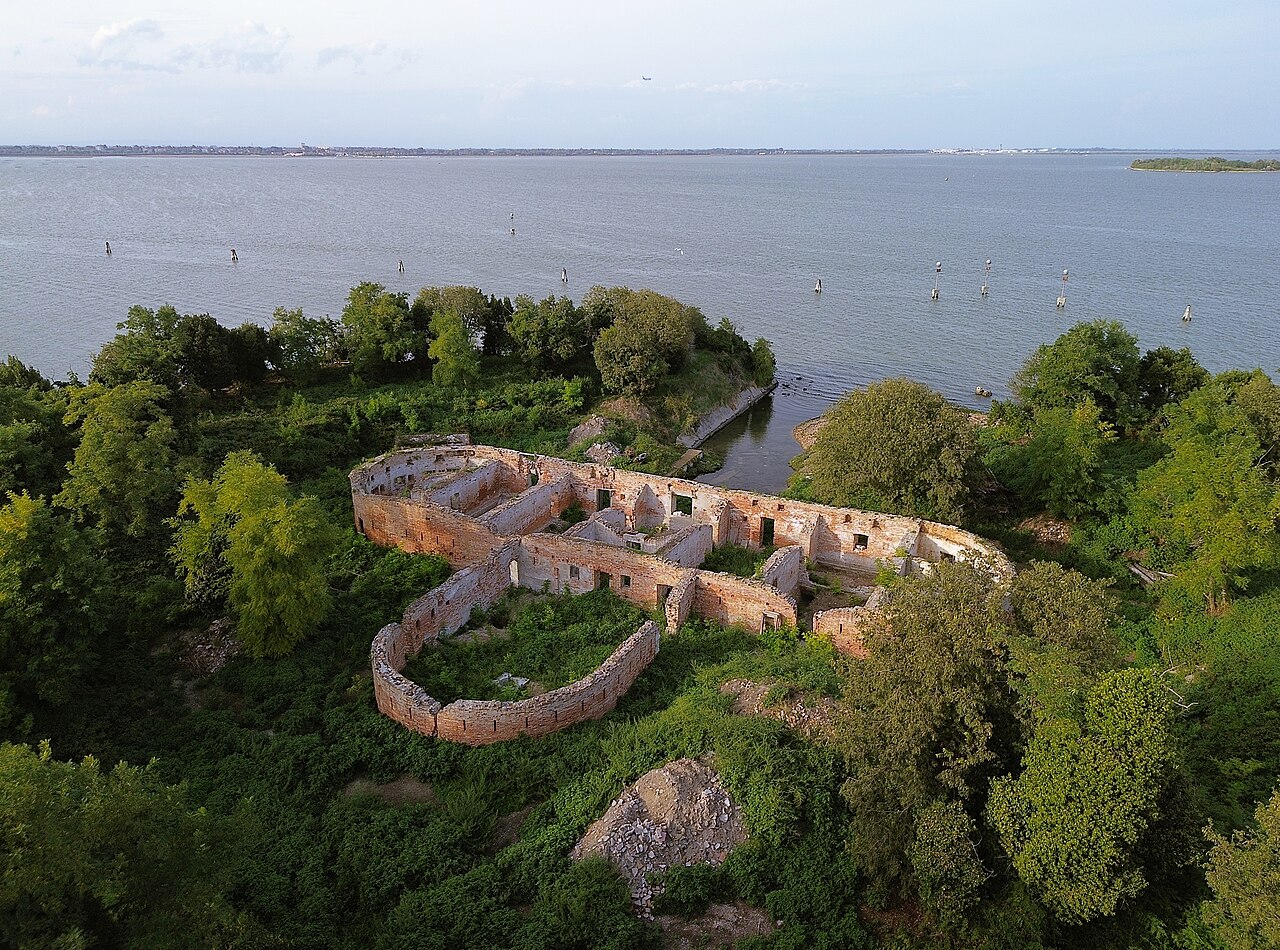
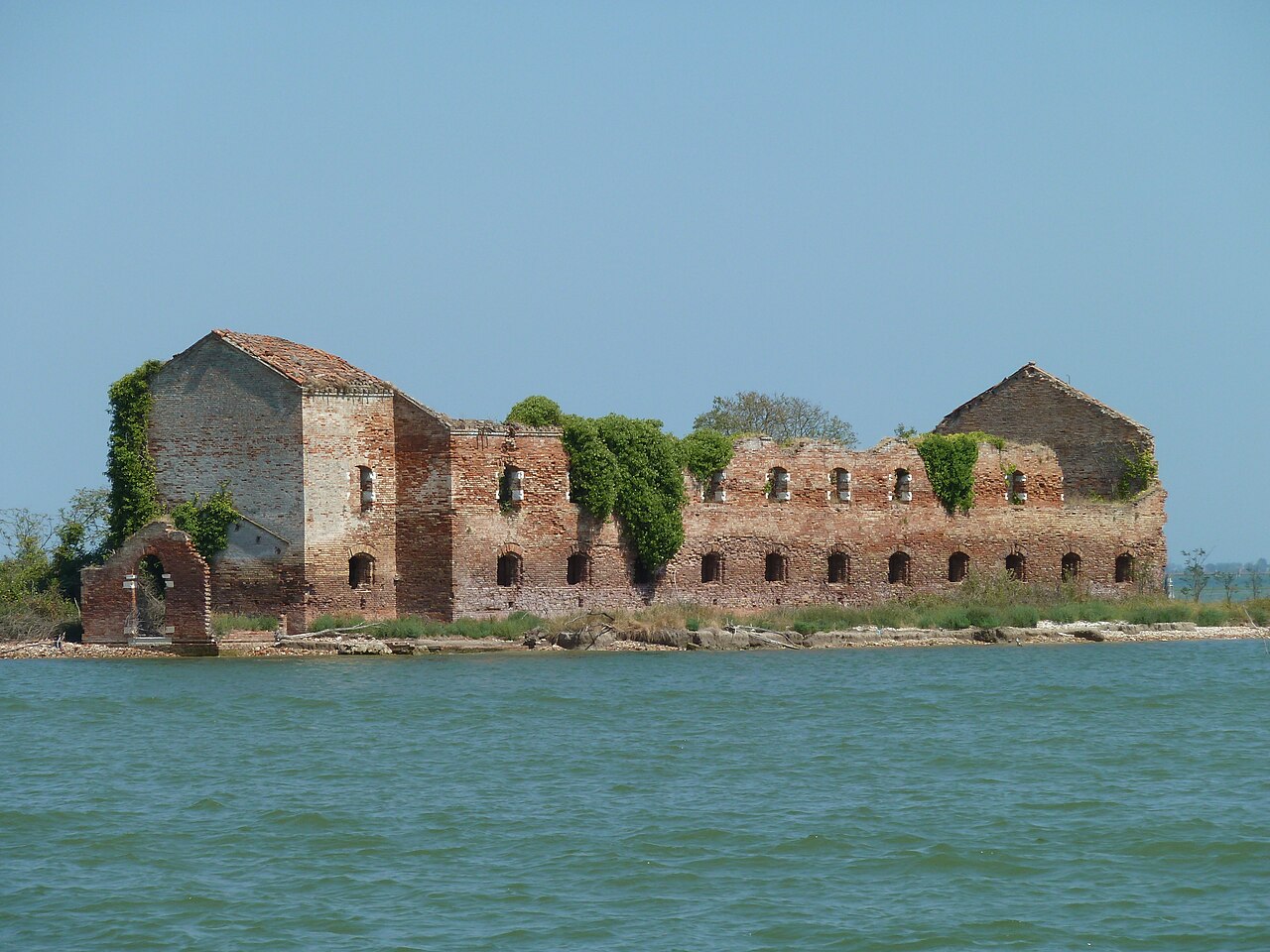
The religious complex ceased to function after the political and ecclesiastical suppressions associated with the Napoleonic period. By the middle of the nineteenth century, the old church and buildings had been demolished or replaced. The island was converted to a military powder magazine, an isolated storage site for materials that were considered dangerous near populated districts. The buildings that survive mainly reflect this later use.
Twentieth-century military uses and abandonment
Military storage continued into the twentieth century, with uses reported through the period of the Second World War. When the site lost its strategic importance, its structures fell into disrepair. The Italian geographical and historical literature also records the end of powder storage around 1958. Vegetation has covered much of the former magazine and the surviving walls are exposed to the moisture and salinity of the lagoon.
Two islets, one history of change
Old maps and photographs show how the island’s two land masses and connecting strip changed with currents, storms and the construction of embankments. The remains include perimeter walls on the larger land area and traces of supporting buildings elsewhere. Modern photographs can easily make these ruins look like parts of an old church, but most visible masonry relates to the later military period. Historic engravings are helpful for visualising its earlier religious appearance.
Private ownership and proposals for reuse
The island passed into private ownership after its military uses, and restoration proposals have appeared from time to time. A concept or architectural competition entry does not demonstrate that a project has been approved, financed or completed. Madonna del Monte remains best understood as a fragile abandoned heritage site, rather than a functioning visitor attraction. Any change in its use should be checked against current official information.
Madonna del Monte and the history of Venice’s smaller islands
Its history resembles that of San Giacomo in Paludo and Mazzorbo: religious institutions were reshaped by poverty, state decisions and military requirements. Yet Madonna del Monte is particularly memorable for how its name changed with the devotional church of 1712 even though the most visible remains belong to the later powder magazine.
Can you visit Madonna del Monte?
No regular public access or authorised landing should be assumed. The island is privately owned and the surviving ruins are not maintained as a museum. Approaching it from navigable waters may provide a view of the island, but landing or entering buildings requires permission and attention to safety. Visitors should not mistake abandonment for an invitation to explore.
Discover the forgotten islands by boat
A private boat itinerary can help interpret the changing geography of the lagoon around San Giacomo in Paludo, Mazzorbo and Madonna del Monte. See our Riding the Lagoon experience or contact us for a customised route. No landing is promised without authorisation.
The meaning of the old name San Nicolò della Cavana
The word cavana in the Venetian lagoon refers to a sheltered place where a boat can be moored or kept. The original dedication to Saint Nicholas, a protector of navigators, therefore reflected the maritime character of the site. Travellers moving between the Sile waterways and Venice needed safe points to rest or shelter. Religious buildings often developed near such useful locations, combining practical services with prayer. The name San Nicolò della Cavana preserves the memory of that early relationship between the island and navigation even though its church has disappeared.
What an island powder magazine required
When the site was converted to military storage, isolation became an advantage rather than a hardship. Powder magazines were separated from population centres because their contents posed serious risks. They required guarded access, appropriate storage buildings and dependable boat connections with military facilities elsewhere in the lagoon. The remaining walls and ancillary structures should be interpreted in this context. They are evidence of modern state logistics, not proof that the old Benedictine convent survived intact. The former military purpose also helps explain why the island remained restricted long after religious life ended.
Heritage protection and the risk of romanticising abandonment
The masonry, vegetation and water make Madonna del Monte visually striking, but ruins are not necessarily safe. Exposure to salt water and the absence of maintenance can weaken foundations and walls. Photographs taken from the lagoon are useful historical documents when accurately dated and attributed, yet they should not encourage unauthorised exploration. A sound plan for the island would need to balance structural conservation, ecological conditions, archaeological documentation, property rights and practical navigation. Future use should be evaluated through verified official decisions, not through speculative descriptions of a hotel or public museum that does not exist.
Frequently asked questions
Why is it called Madonna del Monte?
The name derives from the church of Our Lady of the Rosary built in 1712.
When was its first monastery founded?
The Benedictine convent of San Nicolò della Cavana was established in 1303.
What are the ruins visible today?
Most belong to the later military powder magazine rather than the medieval church.
Can tourists land on the island?
No ordinary public access exists; private ownership and safety conditions require permission.
Explore more: discover the history of the other Venetian Lagoon islands.
Sources
IUAV, Isolario Venezia; Conoscere Venezia, historical sources; Treccani. Images: Maspez / Wikimedia Commons, CC0.