Between Murano and Burano, a small island tells an unexpectedly large part of Venice’s story. San Giacomo in Paludo was a place of welcome for travellers, a home for religious communities, a military outpost and, for decades, a forgotten corner of the northern lagoon. In 2026, it began a new chapter as a centre for contemporary art and environmental research.
Its history offers an unusually clear example of how the Venetian Lagoon has changed: the same stretch of land has served very different purposes without losing its connection to water, travel and the wider city.
Where is San Giacomo in Paludo?
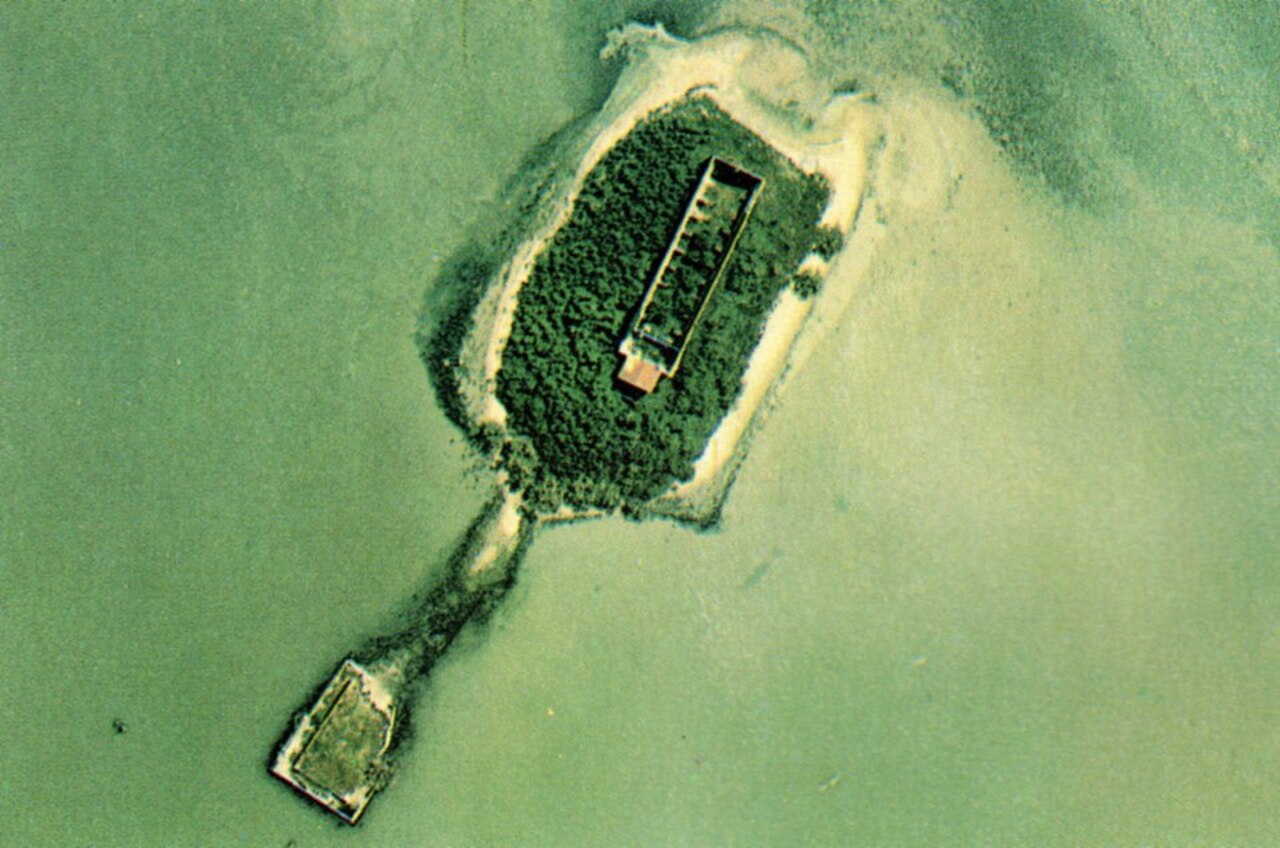
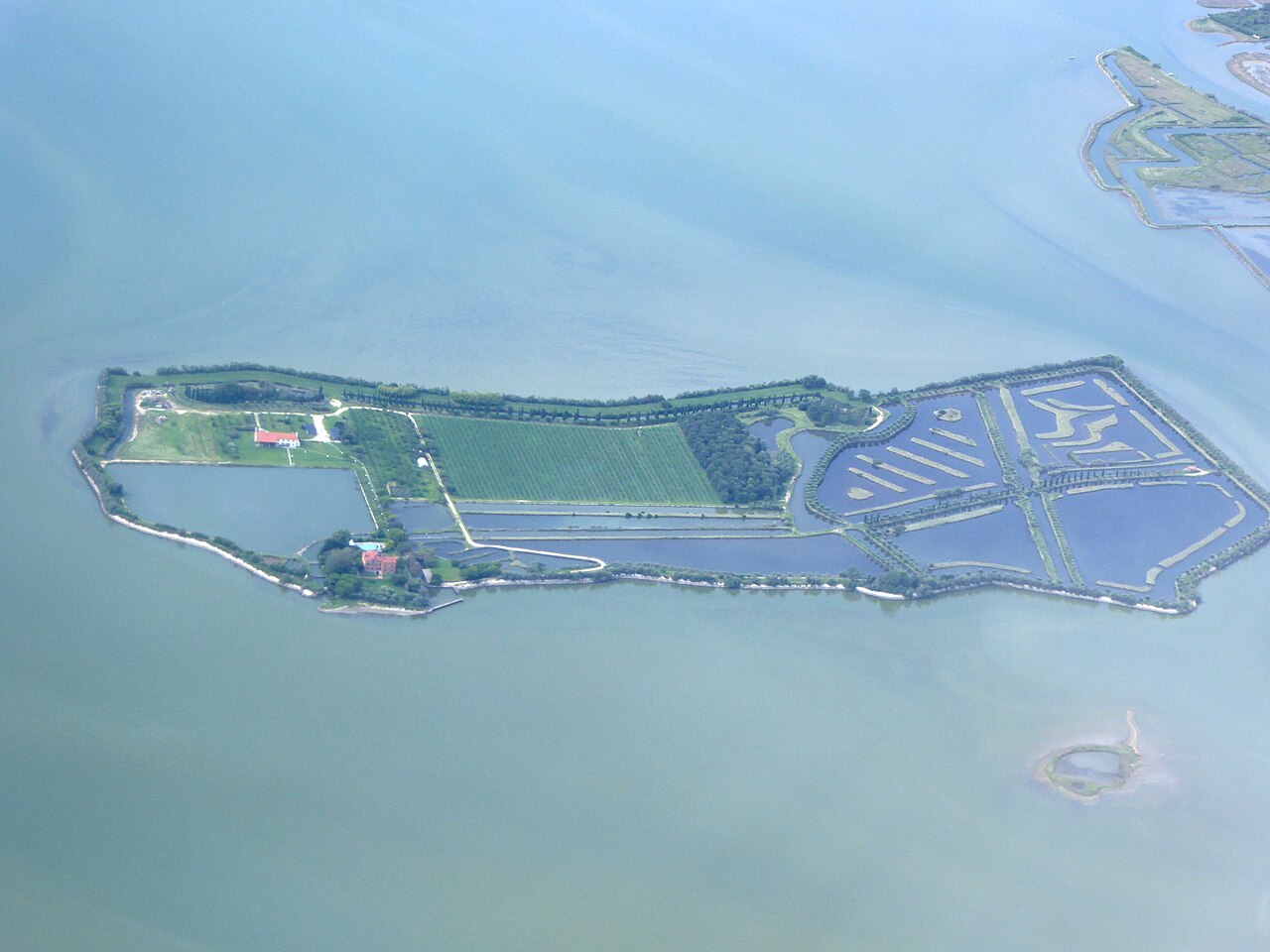
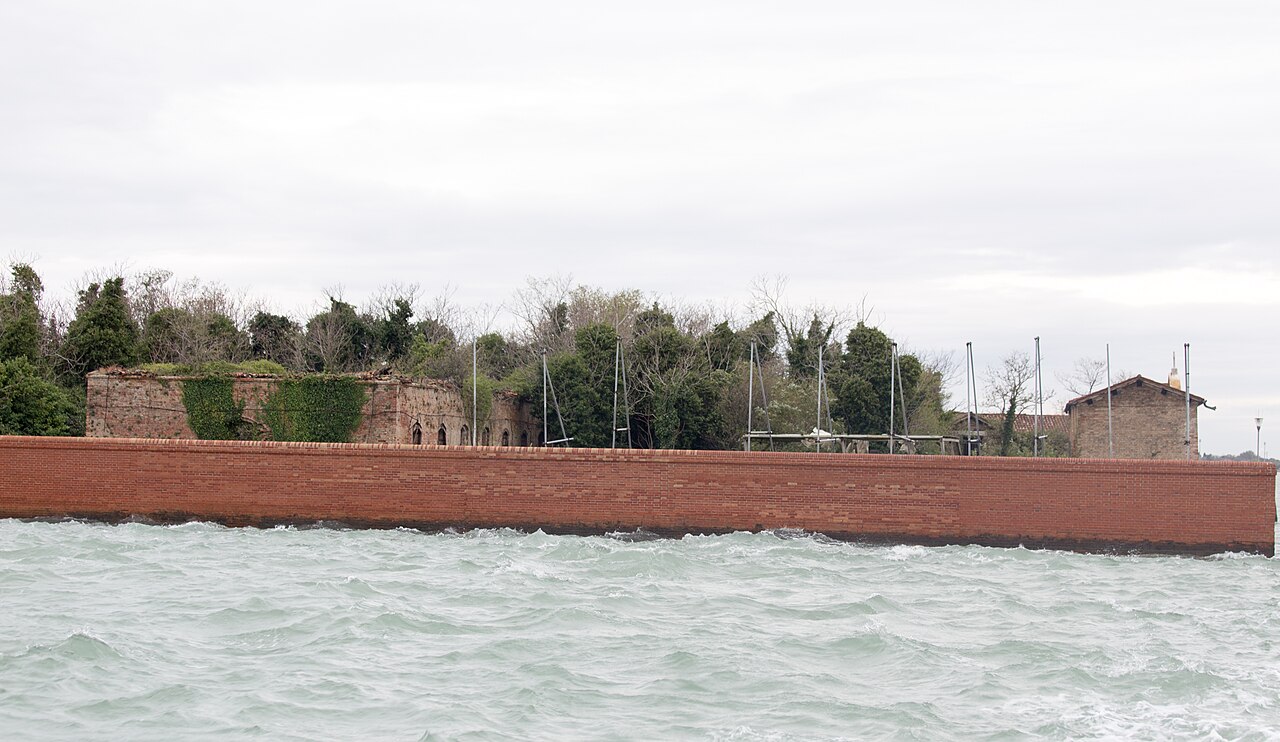
San Giacomo in Paludo is located in the northern Venetian Lagoon, between the routes leading towards Murano and Burano. Seen from the water, its almost square outline and low brick structures distinguish it from the larger inhabited islands. The name recalls the marshy landscape that once surrounded so many of Venice’s smaller settlements.
Today it is easy to think of these islands as remote. In the Middle Ages, however, they lay along waterways used by merchants, pilgrims and local communities. An island could be both isolated from the city’s busiest streets and closely connected to its everyday life.
From a pilgrims’ hospice to a Cistercian monastery
The earliest chapters of San Giacomo are linked to hospitality. Historical accounts and archaeological research describe a medieval hospitale: a place where travellers, including pilgrims travelling towards the Holy Land, could stop and find shelter. Sources differ on the precise foundation date, so it is safer to understand this as a long medieval history rather than assign it a single unquestioned year.
In 1238 the island became home to a community of Cistercian nuns. Their presence continued until around 1440–1441. The monastery was not only a place of prayer: the community maintained buildings, worked the land and managed the difficult relationship between freshwater, tides and cultivated ground.
That practical knowledge was essential. Living in the lagoon meant protecting small areas of productive land from salt water while maintaining boats and connections with nearby islands. San Giacomo’s religious history is also a history of work and adaptation.
The Franciscan centuries: a church, a guesthouse and a gardener’s boat shelter
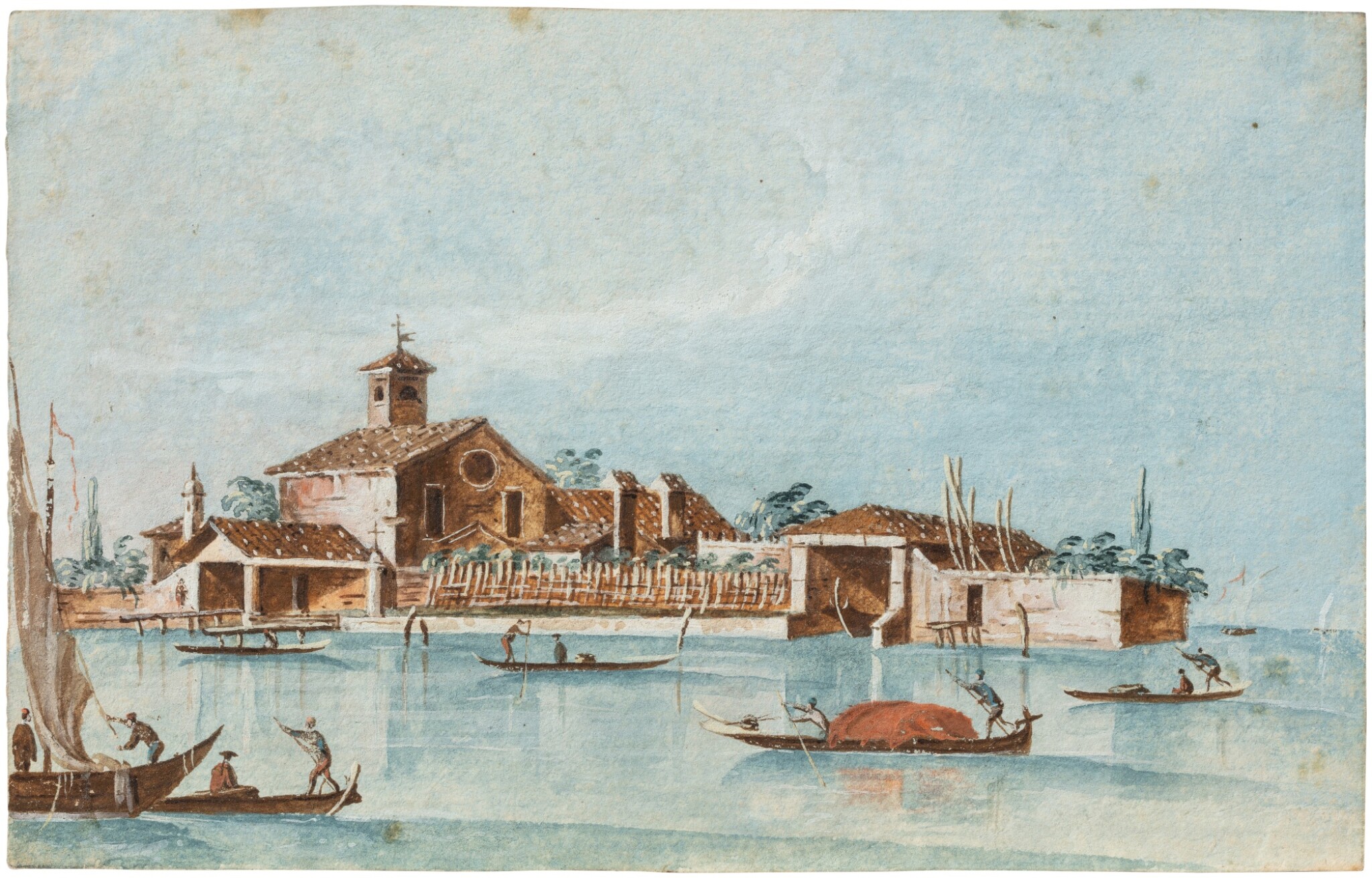
After the departure of the Cistercian community, the island passed through another period of change. In 1458 it was entrusted to the Friars Minor, connected with the Franciscan world of Venice. A small church and convent formed the heart of a new religious settlement, with spaces for guests and agricultural activity.
One particularly revealing detail is the cavana dell’ortolano, a boat shelter associated with the gardener. It reminds us that even a monastery depended on boats: to move people, receive supplies and take produce beyond the island.
The Franciscan community remained until 1769, when the monastery was closed by the civil authorities after a long period of decline. The buildings no longer had the same function, and a different chapter was approaching.
From sacred ground to military island
Following the political upheavals at the end of the Venetian Republic and during the nineteenth century, San Giacomo was repurposed for military use. Religious structures were demolished or altered, while powder magazines and defensive facilities took their place. Its position along lagoon waterways made it useful for controlling and supplying a city whose geography has always depended on navigation.
Austrian and later Italian military installations left visible traces on the island. That use continued into the middle of the twentieth century and ended around 1960–1961. Without its former role, San Giacomo entered decades of abandonment, with vegetation spreading over buildings and walls.
What archaeology reveals about everyday life
The story of the island is not limited to official dates or famous institutions. Archaeological research carried out by Ca’ Foscari University of Venice has investigated walls, floors, burials, ceramics and traces of daily activities. Such finds help reconstruct where people lived, how spaces were reused and how communities responded to changing lagoon conditions.
The excavations also remind us that the visible buildings are only part of the story. Some medieval remains lie below later structures and embankments. The small island is therefore a layered historical landscape, not simply a former convent or fort.
San Giacomo in 2026: a new life dedicated to art
After years of neglect, the island was acquired in 2018 by Patrizia Sandretto Re Rebaudengo and Agostino Re Rebaudengo and underwent an extensive recovery programme. The project combines cultural activities with attention to the lagoon environment and sustainability.
On 7 May 2026, the Fondazione Sandretto Re Rebaudengo officially inaugurated its new Venice venue on the island. Contemporary art exhibitions, outdoor installations and research activities have given San Giacomo a new public purpose while preserving its historical character.
Visiting information is important: the Foundation currently describes the venue as temporarily closed. The inaugural exhibitions ended in September 2026 and the programme is expected to resume in 2027. Access is organised around specific events and guided visits; it should not be assumed that visitors can land or enter freely at any time. Before planning a visit, consult the Foundation’s official visitor information.
Three details that make this island special
- A surprisingly compact shape. San Giacomo’s nearly square profile contrasts with the elongated outlines of many neighbouring islands.
- Everyday life beneath the ruins. Archaeology has documented not only religious buildings but also working spaces, objects and structures connected with boat transport.
- An island painted before photography. A view attributed to the Venetian artist Giacomo Guardi offers a glimpse of an earlier San Giacomo, when its architectural profile looked very different.
Discovering the island from the water
Even when access to the island is restricted, its position in the northern lagoon makes San Giacomo an interesting point of reference for understanding the history of Venice from the water. Seeing it alongside neighbouring islands reveals how places of worship, agriculture, defence and travel formed a connected landscape.
Interested in exploring these stories with a tailored itinerary? Discover the Venetian Lagoon by private boat or contact us. Possible routes and stops depend on navigation conditions, permissions and the island’s current access arrangements; a boat tour does not automatically include landing at San Giacomo.
For further island histories, explore our developing collection, History of the Venetian Lagoon Islands.
Frequently asked questions
What was San Giacomo in Paludo used for in the past?
It was associated with a medieval hospice for pilgrims, later housed Cistercian nuns and Franciscan friars, and was eventually used for military storage and defence.
What is San Giacomo in Paludo today?
Since May 2026 it has hosted a restored cultural venue associated with the Fondazione Sandretto Re Rebaudengo, dedicated to contemporary art and sustainability.
Can you visit San Giacomo in Paludo?
Access is not continuously available. The Foundation reports a temporary closure and arranges access through particular programmes or guided visits. Always verify the latest arrangements on its official website.
Historical sources and image credits
This article draws on the Veneto Region’s archaeological record, the Ca’ Foscari research publication and the Fondazione Sandretto Re Rebaudengo. Featured photograph: Gode Nehler, San Giacomo in Paludo (2019, before restoration), Wikimedia Commons, CC BY-SA 4.0; resized for web display.