Before Venice became the city we know today, Torcello was one of the most important settlements in its lagoon. Where visitors now find quiet paths, gardens and reed beds, there once stood a prosperous centre of trade, religious authority and skilled craftsmanship. Its cathedral, founded in the seventh century, preserves some of the most remarkable early medieval art in Venice.
The story of Torcello island explains how communities first established themselves on the lagoon, why some places flourished before Rialto and how nature eventually reshaped the balance of power.
Where is Torcello island?
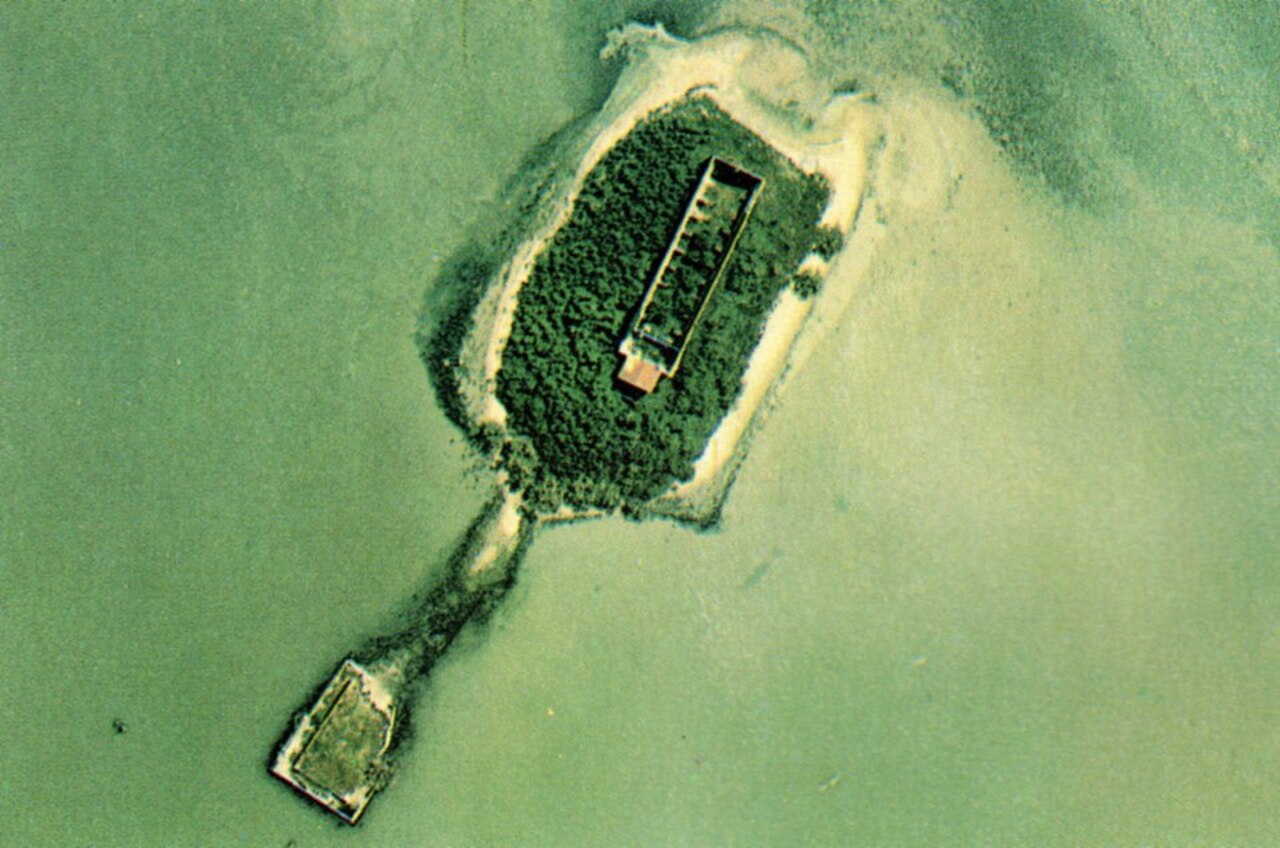
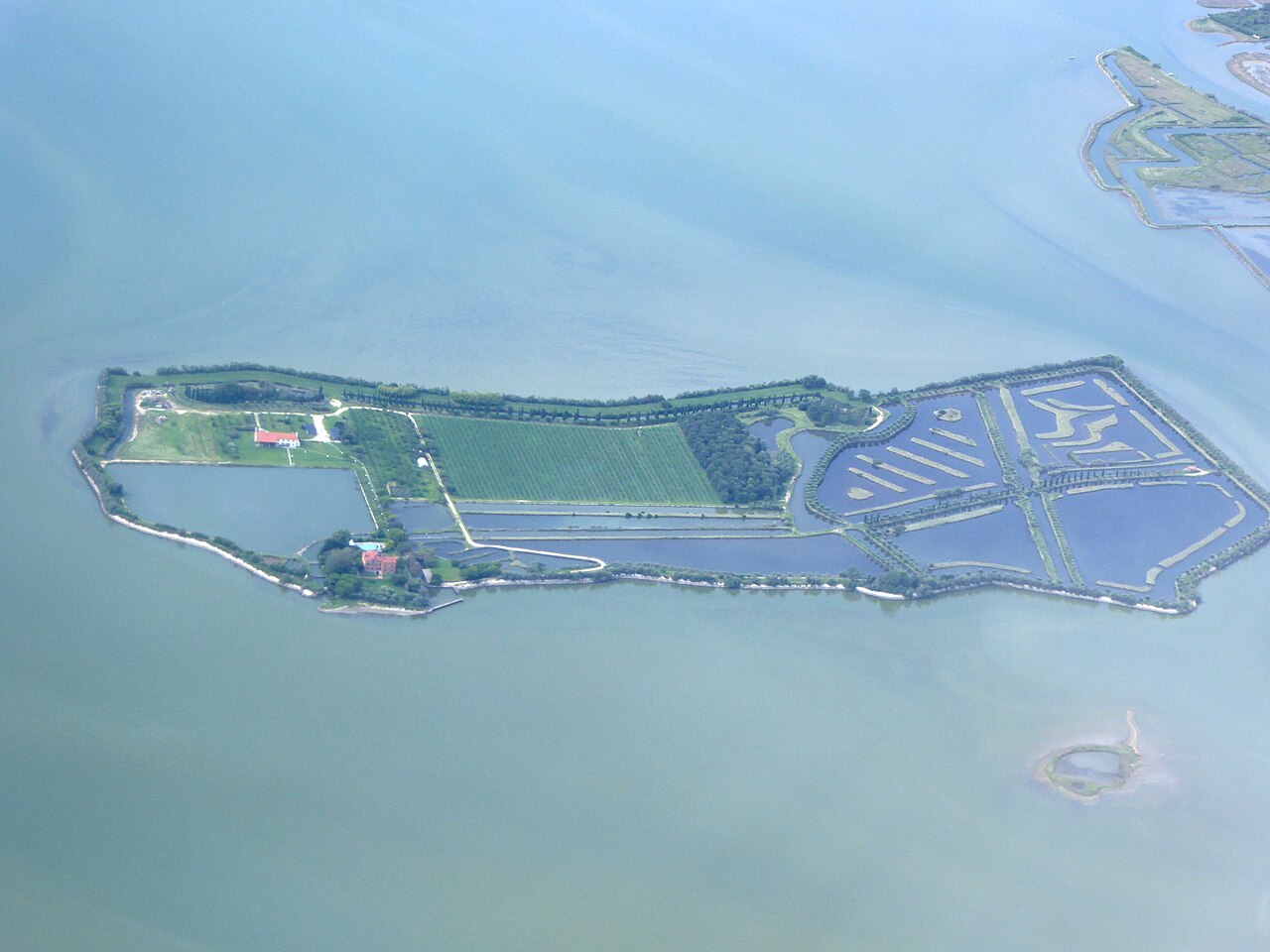
Torcello is in the northern Venetian Lagoon, near Burano and Mazzorbo, surrounded by channels, salt marshes and cultivated land. Arriving by boat, you see a landscape very different from central Venice: low buildings, greenery and the tall bell tower of the Cathedral of Santa Maria Assunta.
Today the island has only a very small resident community. It is tempting to imagine that it has always been this quiet, but in the early Middle Ages Torcello was an important religious and economic centre linked to other islands and to the mainland.
How did Torcello become one of the first centres of the lagoon?
Archaeological research has found evidence of occupation in the area from Roman times. Settlement expanded in the sixth and seventh centuries, as communities in the Veneto mainland and nearby lagoon sought security amid political instability and the Lombard incursions.
The familiar account of people fleeing the mainland contains a historical core, but the origins of Venetian civilisation were a gradual process, not a single mass escape on one date. Torcello was one of several places where trade, fishing, agriculture and new political relationships developed together.
In 638, the bishop of Altino transferred his seat to Torcello; in 639, the cathedral was founded. This early episcopal presence shows how significant the island had become, well before Venice’s later political and commercial centre took shape around Rialto.
A prosperous town: salt, trade and connections with Byzantium
Between the seventh and tenth centuries, Torcello and its neighbouring settlements formed a network linked to the Adriatic and Byzantine world. The production of salt, local crafts, navigation and trade helped sustain the population and religious institutions.
Some historical descriptions credit Torcello with tens of thousands of inhabitants at its height. Such numbers should be treated as traditional estimates rather than a precise census, but they reflect the striking contrast between the island’s former importance and its limited population today.
Archaeological investigations have uncovered traces of buildings, agricultural activity and glassworking. They remind us that the island was not simply a cathedral surrounded by fields, but part of a complex inhabited landscape.
The Cathedral of Santa Maria Assunta: founded in 639
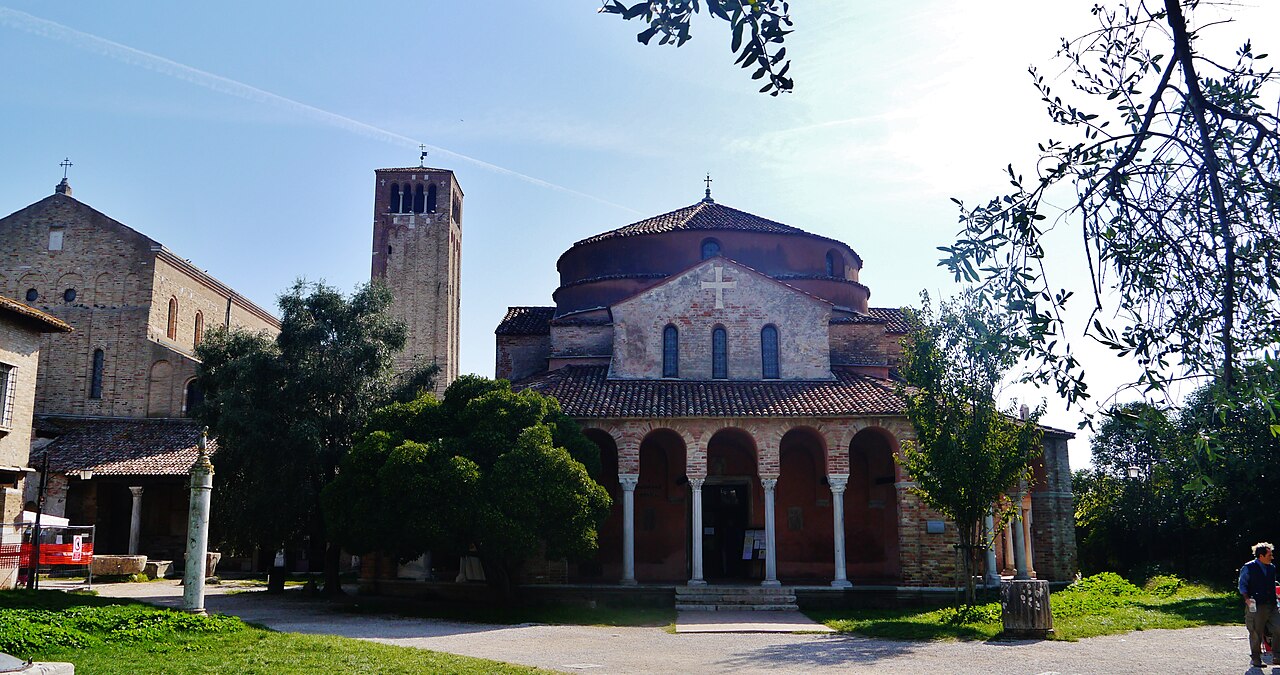
Torcello’s most important monument is the Cathedral of Santa Maria Assunta. An ancient inscription records its foundation in 639; the building was altered over the centuries, with the present principal structure dating to 1008.
Inside, the great three-aisled space preserves an early medieval atmosphere. Marble columns, the sanctuary screen, historic paving and other architectural elements reveal the influence of the Eastern Mediterranean and Venice’s connection with Byzantium.
It is one of the clearest places to experience the history of Venice before the magnificent Gothic and Renaissance palaces that later came to define the city.
The Byzantine mosaics and the Last Judgement
Inside the cathedral, the mosaic decoration is among Torcello’s greatest treasures. The west wall carries a monumental representation of the Last Judgement, created and altered across several phases in the twelfth and thirteenth centuries. The apse also preserves an extraordinary image of the Virgin Mary with the Christ Child.
These works combine visual storytelling and religious symbolism: they were designed to be understood by people entering the church, at a time when images were essential to religious communication.
For up-to-date admission conditions and tickets, consult the Patriarchate of Venice’s official cathedral page. The cathedral is an active place of worship, and guided groups must respect the listed rules.
Santa Fosca: an unusual church with a Greek-cross plan
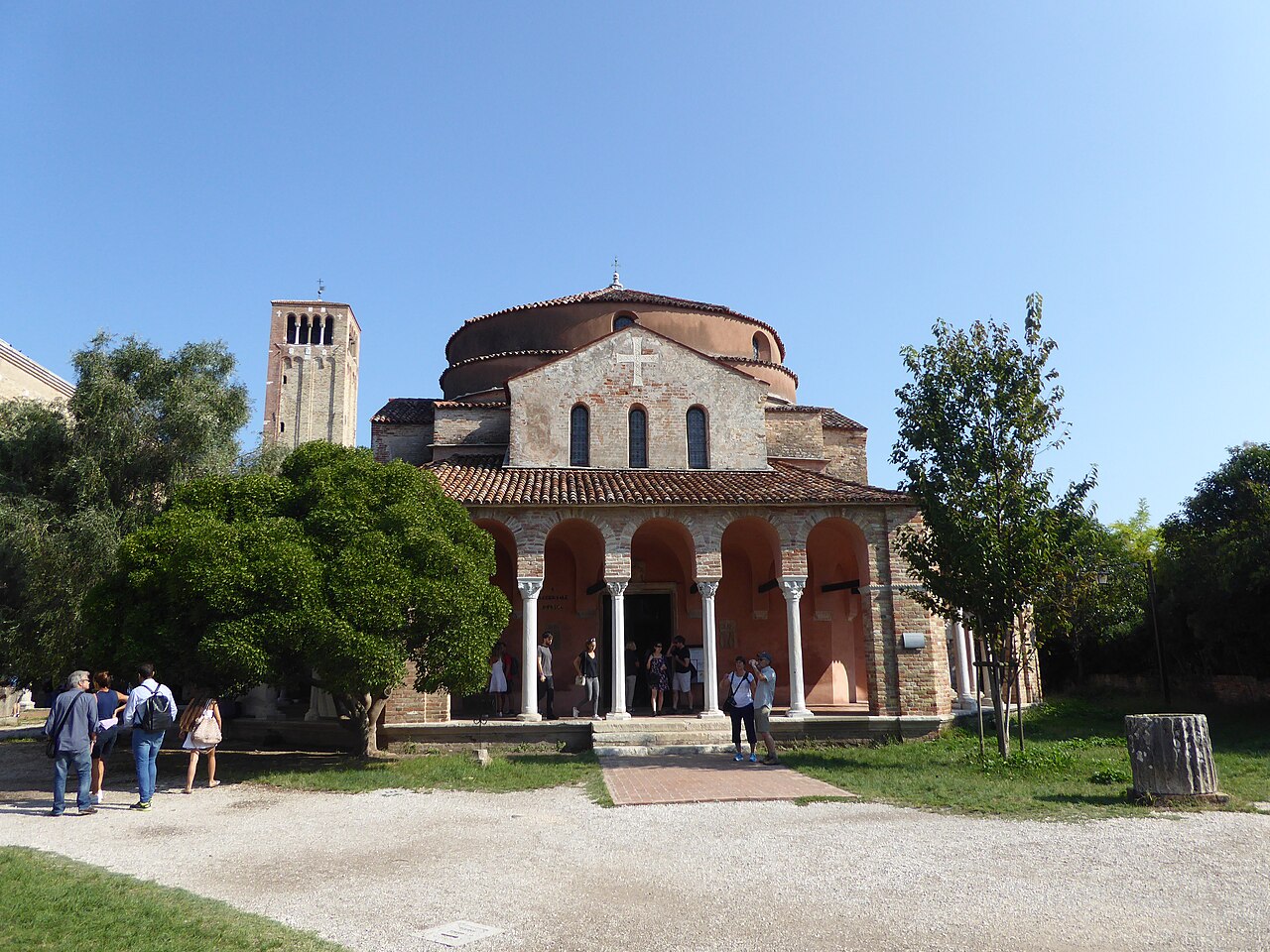
Beside the cathedral stands the Church of Santa Fosca, whose present appearance largely dates from the eleventh and twelfth centuries. Its centralised Greek-cross plan, rounded forms and portico supported by columns make it one of the most distinctive surviving buildings in the lagoon.
While the cathedral impresses through its long nave and mosaics, Santa Fosca offers an intimate example of the region’s Byzantine architectural connections.
Why did Torcello decline and become so quiet?
Torcello’s decline was not the result of one catastrophe. As Venice’s political and economic activities became concentrated in the Rialto area, the old centres of the northern lagoon gradually lost influence. Environmental change played a major part too.
Silting channels, marsh formation, changing water conditions and the spread of diseases associated with unhealthy wetlands made living and trading here more difficult. The decline intensified from around the fifteenth century; inhabitants moved elsewhere, buildings deteriorated and some valuable construction materials were reused.
The bishopric gradually shifted its activities to Murano and was finally suppressed in 1818. Paradoxically, the demographic decline helped preserve the medieval character of the cathedral and Santa Fosca, which escaped many later architectural transformations common elsewhere in Venice.
The Museum of Torcello: the island’s history through archaeology
The Museo di Torcello occupies two buildings on the historic square: the Palazzo dell’Archivio, housing the archaeological collection, and the Gothic Palazzo del Consiglio, associated with the island’s former civic government and today containing medieval art.
The museum’s origins date to 1870, when Luigi Torelli began collecting and protecting material from Torcello, nearby islands and the area of ancient Altino. Objects found in the lagoon help visitors understand the transition between the Roman world and early medieval Venice.
The museum is open according to a published seasonal timetable, normally closed on Mondays. Check the official Museo di Torcello website before visiting.
Attila’s Throne: history or legend?
In the small square near the churches stands the famous “Throne of Attila”, a rough-hewn stone seat that has become a popular symbol of Torcello.
Legend connects it to Attila, king of the Huns, but there is no reliable historical evidence that he ever used this seat. It is more plausibly associated with medieval civic or ecclesiastical authority, perhaps a magistrate or bishop.
The name survives because legends are part of the way communities remember places—even when the historical explanation is different.
The Devil’s Bridge: a mysterious bridge without parapets
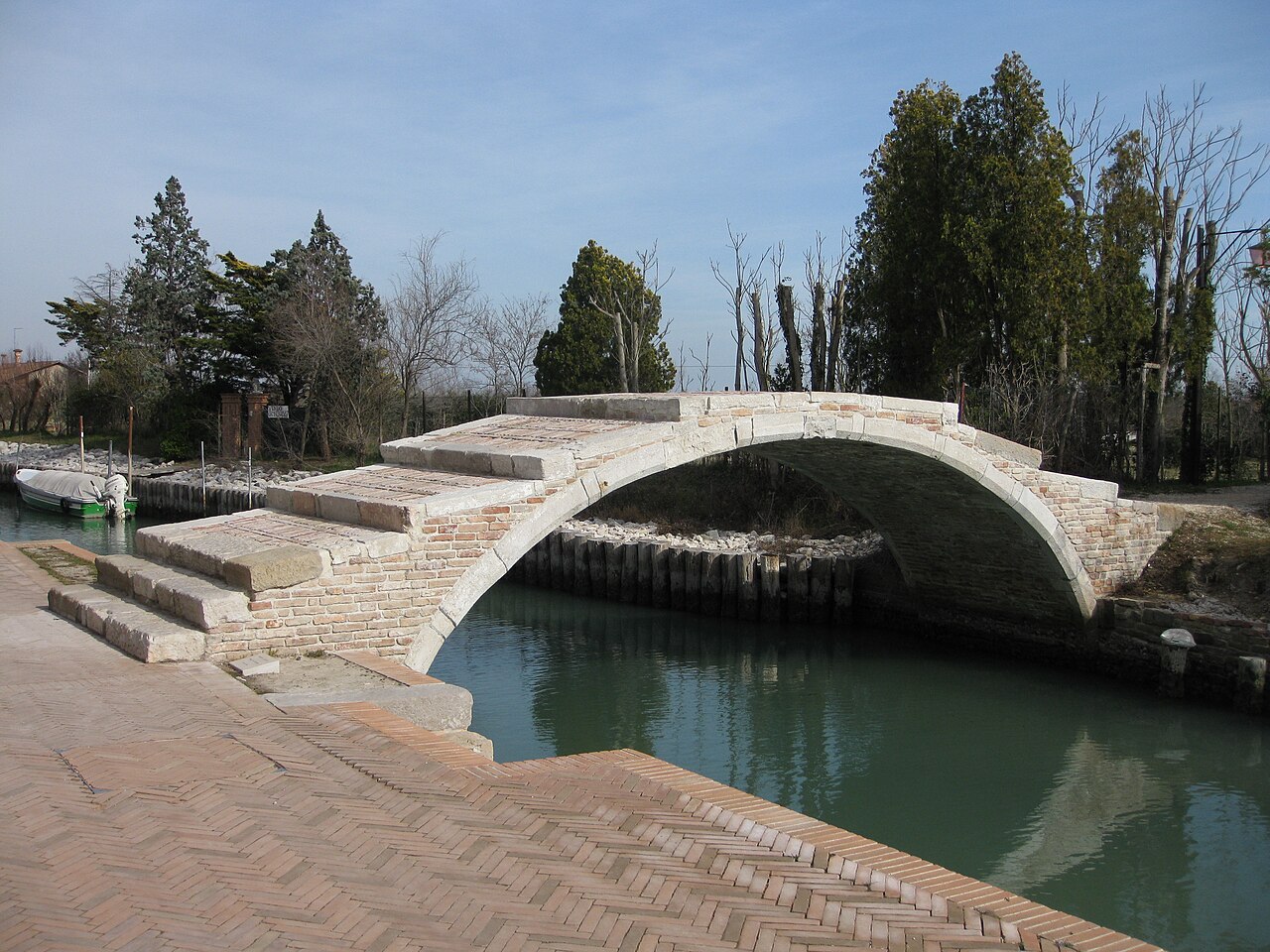
The walk from the boat landing to Torcello’s historic centre crosses the area of the Ponte del Diavolo (Devil’s Bridge). Its lack of parapets preserves the appearance of early Venetian bridges, when low stone arches crossed the canals without side barriers.
Stories about the origin of its name include a local family nickname and a supernatural tale involving a witch and two lovers. These are folklore, not documented events, and should be enjoyed as part of the island’s oral tradition.
Visiting Torcello today: what should you know?
Torcello can be reached by public transport from Venice using ACTV line 12 towards Burano, followed by line 9 between Burano and Torcello, subject to the current timetable. From the island’s landing stage, a path leads towards the church complex, museum and village area.
The cathedral, bell tower and museum have separate admission arrangements. The Patriarchate publishes seasonal hours for the cathedral and bell tower, while the museum maintains its own schedule; both may change for religious services, restoration or special events.
A visit is best approached at an unhurried pace. Beyond its monuments, Torcello offers a chance to appreciate the quiet channels, vegetation and salt marshes that shaped the earliest settlements.
Explore Torcello and the northern lagoon by private boat
The difference between Torcello’s past and present makes it especially rewarding to explore within the landscape of the northern Venetian Lagoon. Seen from the water, its relationship with nearby Burano and Mazzorbo becomes clear, as does the historical importance of routes that connected early lagoon communities.
Would you like to include the island in a tailored excursion? Discover Torcello by private boat or contact us to plan a route. Visits inside monuments and museum admission are arranged separately, and stopping points depend on navigation and landing permissions.
Continue with our collection History of the Venetian Lagoon Islands.
Frequently asked questions
Was Torcello inhabited before Venice?
Yes. Torcello had settlements in antiquity and became an important centre in the early Middle Ages, particularly in the seventh century, before Rialto emerged as Venice’s dominant centre.
Why is Torcello’s cathedral famous?
Founded in 639 and rebuilt in its present form in 1008, the Cathedral of Santa Maria Assunta preserves important Byzantine-style mosaics, including the Last Judgement.
Did Attila really sit on the stone throne in Torcello?
There is no reliable evidence. The name “Attila’s Throne” is a legend; the seat probably had a medieval institutional function.
How do you get to Torcello from Venice?
Public waterbus routes normally use line 12 to Burano and line 9 to Torcello. For a flexible alternative, you can arrange a private boat itinerary; check current schedules and admission conditions.
Explore the lagoon by boat: discover our private boat tour in the Venetian Lagoon. Routes are customisable; stops and island access depend on permissions and navigation conditions.
Historical sources and photographic credits
Sources: Museo di Torcello – History of the island; Museo di Torcello – Museum history; Patriarchate of Venice – Basilica and Bell Tower; Venezia Unica – Venice’s origins. Featured image: Zairon / Wikimedia Commons, CC BY-SA 4.0, resized to 1280 px. Other photos credited in captions.