Not every island in the Venetian Lagoon has medieval origins. Sacca Sessola was built by people in the nineteenth century, became a centre for the treatment of infectious and respiratory diseases, and is now a luxury hotel island known as Isola delle Rose. Behind its gardens and restored buildings is a history that connects Venice’s maritime engineering, public healthcare and contemporary tourism.
Understanding the history of Sacca Sessola means discovering how an artificial island created for practical purposes became one of the most distinctive places in the southern Venetian Lagoon.
Where is Sacca Sessola, or Isola delle Rose?
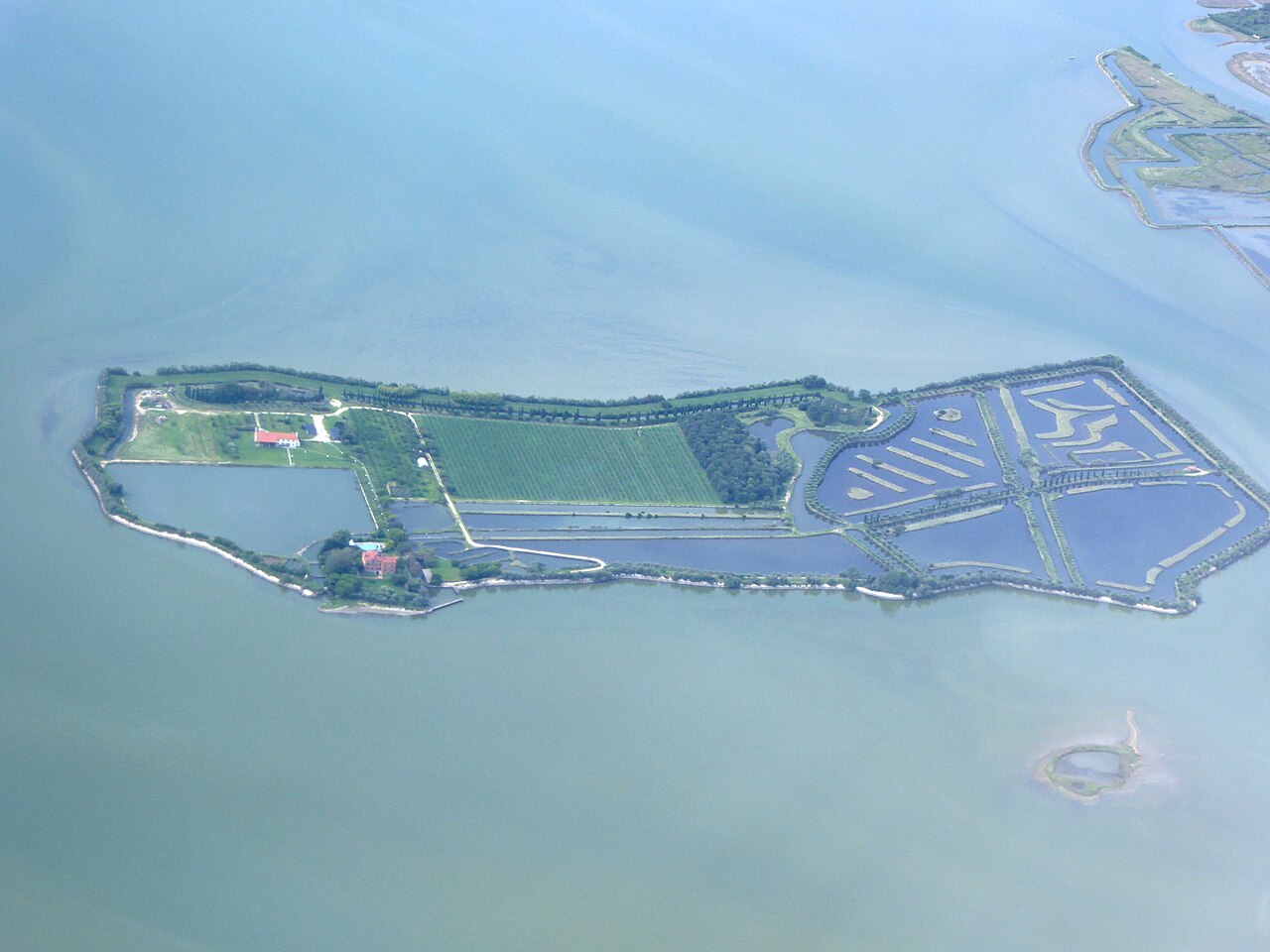
Sacca Sessola is in the southern Venetian Lagoon, south of the Giudecca and near San Clemente. Its shores overlook the waterways that connect the historic centre with the southern lagoon. The island is commonly described as covering about 16 hectares, although some accounts quote smaller areas, depending on what is measured.
Today it is widely advertised as Isola delle Rose, the name used by JW Marriott Venice Resort & Spa. The original Venetian place name is Sacca Sessola. The two names refer to the same island, but they belong to different chapters of its history.
Why is Sacca Sessola an artificial island?
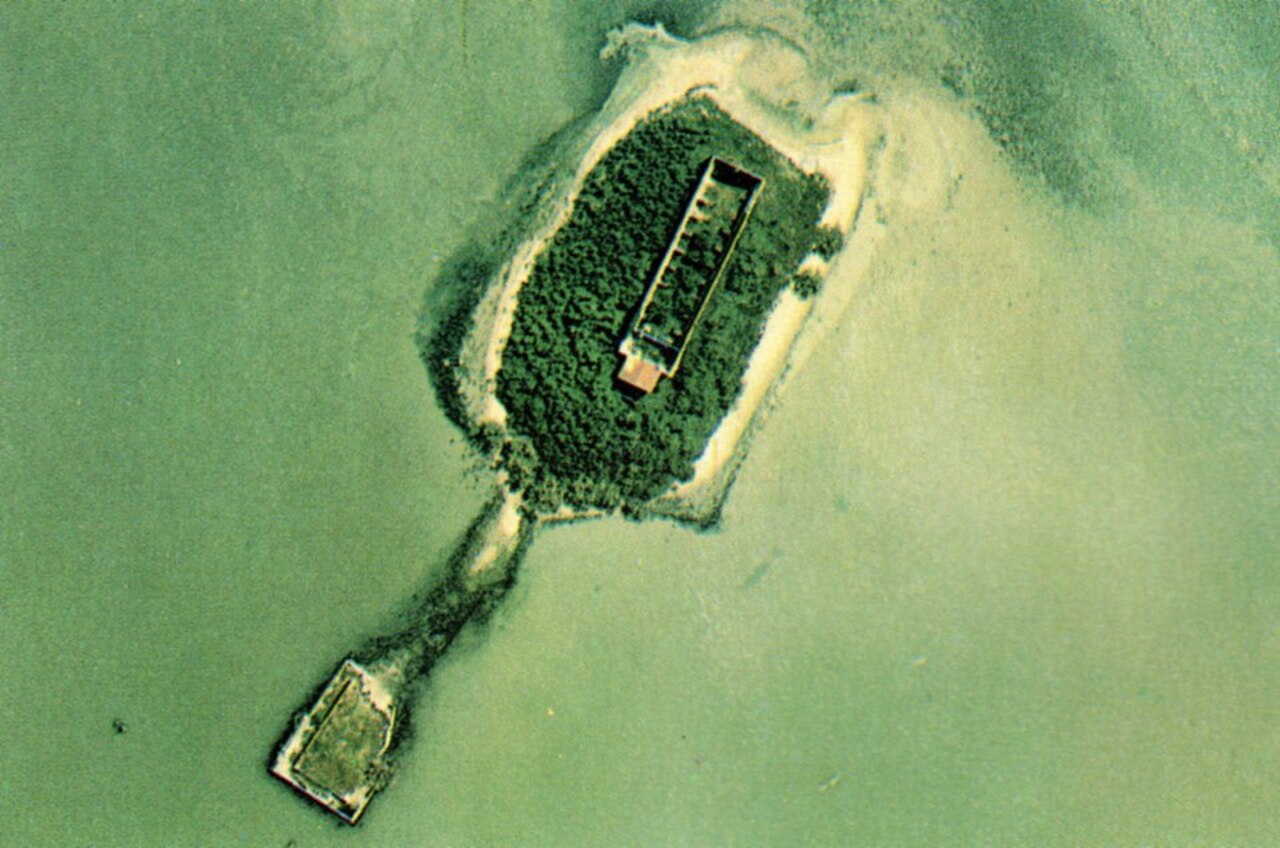
Unlike many islands that developed from early lagoon settlements, Sacca Sessola was created through land reclamation between approximately 1860 and 1870. Excavated earth and dredged material from the canals and works connected with Venice’s commercial port were deposited in this area of the lagoon.
Those deposits gradually created a stable area of land. This is why Sacca Sessola is often described as one of the lagoon’s youngest islands. Its shape is not an ancient natural feature: it reflects the changing demands of transport, navigation and land use in nineteenth-century Venice.
Historical sources commonly link the reclaimed material with work on the maritime station and the Santa Marta commercial harbour. Rather than a romantic origin story, its creation was part of Venice’s adaptation to modern shipping.
What does the name Sacca Sessola mean?
In Venetian lagoon terminology, sacca can describe an enclosed or sheltered stretch of water or land associated with it. Sessola is a Venetian word for a small scoop used to remove water from a boat.
Architectural sources have connected the island’s shape with that tool. This interpretation explains a practical local name rooted in lagoon life, rather than the later garden imagery associated with Isola delle Rose.
Preserving the name Sacca Sessola is important because it keeps the memory of the island’s artificial origins and its working relationship with the city.
1875–1892: from reclaimed land to petroleum storage
At first the new island was used for practical storage rather than housing or leisure. A documented agreement dated 2 July 1875 transferred it to the City of Venice, which used parts of the area for general petroleum storage sheds.
Keeping such materials away from the densely built historic centre was sensible for a maritime city. This early industrial use continued until approximately 1892, when the oil-depot function was discontinued.
The end of petroleum storage opened the way for a very different purpose: Venice needed space for modern health facilities outside its crowded urban districts.
Why did Venice choose the island for healthcare?
In the nineteenth and early twentieth centuries, the Venetian Lagoon was used to separate some medical activities from the city. The water was a physical boundary that could help manage contagious illnesses, while an island also offered space, light and air for patients.
After the depot closed, authorities considered a hospital for infectious diseases. Some of the existing sheds were adapted for medical purposes in 1904, and work on the initial facilities was completed in the following years.
The island’s location was both an advantage and a challenge. Patients and staff relied on boats to travel, and the hospital had to organise its own essential services.
Cholera and the early sanitary buildings
During the cholera epidemic of 1911, the island’s healthcare facilities were part of Venice’s response to infectious diseases. Early buildings and temporary arrangements served changing needs as the city developed a more organised medical infrastructure.
These events are sometimes simplified into a statement that Sacca Sessola was always a “lazaretto”. That would be misleading: the island was created in the nineteenth century and developed through several distinct phases of public healthcare.
It is also different from Lazzaretto Vecchio and Lazzaretto Nuovo, whose plague and quarantine histories began centuries earlier.
1914: the San Marco Hospital and tuberculosis treatment
By 1914, Sacca Sessola was home to the San Marco Hospital, developed for patients with pulmonary tuberculosis. Some patients were transferred from the former healthcare facilities on the island of La Grazia.
Its operation was interrupted during the First World War, with accounts recording a reopening in 1920. As the needs of public healthcare changed, the island gained additional spaces for patients, staff and everyday activities.
Tuberculosis was a major public-health concern in Europe. Before effective antibiotic treatments became widespread, sanatoria often emphasised fresh air, sunlight, rest and carefully organised routines.
A hospital island with gardens, services and its own community
Sacca Sessola gradually developed into much more than a collection of hospital wards. In the 1920s, buildings included a church, recreational areas and spaces associated with agriculture and daily life.
Patients and staff occupied a largely self-contained environment. The island needed infrastructure for heating, supplies, maintenance and transport, while its open spaces became part of the therapeutic landscape.
The gardens associated with the island today therefore have an important earlier history. They were not created exclusively for a luxury resort: green areas had long been part of the medical institution’s design and operation.
1936: the Achille De Giovanni Pneumological Hospital opens
The decisive transformation took place in the 1930s. A large, modern hospital complex was designed with symmetrical wings and extensive accommodation for patients. Construction began around 1931.
In 1936, King Vittorio Emanuele III inaugurated the Achille De Giovanni Pneumological Hospital, named after the Italian physician known for his work in clinical medicine.
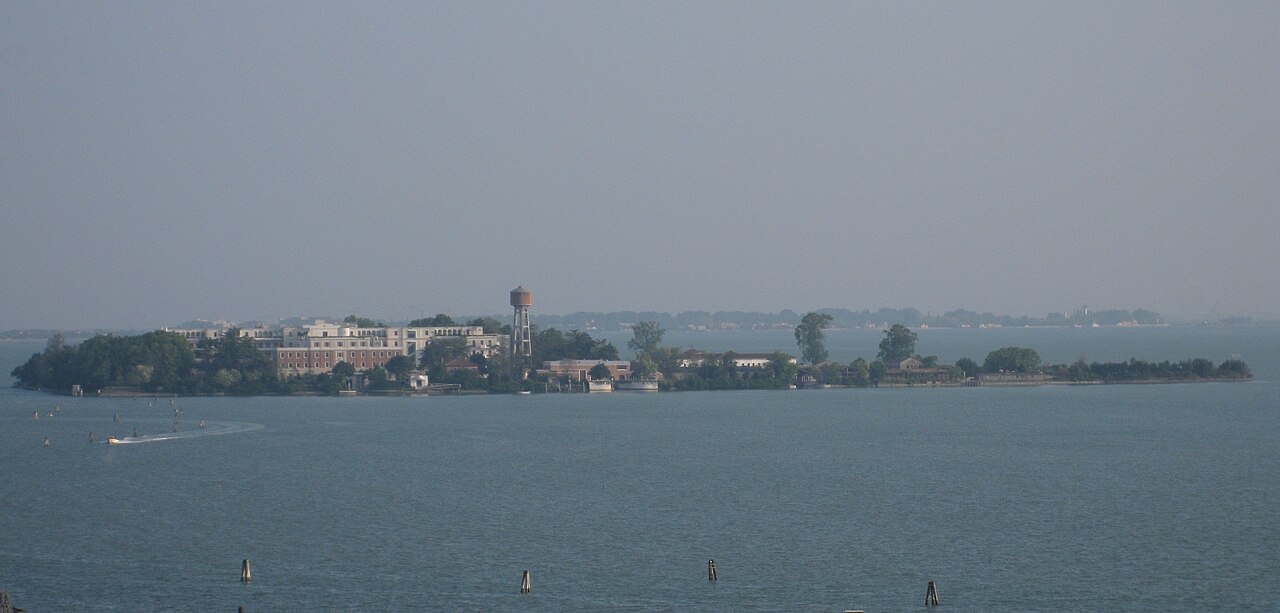
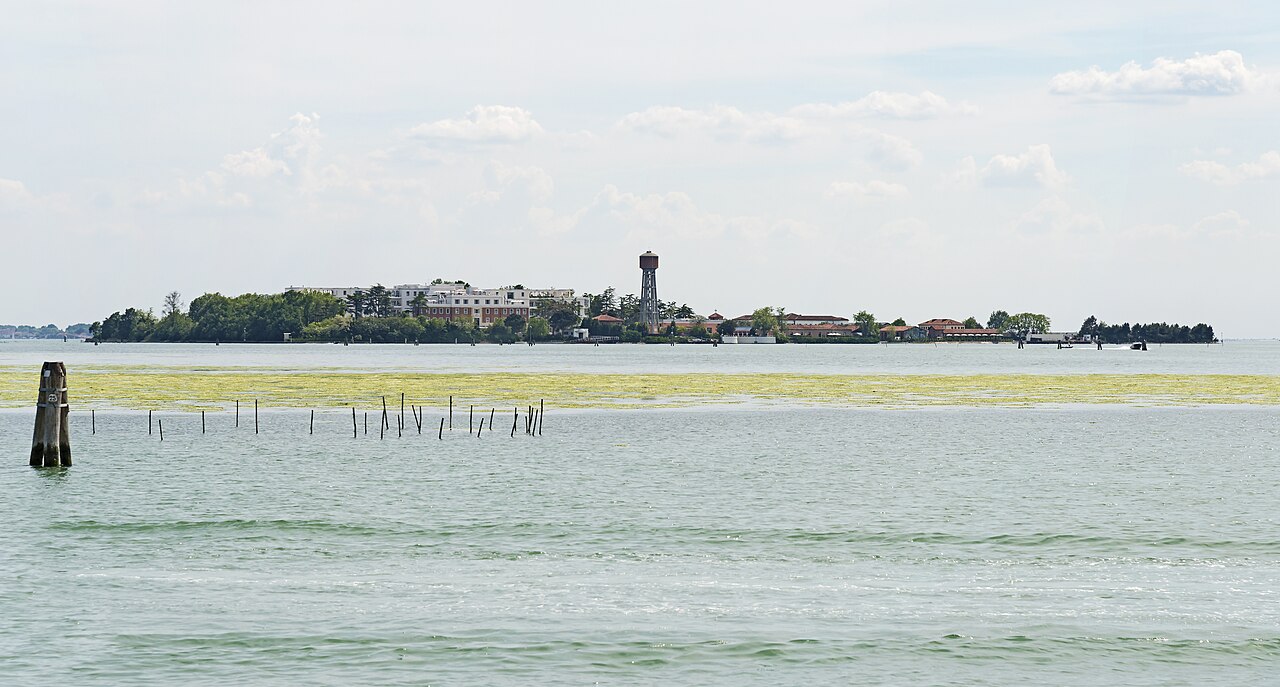
The building reflected the principles of hospital architecture of the period: large windows, bright spaces and terraces to make use of air and sunlight. Its central structure became a defining feature of Sacca Sessola’s skyline.
The surviving hospital architecture is particularly important because it explains the form of the buildings that were later converted into the current hotel.
What was everyday life like at the sanatorium?
The medical complex functioned almost like a small village. Historical accounts mention a church, gardens, workshops, technical services, a water tower and recreational areas. The island also supported agricultural activities and facilities for the people who lived and worked there.
This organisation made sense for a hospital separated from mainland streets by water. Deliveries, medical work, meals and maintenance needed careful planning, while patients often spent considerable periods away from their families.
The story deserves a respectful approach. Behind the historic facades were real patients and healthcare workers, not simply the picturesque “past life” of a future resort.
1979: the hospital closes and the island declines
The Achille De Giovanni hospital ceased its activities in 1979. By then treatment practices and the organisation of healthcare had changed considerably, making the former sanatorium model increasingly outdated.
Without its original function, the buildings began to deteriorate. Some spaces remained unused for many years, while vegetation expanded across parts of the island.
In 1981, ownership passed back to the City of Venice under conditions related to public healthcare. In 1992, the municipality entrusted the island to a centre for marine science and technology research. Neither step immediately produced the complete restoration that would come later.
The first hotel conversion and an unfinished project
During the late 1990s and early 2000s, Sacca Sessola became the focus of plans to convert the former hospital into hospitality accommodation. Initial investment and renovation work began, but a previous large hotel project was interrupted by financial difficulties.
The unused hotel complex subsequently became a subject of local debate. Its history is not therefore a simple sequence from abandoned hospital straight to the JW Marriott resort: an earlier redevelopment attempt had already changed some spaces without achieving a lasting opening.
2015: JW Marriott opens on the Isola delle Rose
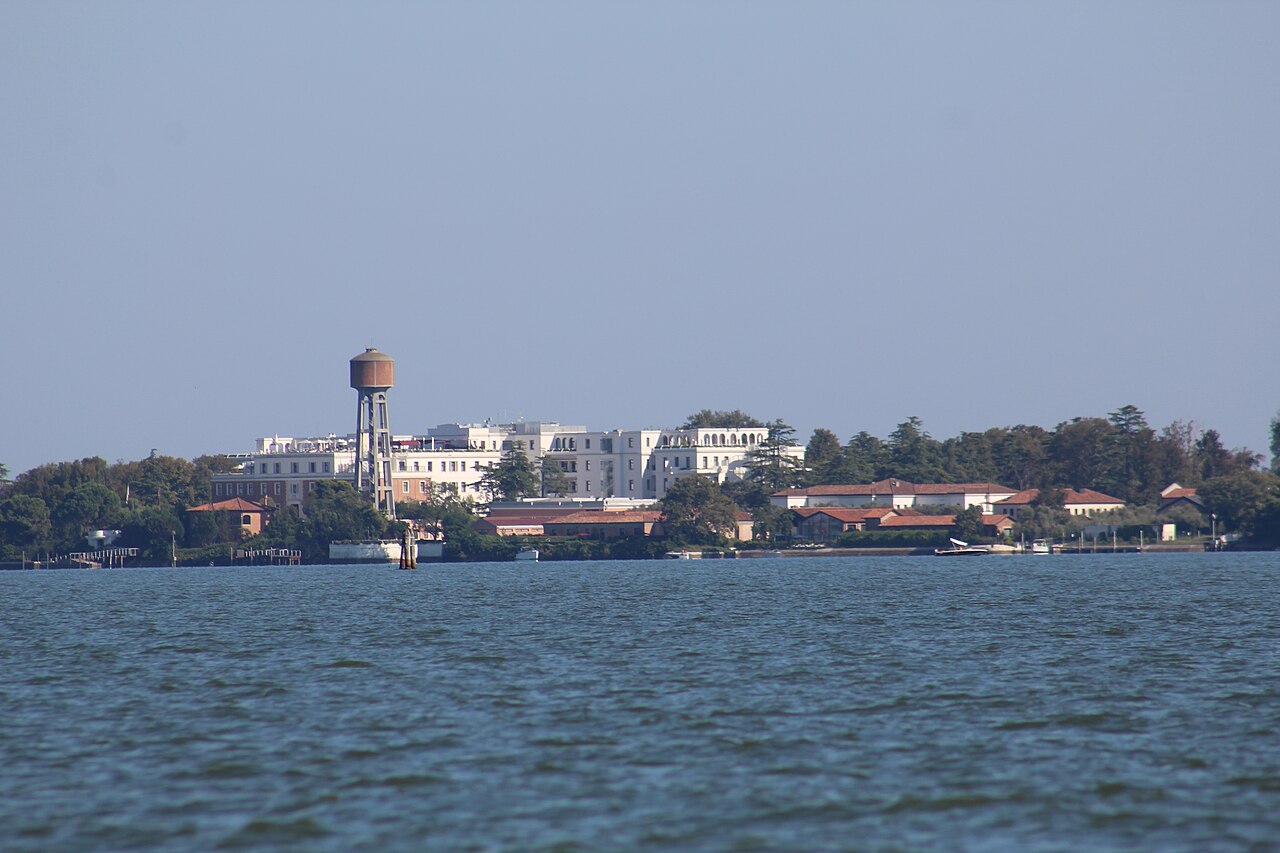
A new chapter began in 2015, when the renovated site opened as JW Marriott Venice Resort & Spa. The architectural conversion was designed by Matteo Thun & Partners, with a strategy that introduced new spaces while retaining significant elements of the original hospital architecture.
Former healthcare buildings gained new functions as accommodation, restaurants, guest facilities and event spaces. The transformation also re-established the relationship between the island’s buildings, gardens and lagoon waterfront.
The commercial name Isola delle Rose highlights the landscaped setting. It is not the historical name with which the artificial island was known for most of its existence.
Why the gardens are part of the island’s heritage
Sacca Sessola’s green landscape forms a significant part of its identity. Over time, the healthcare institution planted trees and developed areas for walking, cultivation and recreation. The later hotel project restored and adapted the grounds.
Today the island is associated with gardens, olive trees, paths and cultivated spaces, but not all of these originated with the resort. They reflect an unusually long history of landscape design on an island that itself was made by human intervention.
The story of Sacca Sessola is therefore also a story of environmental transformation: dredged material became solid land, a medical campus developed gardens, and the former hospital landscape was adapted for new uses.
Is Sacca Sessola open to the public?
Sacca Sessola is an island managed primarily as a hotel resort, not an ordinary public neighbourhood with free access to all areas. Guests and people with confirmed restaurant, spa, event or other arrangements may be able to visit under the operator’s conditions. Historical reports have also discussed public-access provisions, but they should not be interpreted as permission to enter every part of the resort at any time.
The resort advertises a complimentary shuttle boat between the Giardini Reali landing near St Mark’s Square and the island, with service arrangements that may change by season or event. It is a hotel service, not a regular ACTV public waterbus line; check eligibility and reservation requirements.
For up-to-date arrangements see the official hotel website. A private lagoon tour cannot promise an unauthorised landing or access to the property.
See Sacca Sessola from a private boat in Venice
From the water, Sacca Sessola’s long hospital-derived facades can be seen in their lagoon setting. Its story becomes especially interesting alongside San Clemente, another island that changed from religious and healthcare functions to private hospitality, and La Certosa, whose former military landscape has a different contemporary use.
Discover our private boat experiences among Venice’s islands or contact us to discuss a customised route. Navigation and viewing opportunities depend on conditions; access to resort property requires separate arrangements.
Read more in the collection History of the Venetian Lagoon Islands.
Frequently asked questions
Is Sacca Sessola a natural island?
No. It was created artificially around 1860–1870 from dredged material linked to the development of Venice’s port and navigation channels.
What hospital was on Sacca Sessola?
The island housed the San Marco tuberculosis hospital and later the Achille De Giovanni Pneumological Hospital, inaugurated in 1936 and closed in 1979.
Why is Sacca Sessola called Isola delle Rose?
Isola delle Rose is the name used for the modern resort and landscaped island. Sacca Sessola is the historical Venetian name.
Can you visit Sacca Sessola by private boat?
Its shoreline can be viewed from navigable lagoon waters. Landing and entry to the hotel estate require arrangements and permission from the operator.
Historical sources and image credits
Sources: Ecosurvey – history and former petroleum storage; Nautica Report – historical chronology of Sacca Sessola; Ceramica.info – Matteo Thun architectural conversion; La Nuova Venezia – from sanatorium to resort; official resort information. Featured photograph: Godromil / Wikimedia Commons, CC0 1.0, resized to 1280 px. Other images credited in captions.