Poveglia is one of the Venetian Lagoon’s most talked-about islands, but its real history is more interesting than its reputation as a “haunted island”. Long before stories of ghosts appeared online, Poveglia had been a medieval village, a maritime outpost, a quarantine station and a healthcare facility. After decades of abandonment, part of the island is now being returned to community use.
Discovering the history of Poveglia island means looking beyond legends to understand Venice’s relationship with the sea, public health and the preservation of its smaller islands.
Where is Poveglia in Venice?
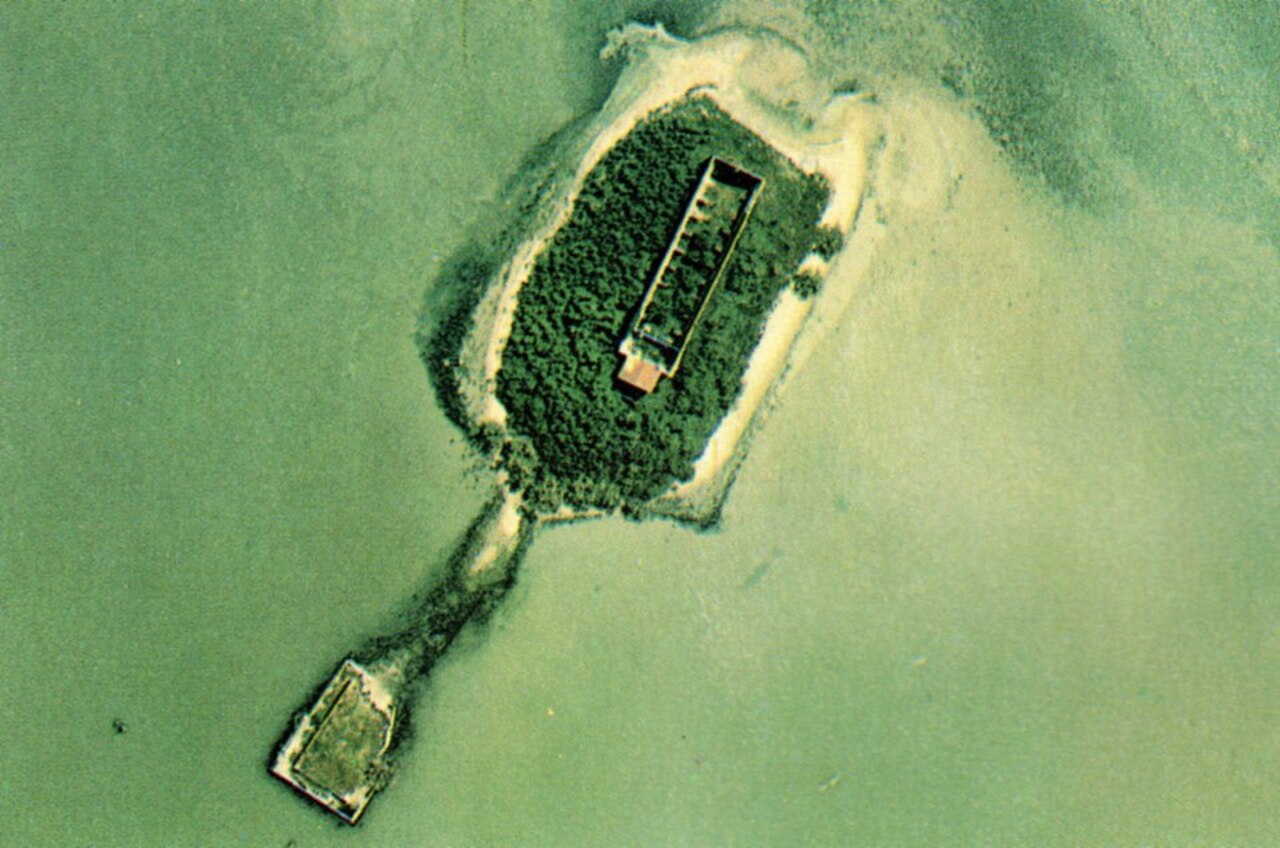
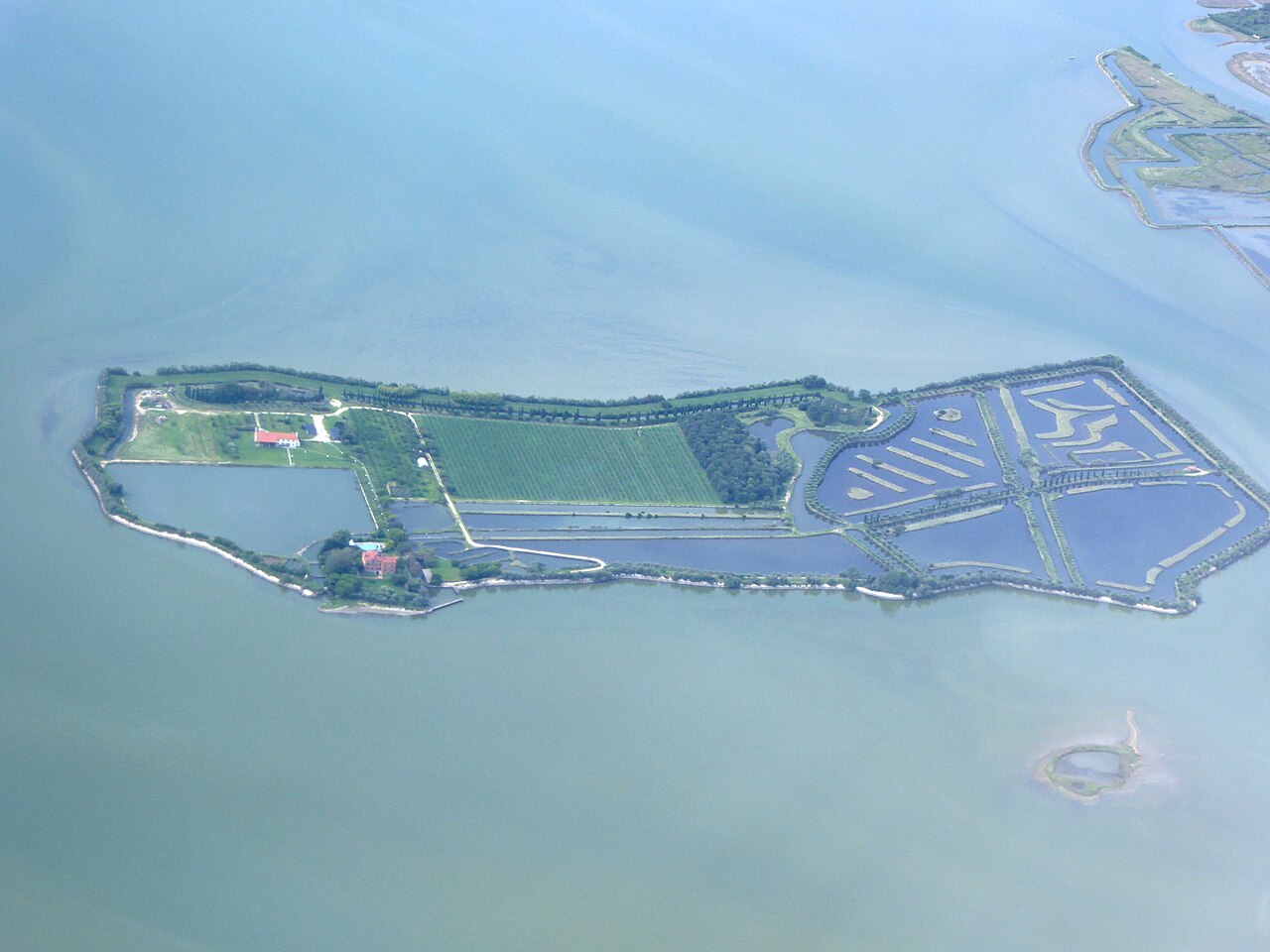
Poveglia lies in the southern Venetian Lagoon, close to the Lido and the waterway historically connecting Venice with the Malamocco inlet. Its outline includes a built-up historic section, a greener northern section and a neighbouring fortified octagonal structure.
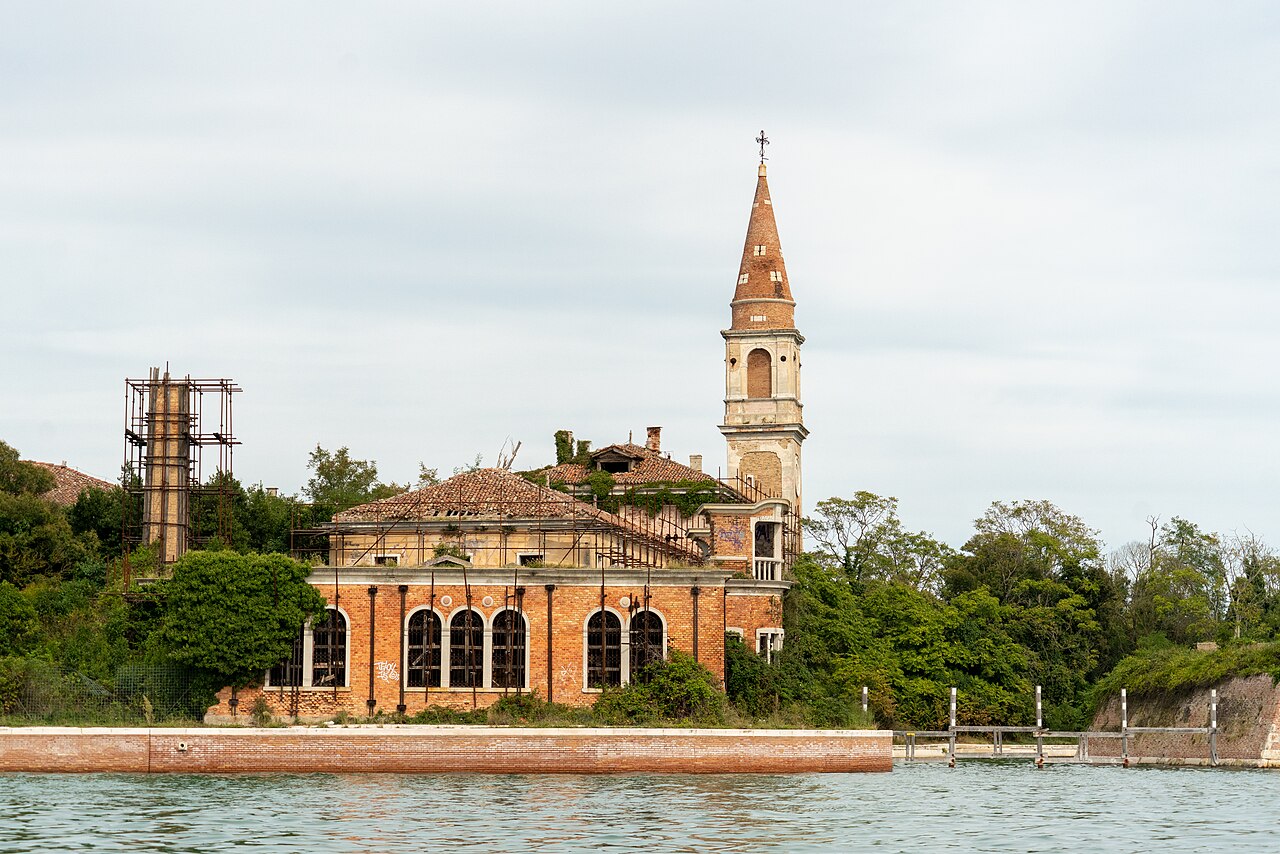
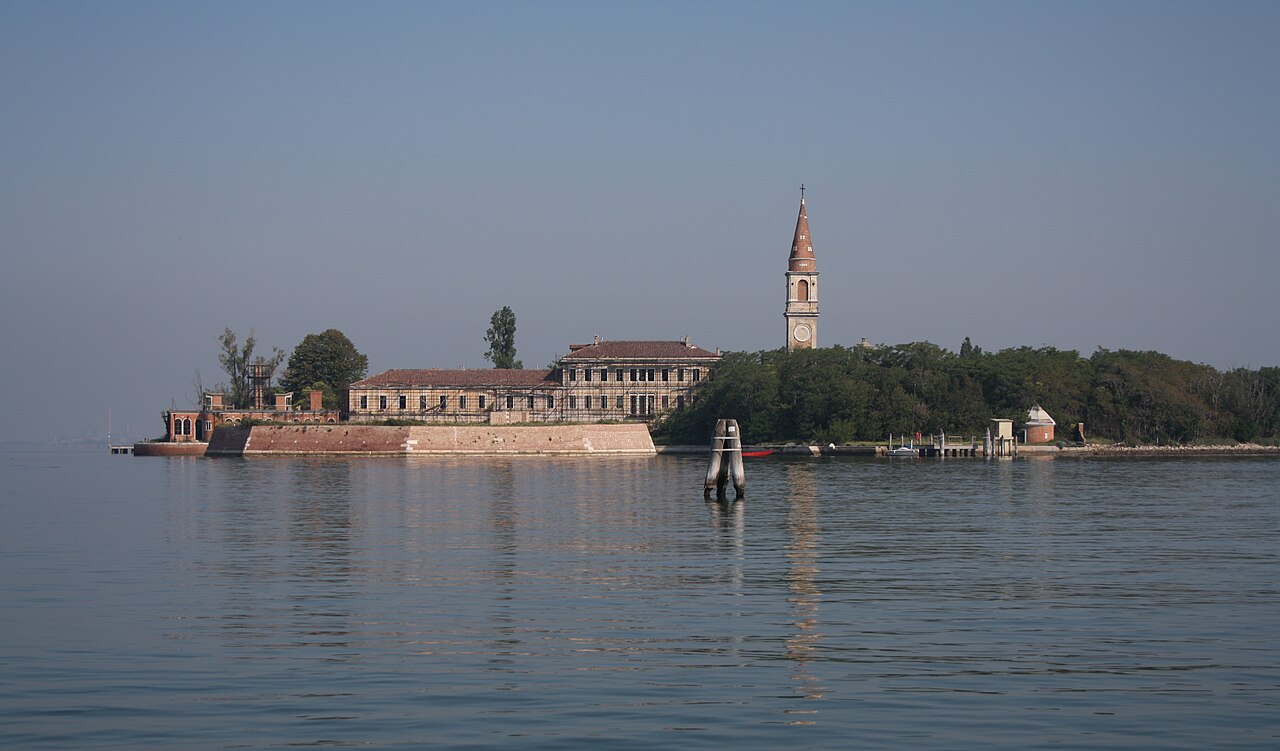
From a boat, the most recognisable features are the old bell tower, long abandoned buildings, walls and thick vegetation. The different parts of the island do not all have the same access rules: a distinction that matters to anyone considering a visit.
Popilia: an early settlement before modern Venice
The Ministry of Culture records Popilia as an ancient name for Poveglia; sixteenth-century maps also use Poveggia. Following the political upheavals and Lombard incursions of the sixth century, communities increasingly settled on the islands and coastal areas of the lagoon.
Poveglia became a small but economically active settlement. Its inhabitants worked in fishing, salt production and trade, with connections to Pellestrina and Chioggia. A church dedicated to San Vitale served the community.
Its story belongs to the complex beginnings of lagoon civilisation: Venice did not arise in a single day, but through the gradual growth of interconnected settlements.
The Doge Pietro Tradonico and the settlers of 864
One particularly unusual episode dates to 864. After the killing of the doge Pietro Tradonico, the families of approximately 200 of his loyal servants were reportedly given land and lagoon rights on Poveglia by his successor.
The account, recorded in historical summaries by the Italian Ministry of Culture, reminds us that Poveglia once had a resident community, its own economic interests and a place within the politics of the Venetian duchy. It was not always an isolated medical island.
The War of Chioggia and the end of the medieval village
Poveglia’s fortunes changed during the War of Chioggia (1378–1381), fought between Venice and Genoa. The population was evacuated towards Venice for military reasons, and the settlement was damaged during the conflict.
Afterwards, the island did not recover its former residential importance. Families who had moved away preserved a sense of Poveglian identity, but the built settlement was not restored on the same scale.
The Venetian Republic made later attempts to find a new use for the island, including proposals involving the Camaldolese in 1527 and descendants of former residents in 1661. Neither led to the island’s full repopulation.
From maritime station to quarantine island
Poveglia’s position near maritime routes made it useful for boats and cargo. It first served for vessel stops, equipment storage and related maritime activities. From 1782, according to the Ministry of Culture, it was increasingly used by the Venetian health authorities for checks on people and goods.
In 1793, following the arrival of a vessel carrying plague infection, the Republic organised an emergency quarantine station on Poveglia. Venetian public-health measures sought to isolate the outbreak and prevent its spread to the city. The episode is described both in Treccani’s History of Venice and in academic research at Ca’ Foscari University.
Poveglia continued to perform maritime sanitary and quarantine functions through the nineteenth century and into the twentieth century. This was a genuine and important part of its history, but it should not be confused with unsupported stories of hundreds of thousands of people secretly dying here.
Poveglia, Lazzaretto Vecchio and Lazzaretto Nuovo: what is the difference?
Venice developed several islands with distinct healthcare responsibilities. Lazzaretto Vecchio became a plague hospital in 1423; Lazzaretto Nuovo was assigned to preventive quarantine in 1468. Poveglia became especially relevant as a later maritime sanitary station in the eighteenth century.
These three histories are connected, but they are not interchangeable. Explore our documented histories of Lazzaretto Vecchio and Lazzaretto Nuovo to understand how Venice managed epidemics through its geography.
The bell tower, its clock and the octagonal fortification
The island’s familiar bell tower is a remnant of the former church of San Vitale. The church itself disappeared following changes during the Napoleonic period, while the tower survived because it was used as a navigation marker or lighthouse.
Its clock dates to 1745, according to the Ministry of Culture, and is now without hands. A separate octagonal fortification also recalls the defensive importance of the southern lagoon waterways. Seen from the water, these structures tell a story of faith, maritime traffic and defence rather than paranormal activity.
The twentieth-century healthcare facilities and closure in 1968
In the twentieth century, some buildings were adapted into a geriatric convalescent or long-stay healthcare facility. Historical accounts describe this period as beginning in the 1920s; the health-related activities ended in 1968. With the buildings no longer in use, the island gradually fell into disrepair.
This history is often confused with claims that Poveglia was a psychiatric asylum run by a doctor conducting cruel experiments. Those stories are not supported by reliable archival evidence and should not be repeated as facts. A geriatric medical institution is not the same thing as the fictional institution described in popular ghost stories.
For a documented account of the history of psychiatric care in Venice, see our article about San Clemente, which really operated a psychiatric hospital until 1992.
Is Poveglia really haunted? Where the legends came from
Online stories about Poveglia sometimes describe enormous plague burial grounds, a sadistic asylum director and ghosts in the abandoned buildings. Such claims became widespread through paranormal websites, videos and television programmes in the 2000s.
A peer-reviewed 2020 study by Federica Letizia Cavallo and Francesco Visentin at Ca’ Foscari University examined how these narratives developed and circulated. The research treats them as a cultural phenomenon, not as proof of supernatural events.
Poveglia’s real history includes epidemics, isolation and institutional care. That reality deserves attention without sensationalising the lives of patients or turning unverified claims into historical facts.
The 2014 auction and the campaign for a public island
After decades of disuse, proposals to transform Poveglia into a private destination raised questions about who should benefit from the lagoon’s public heritage. In 2014, a plan to offer a long-term lease prompted residents to organise the association Poveglia per tutti (“Poveglia for Everyone”).
Supporters raised funds to participate in the bidding process, but the proposed private concession did not proceed. The campaign continued with the aim of restoring green areas and creating a shared public space rather than simply turning the island into another exclusive resort.
2025–2026: a new beginning for the northern island
On 2 July 2025, Italy’s State Property Agency announced a six-year concession over the northern, predominantly green portion of Poveglia to the community association. According to the association, the concession began on 1 August 2025.
The goal is to create a community-managed lagoon park, protect biodiversity and develop shared cultural and environmental activities. Research and public participation involve partners including the University of Verona. By 2026, the association was organising activities and participatory work connected with the island’s future.
This does not mean the entire island has reopened. The built-up section remains under the State Property Agency and is subject to a ban on landing and entry. The northern area has a provisional landing stage that the association itself describes as not meeting modern safety standards. Any organised visit must therefore follow current arrangements and safety instructions.
Can you visit Poveglia today?
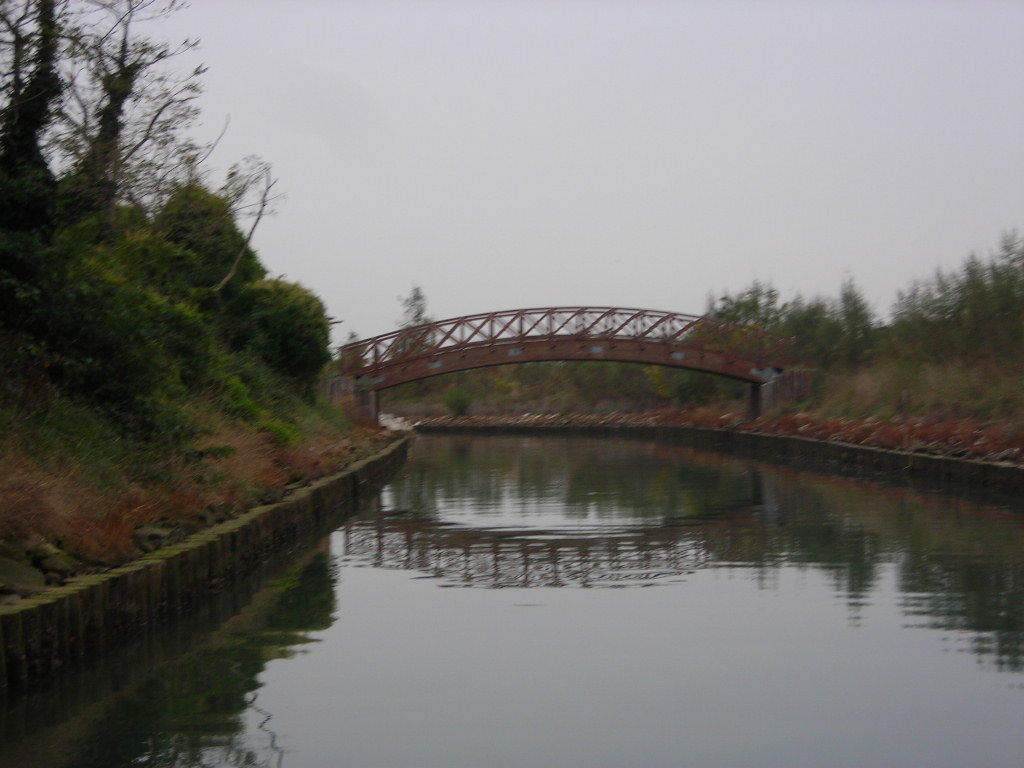
There is no regular public waterbus service to Poveglia. The association reports that the northern green part may be reached by privately arranged boat and during certain association events, subject to safety and access arrangements. The historic built-up area remains closed to entry and landing.
Before planning a landing, consult the official Poveglia per tutti FAQ and its event calendar. Do not enter derelict buildings, attempt unauthorised landings or assume a boat excursion includes access to any part of the island.
As of November 2026, it is more accurate to describe Poveglia as a heritage site undergoing a community-led recovery than as an entirely forbidden island or a fully open tourist attraction.
Discover the story of Poveglia from a private boat
Approaching Poveglia from the water offers views of the bell tower, the former sanitary buildings and the lagoon landscape that made the island historically important. Its authentic past—and the continuing effort to restore it—is compelling without invented horror stories.
Our Poveglia: The Ghost Island private boat tour offers an opportunity to explore this part of the lagoon from the water. For a broader itinerary, discover our private lagoon boat experiences or contact us. Any landing would require a separate, authorised arrangement and cannot be guaranteed.
Continue reading the collection History of the Venetian Lagoon Islands; for more on local traditions and popular legends, see our Poveglia tour insight.
Frequently asked questions
Was Poveglia originally an abandoned island?
No. It was a populated medieval settlement connected with fishing, salt production and Venetian political history before the War of Chioggia led to its evacuation.
Was Poveglia a plague quarantine station?
Yes. Venetian authorities used it for maritime health controls from the late eighteenth century and organised a documented emergency quarantine operation during a plague episode in 1793.
Did Poveglia really have a haunted psychiatric asylum?
The widely circulated stories of a sadistic asylum director and ghostly experiments lack reliable historical evidence. Documented twentieth-century healthcare use included a geriatric convalescent facility.
Can you land on Poveglia or visit its buildings?
The historic built-up area is not open to landing or visits. The northern green area has been under a community concession since 2025, but access depends on current arrangements, transport and safety conditions.
Historical sources and photo credits
Historical and current information: Italian Ministry of Culture – Poveglia and its octagon; Treccani – History of Venice and the 1793 lazzaretto; Cavallo and Visentin (2020), research on ghost narratives; State Property Agency – July 2025 concession; Poveglia per tutti – access FAQ. Featured photograph: Paul Colin Hennig / Wikimedia Commons, CC BY-SA 4.0, resized to 1280 px; other photographs credited above.