Families by Boat in Venice
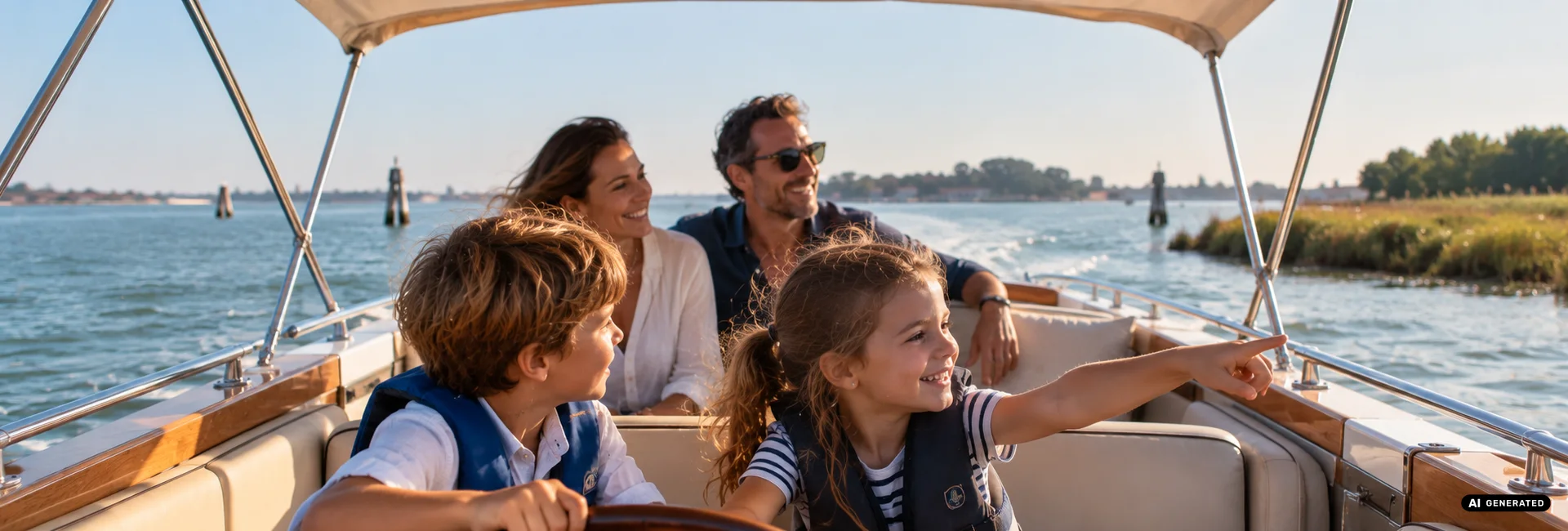
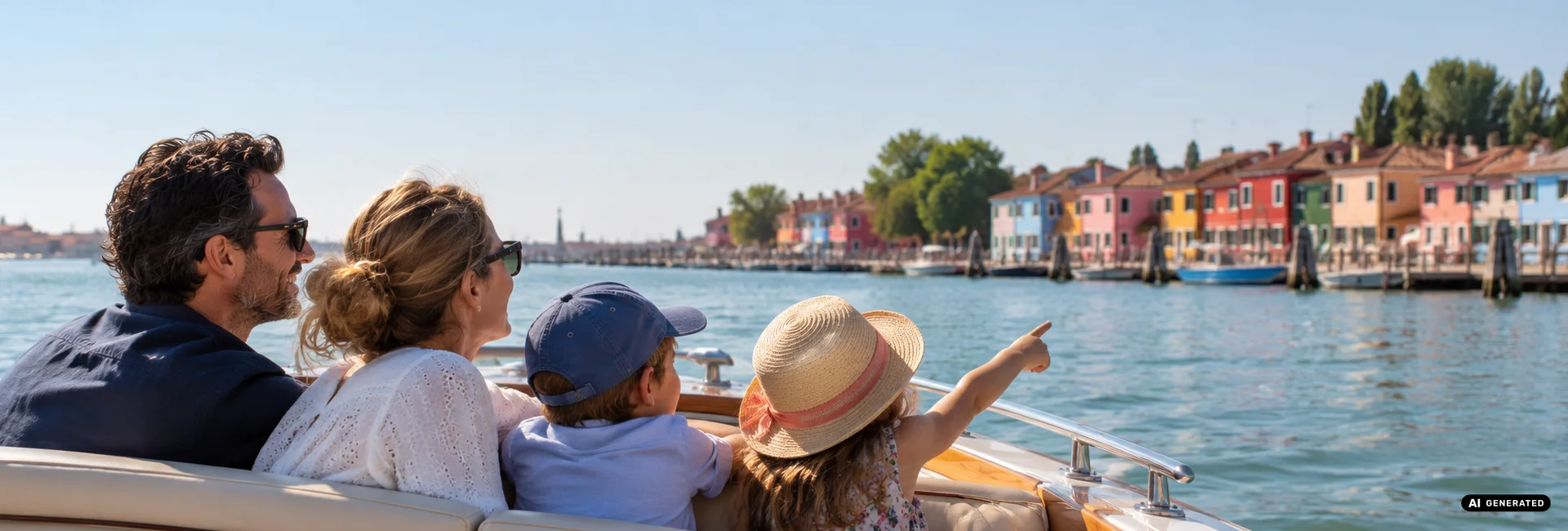
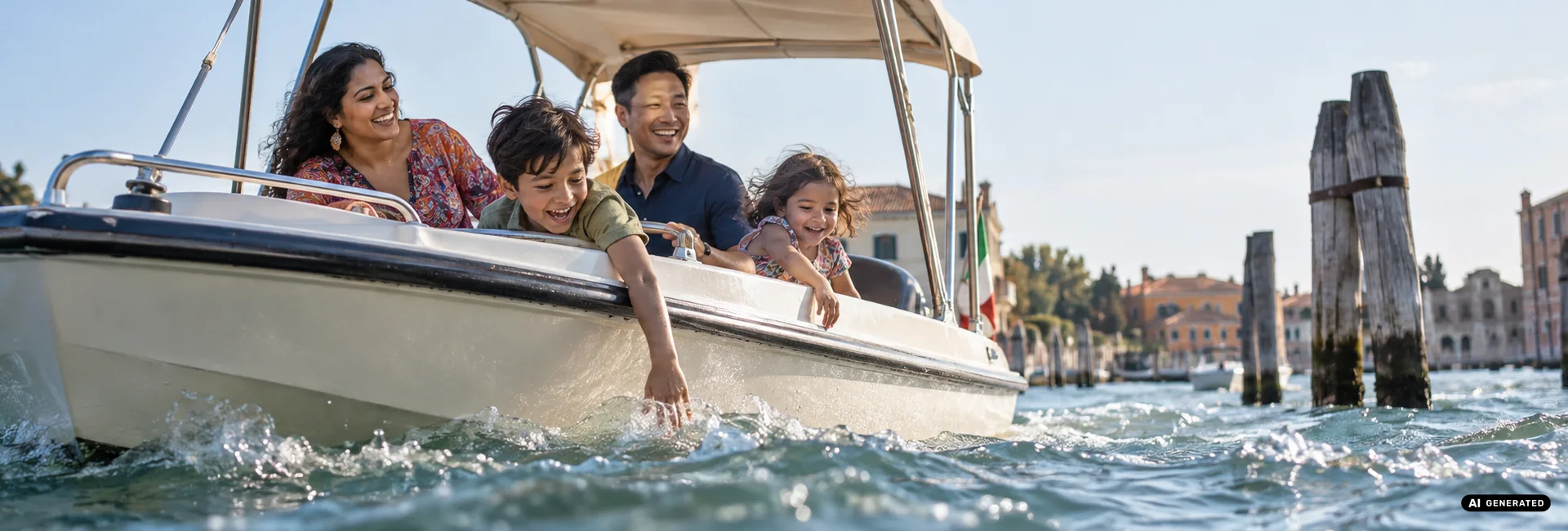
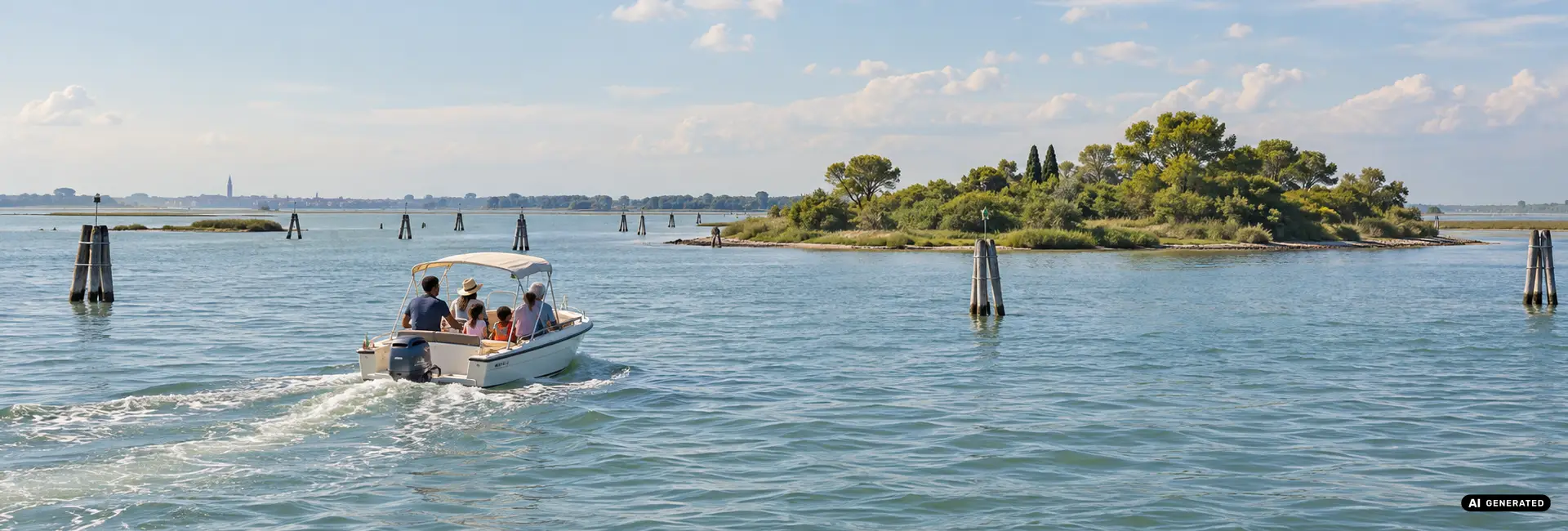
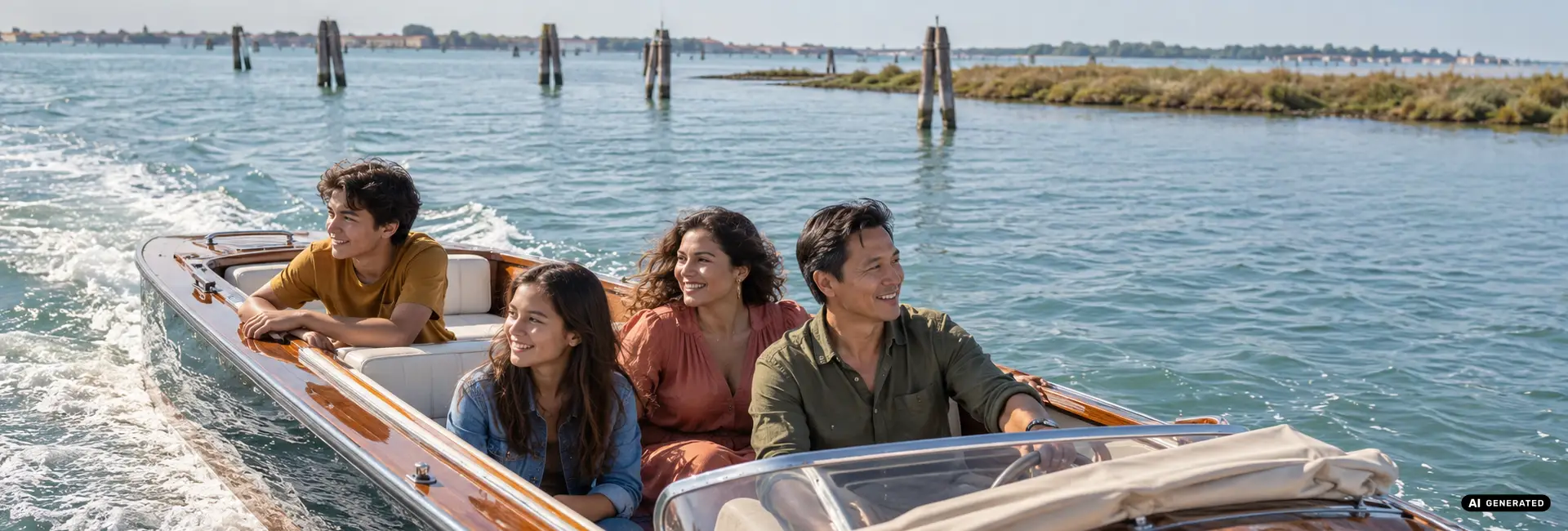
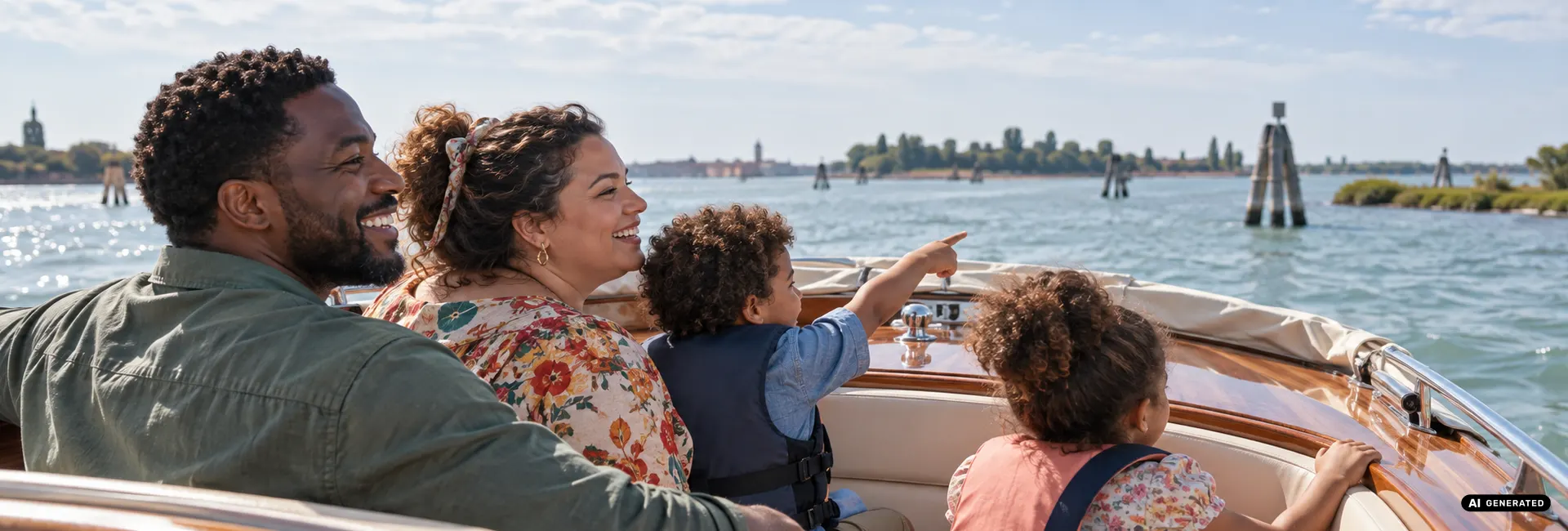
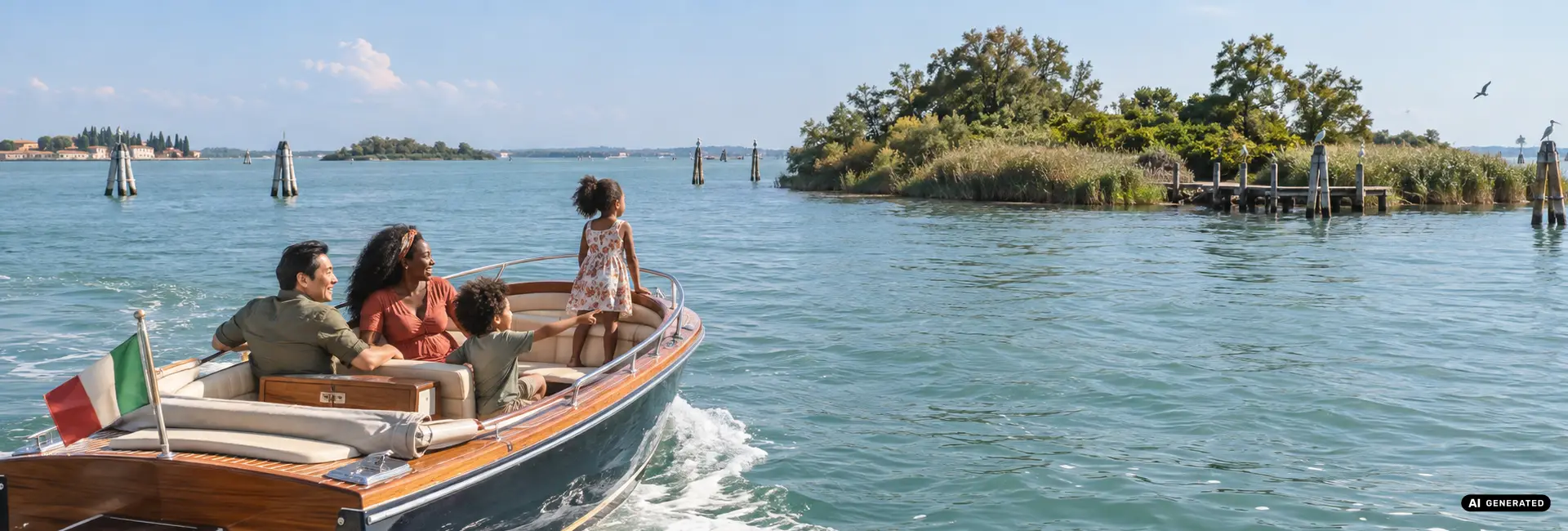
Choose the topic that best matches your family and the kind of day you would like to experience in Venice.
Family time on the lagoon should follow the children, not a checklist
Family travel in Venice becomes easier when the day can adapt to ages, curiosity and energy levels. A private boat creates a different rhythm from a fixed group excursion: parents can discuss priorities in advance and choose a route that makes sense for everyone.
There is no minimum age for our private tours. For younger children, the most important elements are often manageable duration, breaks and something concrete to observe. Older children and teenagers may respond better to challenges, photography, stories, swimming requests discussed with parents, or a more active way of exploring islands.
Why islands can work particularly well with children
Murano can turn craftsmanship into something visible; Burano adds colour and an easy visual game; Sant’Erasmo introduces gardens, open space and a different side of Venice; nature areas can make birds, sandbanks and the shape of the lagoon part of the experience.
Venezia Unica itself presents Venice as a city for children and highlights museums and activities for families, including the Glass Museum on Murano and the Lace Museum on Burano. A boat day can complement those activities rather than compete with them.
Games, treasure hunts and teenagers
For children roughly between four and ten, a treasure-hunt format can make navigation and discovery more engaging. We already offer a Lagoon Treasure Hunt, and the itinerary needs to remain coherent with the game once it has been chosen.
Teenagers usually need a different tone. An adult-style treasure hunt, photography challenge, island exploration or a route built around their interests can work better than activities designed for small children. The aim is participation, not forcing everyone into the same format.
Practical planning for parents
Strollers are welcome and can be folded for boarding. Life jackets are carried on board, while the high sides of our launches provide additional protection during normal navigation. Families should still tell us the ages of the children so we can discuss the most suitable setup.
A four-hour experience is often a useful minimum for a meaningful lagoon route, while six or eight hours allow more stops and a calmer pace. Lunch or aperitif stops can be organised on land; food and drinks are not normally served on our launches, although water is allowed.
Weather is part of planning with children. If conditions are not comfortable for your group, we can discuss rescheduling. Routes can also be adapted before the experience, but changing a route connected to a structured game may mean that the game itself can no longer be used.
A starting point for our Venice with Kids section
This page will become the gateway to more specific content about Venice with kids: Murano and Burano, nature, teenagers, group-friendly island ideas and practical ways to build a private day. For now, it gives parents the principles needed to start planning without choosing a rigid package.
For official group information, see Venice with children on Venezia Unica.
What makes the day work well
A family experience becomes easier when the route follows the children’s energy instead of a fixed sightseeing list. A family with younger children may need shorter stops, while a family with older children can include more navigation or a longer island visit. A private day can also mix something playful with something the adults especially want to see.
A family route can use Burano for colour, Murano for craft, or quieter islands for space and nature. A family that enjoys puzzles may prefer a treasure-hunt element, while a family interested in animals and landscape may spend more time in natural areas. A family experience can also include a lunch stop when timing works well. A family plan is strongest when every stop has a clear reason to be there.
For a family, flexibility is valuable because attention spans and weather can change the rhythm of the day. A family with teenagers may want photography, swimming opportunities or more independence than a family with small children. A family route can therefore be discussed around interests rather than age labels alone. A family day should ultimately feel shared, not divided between activities for children and activities for adults. A family experience is successful when everyone finds something worth remembering.
Build the day around attention spans and shared interests
Parents do not need to arrive with a complete itinerary. Tell us what the children already enjoy: boats, animals, colours, crafts, puzzles, beaches, food or taking pictures. Those clues help us compare island ideas and decide where a stop is worth the time. It is equally useful to know what usually makes travel difficult, such as long waits or too many consecutive visits.
The objective is a day that adults also enjoy. A child-focused activity can sit beside a good lunch, a scenic stretch of navigation or a place the parents wanted to see. Private planning is valuable because these priorities can be balanced before departure instead of asking everyone to follow a programme designed for an average visitor.
Frequently Asked Questions
Are babies and young children allowed?
Can we bring a stroller?
Can the itinerary change if the children get tired?
Let’s Plan Together
Tell us what you have in mind and we’ll help turn it into a private boat experience built around you.