Nature in the lagoon is one of Venice’s hidden family experiences
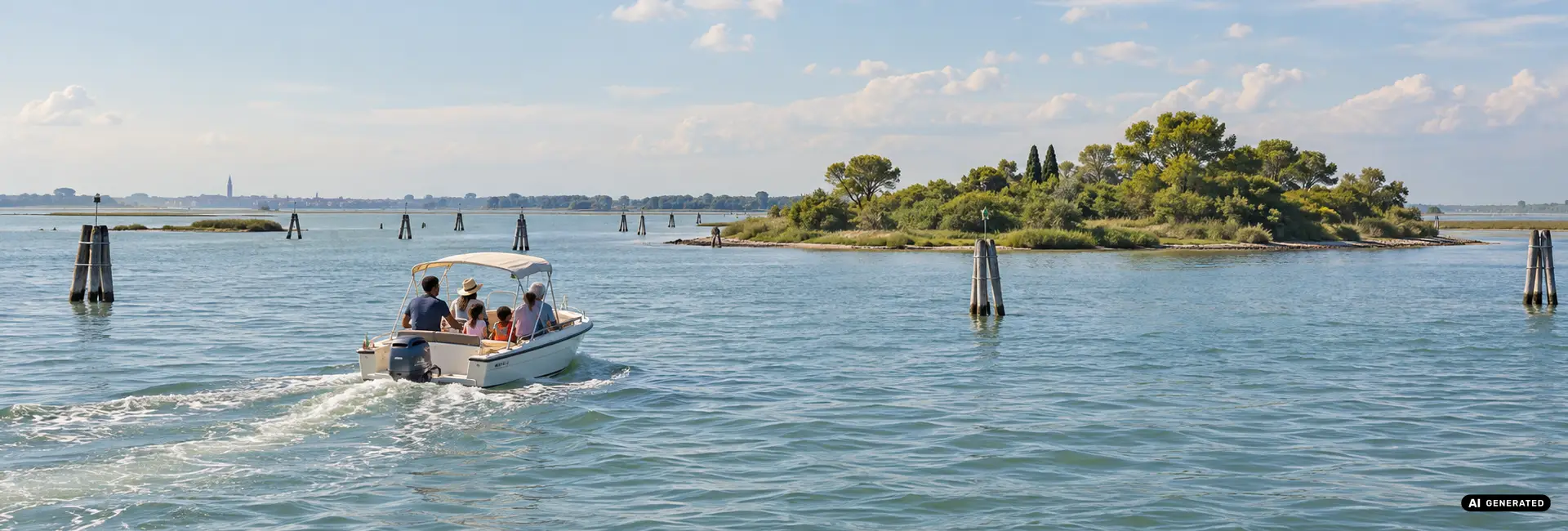
Nature in the Venice Lagoon with kids can completely change how children understand the city. Away from crowded streets, the landscape becomes water, mudflats, salt marshes, shallow channels, dunes, pine woods and cultivated islands. The Municipality describes the lagoon as a mosaic of natural and artificial forms including barene, ghebi, velme, low water, dunes and embankments.
What children can observe from the boat
A private boat makes it possible to slow down and notice changes in water colour, bird movement, reeds, tidal edges and the transition between inhabited islands and open lagoon. The goal is not to promise a particular animal sighting. Migration, nesting and water levels change with the season, so observation is more useful when it stays flexible.
Alberoni: dunes, pine woods and protected habitats
At the southern end of the Lido, Alberoni protects a complex system of beach, pioneer dunes, white dunes, dry grassland, wet depressions and woodland. The Municipality and WWF continue to run family activities there, including guided visits for children, biodiversity walks and educational workshops. It is an excellent example of how the Venetian environment extends far beyond canals and palaces.
Ca’ Roman and the southern lagoon
Ca’ Roman, at the southern end of Pellestrina, is one of the lagoon’s most important coastal natural areas. Its relative isolation has helped preserve beaches, dunes, pine woods, humid depressions and lagoon habitats. It belongs to the Natura 2000 network and is important for birds, plants and the ecological connection between the Adriatic coast and the lagoon.
Sant’Erasmo and cultivated nature
Sant’Erasmo offers another type of environmental story. Instead of dunes, children can see how agriculture survives inside a lagoon landscape. Fields, canals and open views make it useful for explaining that nature and human activity have been connected here for centuries.
Certosa and green space close to Venice
Certosa is a useful transition between city and open lagoon. Its park and vegetation can give families a quieter stop without travelling to the farthest edges of the lagoon. Depending on the day and access conditions, it can fit into a route focused on landscape, movement and time outdoors.
Respect protected areas
Protected habitats need careful behaviour. Nesting birds, dunes and salt-marsh vegetation can be damaged by uncontrolled access. We therefore distinguish between observing a place from the water and landing there. Any walk or stop must respect current access rules, weather and environmental restrictions.
Official environmental information
For current information about protected coastal areas, see the Municipality of Venice page on Alberoni and the official pages for Ca’ Roman and the lagoon landscape.
How to plan a balanced family day
Environmental experiences are strongest when adults help children notice patterns instead of chasing a list of species. Tides change the edges of the water, plants occupy different levels of salt and moisture, and birds use open flats, dunes and wetlands in different ways. A short observation from the boat can be paired with a permitted walk where appropriate. Binoculars, a simple camera or a notebook can turn the route into an active activity without disturbing habitats or requiring a formal lesson.
When nature is the priority, the route should still leave enough time for breaks and unplanned discoveries. Good nature planning compares navigation time with the attention span of the youngest traveller. nature works better when one strong activity is protected instead of filling every available hour. Season and weather can change how nature should be organised, especially in summer heat or windy conditions. Parents should tell us which part of nature matters most before we suggest additional stops. A private format makes nature easier to adapt when the family needs a slower or faster rhythm. Food reservations and museum times should support nature rather than force the entire day into a rigid schedule.
For younger children, nature is usually more successful when walking time stays realistic. For older children, nature can include more independence, photography or a choice of destination. The best nature plan gives adults and children something to anticipate. If the family is tired, nature can be simplified without losing the main idea of the experience. If everyone is engaged, nature can be extended when navigation and opening times allow. We prefer to discuss nature as a flexible experience rather than a fixed package.
Frequently Asked Questions
Can children see wildlife in the lagoon?
Yes, especially birds and changing coastal habitats, but no specific species can be guaranteed.
Can we land in protected natural areas?
Only where access is permitted. Some areas are sensitive, so the route may focus on observation from the water.
Is this suitable for younger children?
Yes, particularly when the route is not too long and includes clear visual changes, short stops and time outdoors.