Just a short walk from Burano’s colourful houses, Mazzorbo reveals a very different side of the Venetian Lagoon. Today its gardens, narrow waterways and vineyards suggest a quiet agricultural island. In the Middle Ages, however, it was an important settlement with salt production, commercial activity and an extraordinary number of churches and monasteries.
The history of Mazzorbo island connects the earliest lagoon communities with Venetian religious life, the decline of northern lagoon centres and the recovery of a rare local grape, Dorona di Venezia. Behind its present-day tranquillity is a story extending across many centuries.
Where is Mazzorbo in the Venetian Lagoon?
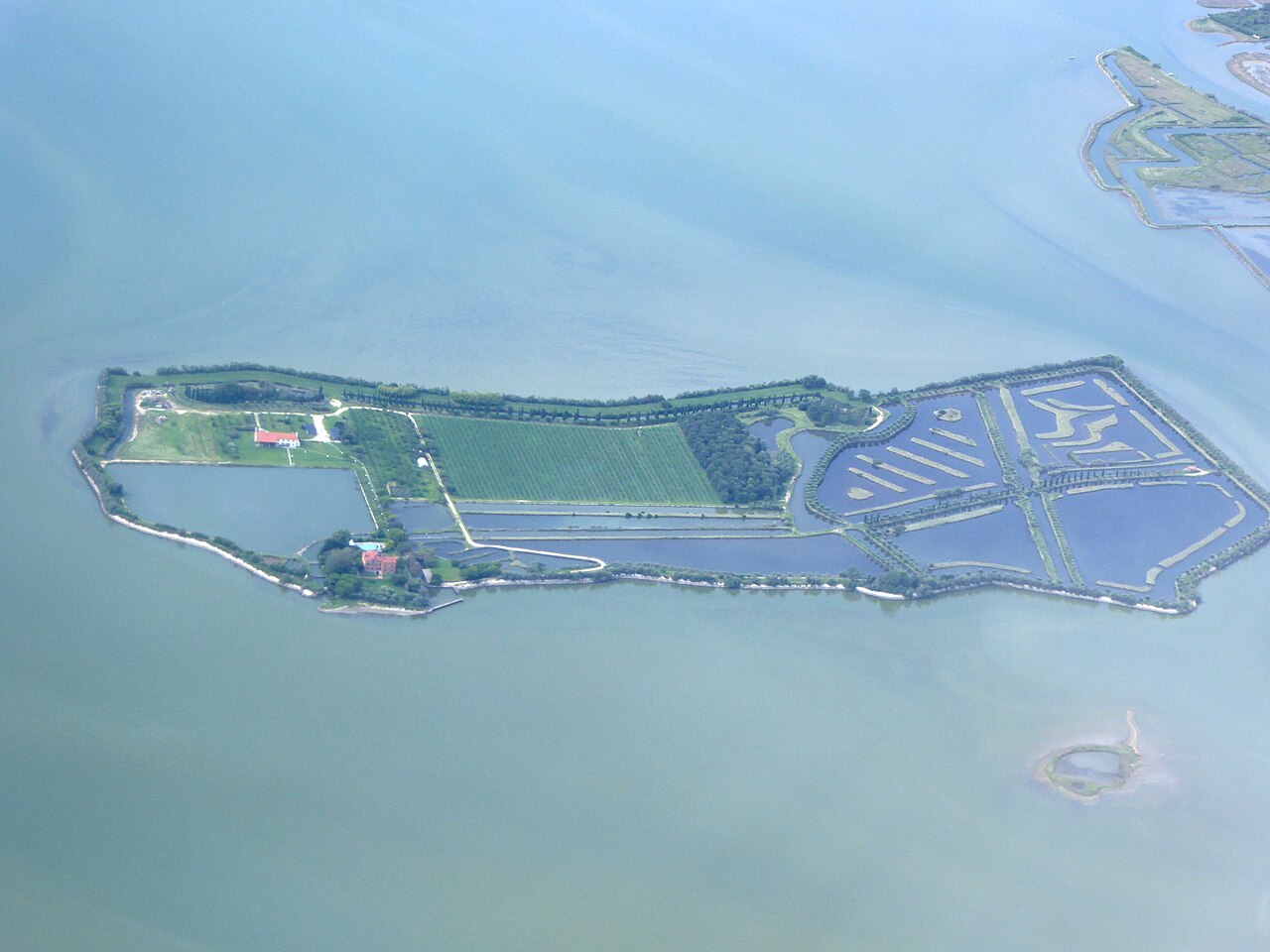
Mazzorbo lies in the northern Venetian Lagoon, beside Burano and close to Torcello. It is connected to Burano by the pedestrian bridge commonly called Ponte Longo, making it possible to reach a quieter landscape within minutes of the better-known island.
The area includes waterways, small residential clusters, cultivated plots, gardens and surviving religious monuments. Nearby Mazzorbetto is a distinct island, separated by water; its history is closely linked to that of Mazzorbo but the two should not be confused.
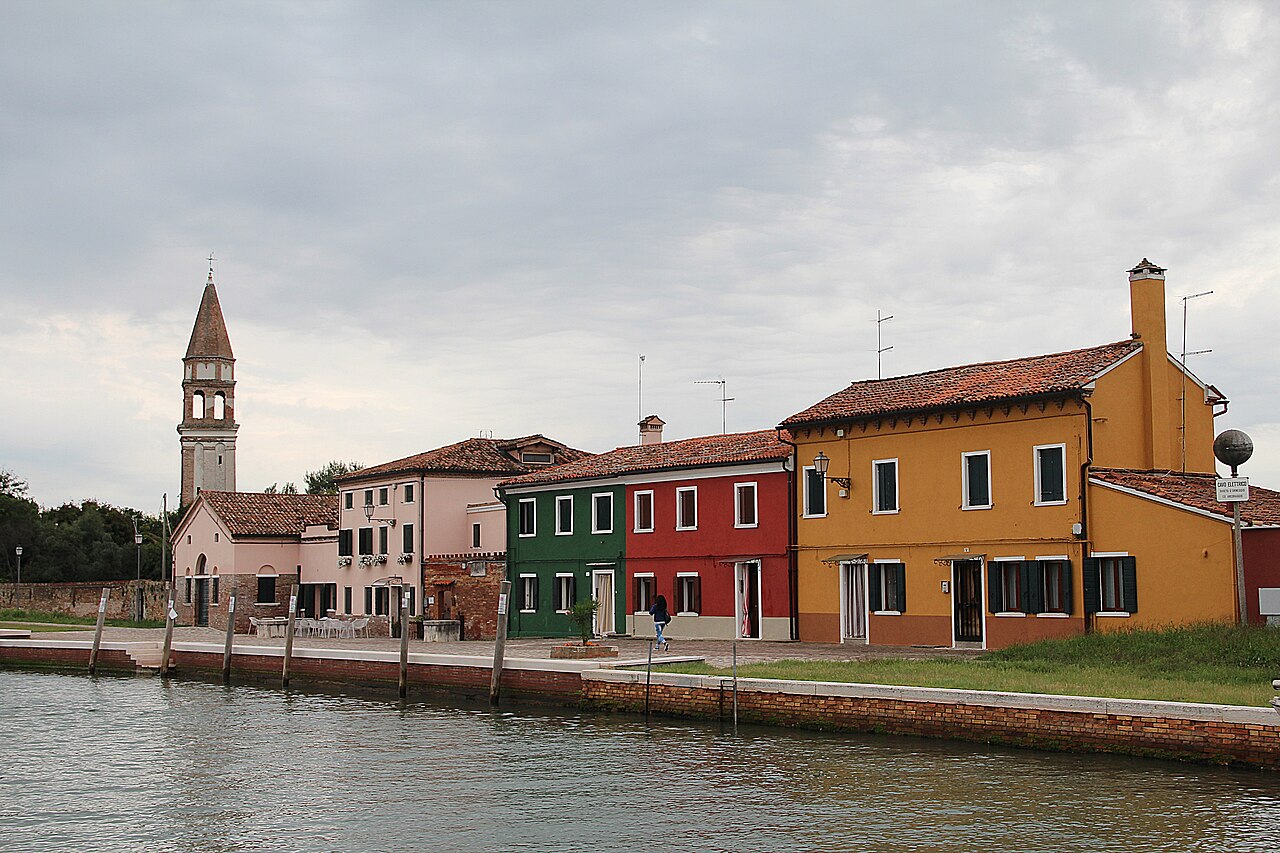
The contrast with Burano is immediate. Rather than a close succession of brightly painted houses, Mazzorbo opens into green spaces and low buildings facing the lagoon. This landscape is the result of long changes in settlement, agriculture and the use of former religious land.
Roman traces and the earliest northern lagoon communities
Local archaeological evidence indicates activity around Mazzorbo in the Roman period, even though the precise development of the earliest settlement is not fully documented. The City of Venice and Venezia Unica both describe the island as having ancient origins within the network of settlements that developed around Torcello.
These early communities relied on waterways for travel and trade. Changes in river courses, shoals and tidal channels could transform the usefulness of a landing or an agricultural plot. Settlement in the lagoon therefore developed gradually rather than beginning on one universally agreed date.
The proximity of Torcello, once a major religious and commercial centre, helped Mazzorbo participate in a wider economy long before Venice’s present-day historic centre became dominant.
Why is the island called Mazzorbo?
One explanation recorded by the City of Venice connects the name Mazzorbo with the medieval expression Maggior Borgo, meaning “greater village” or “major settlement”. In this interpretation the name recalls its importance in the northern lagoon after Torcello.
Other historical descriptions use the form Maiorbum. Place-name origins can be difficult to reconstruct with certainty, so the “Maggior Borgo” derivation is best presented as the traditional explanation preserved in local historical accounts.
What is beyond doubt is that the small island was once much more densely organised and institutionally significant than its present-day appearance suggests.
The medieval salt industry and Mazzorbo’s economy
Between approximately the eleventh and fourteenth centuries, Mazzorbo was associated with important salt-making and salt-processing activities. Salt was fundamental to preserving food and to Venice’s wider commercial system.
The Centro Studi Torcellani, in historical material published by Venezia Unica, also describes the presence of mills whose remains have been investigated archaeologically. These activities depended on an understanding of tides, canals and the landscape’s changing conditions.
Fishing, local trade and small-scale cultivation added to the island’s economy. The lagoon was an interconnected production system: supplies moved by boat between islands, markets and the more important centres of the Republic.
This maritime and productive past helps explain why Mazzorbo later developed such a substantial network of religious buildings. Monasteries and parishes were integrated into communities that had land, labour and resources to administer.
Ten churches and monasteries: Mazzorbo’s forgotten religious importance
It is surprising that an island now best known for its vineyards once had ten churches and religious institutions. Historical reconstructions identify five parish churches and five conventual complexes across the old settlement area.
Among the places of worship were the churches of San Pietro, San Bartolomeo, San Michele Arcangelo, Santo Stefano and Santi Cosma e Damiano. Religious houses included institutions dedicated to Santa Caterina, Santa Maria della Valverde, Santa Maria delle Grazie, San Maffio and Sant’Eufemia, the last associated with nearby Mazzorbetto in historical descriptions.
Not all of these buildings stood at precisely the same time or occupied what are now regarded as the same island boundaries. Their existence nevertheless reveals a period when this part of the northern lagoon sustained a remarkably rich religious and social life.
San Pietro and the churches that disappeared
The Duomo of San Pietro Apostolo was once particularly admired for its marble decoration. Historical accounts record that it contained a precious gilded silver altarpiece that has since disappeared.
The church was demolished in the early nineteenth century, during a long period when older religious institutions were closed, transferred or adapted to different purposes. Other churches had already declined or disappeared in earlier centuries.
The loss of these buildings transformed Mazzorbo’s skyline. To understand the island today, we have to imagine a place with church towers, courtyards, canals and religious communities in areas now used for gardens and agriculture.
Santa Maria della Valverde and the monastic communities
One important foundation was the convent of Santa Maria della Valverde. The Venice State Archives record its establishment on 15 November 1281 by Cistercian nuns from Santa Caterina di Chioggia. By the beginning of the fourteenth century, the community had adopted the Benedictine rule.
Such houses were places of prayer, but also of education, property management and social relationships. Monastic communities held land and had connections to important Venetian families, contributing to the island’s economic and institutional life.
Religious foundations changed over time as communities were reorganised, transferred or suppressed. The scarcity of buildings today should not obscure how influential these institutions could be.
Santa Caterina d’Alessandria: the surviving church
The great exception to the disappearance of Mazzorbo’s medieval religious landscape is the Church of Santa Caterina d’Alessandria. Its origins are traditionally traced to an earlier religious foundation mentioned in 783, while the main medieval building reflects developments in the thirteenth century.
Santa Caterina was part of a Benedictine convent that welcomed women from Venetian patrician families. After the suppression of the convent in 1806, the church survived because it became the island’s principal parish church.
The building preserves a valuable combination of Romanesque and Gothic features. Its understated exterior makes the interior even more rewarding for visitors interested in the history of the lagoon.
The wooden ceiling and the nuns’ enclosed gallery
Inside Santa Caterina, one of the most distinctive details is the wooden ceiling shaped like an inverted ship’s hull, dated to the fifteenth century. In a maritime city, the resemblance to boat construction is particularly evocative, although the ceiling is first and foremost a valuable piece of historic architecture.
Another feature is the barco, an elevated choir or gallery where cloistered nuns could attend services without being visible to the congregation. It provides a direct insight into how the convent and the parish church functioned together.
The church also contains works associated with later Venetian painting, including a Baptism of Christ by Giuseppe Porta, known as Il Salviati, dated to the second half of the sixteenth century in local historical studies.
The 1318 bell and the island’s two different bell towers
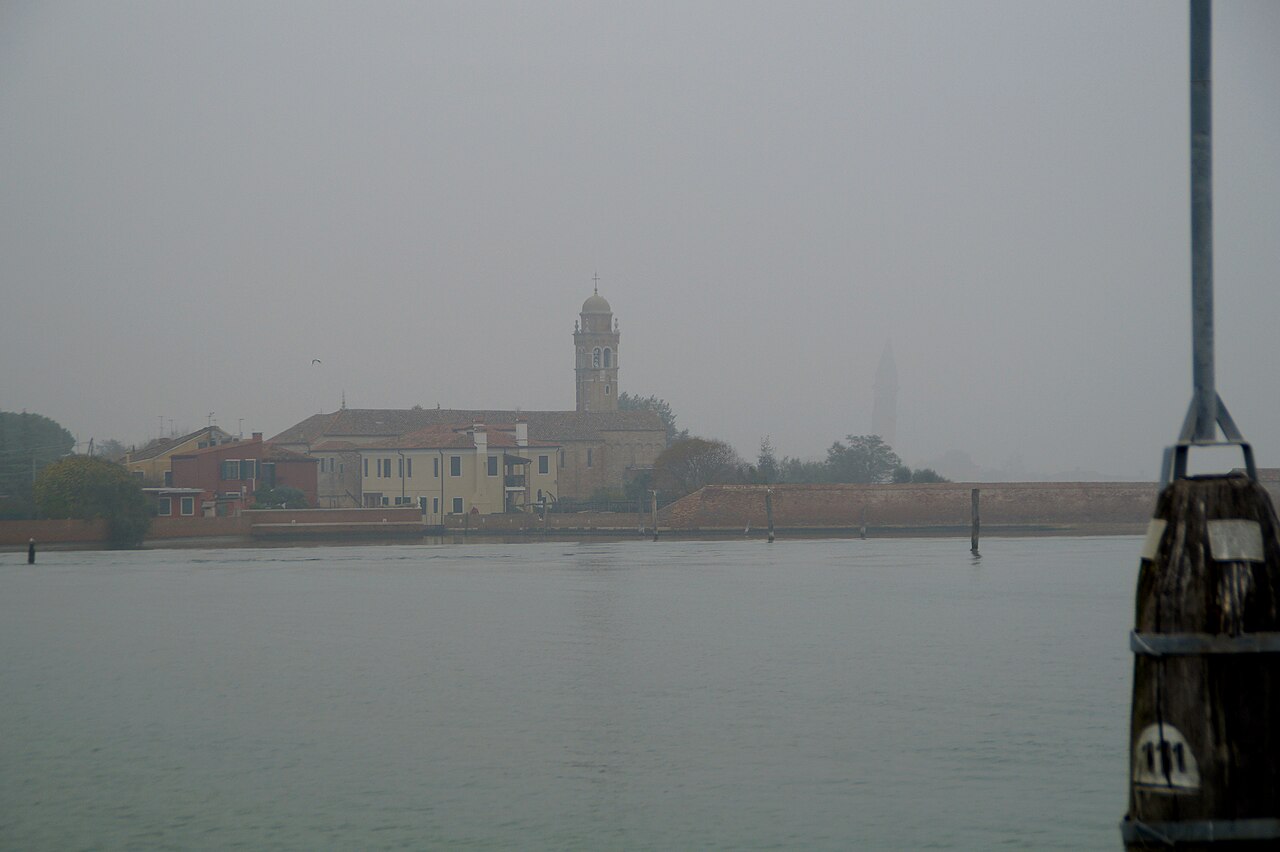
Mazzorbo’s historic bell towers are easy to confuse, so it is worth making a clear distinction. Santa Caterina has a bell tower associated with the surviving church, which preserves a bell dated 1318, celebrated as the oldest surviving bell in the Venetian Lagoon.
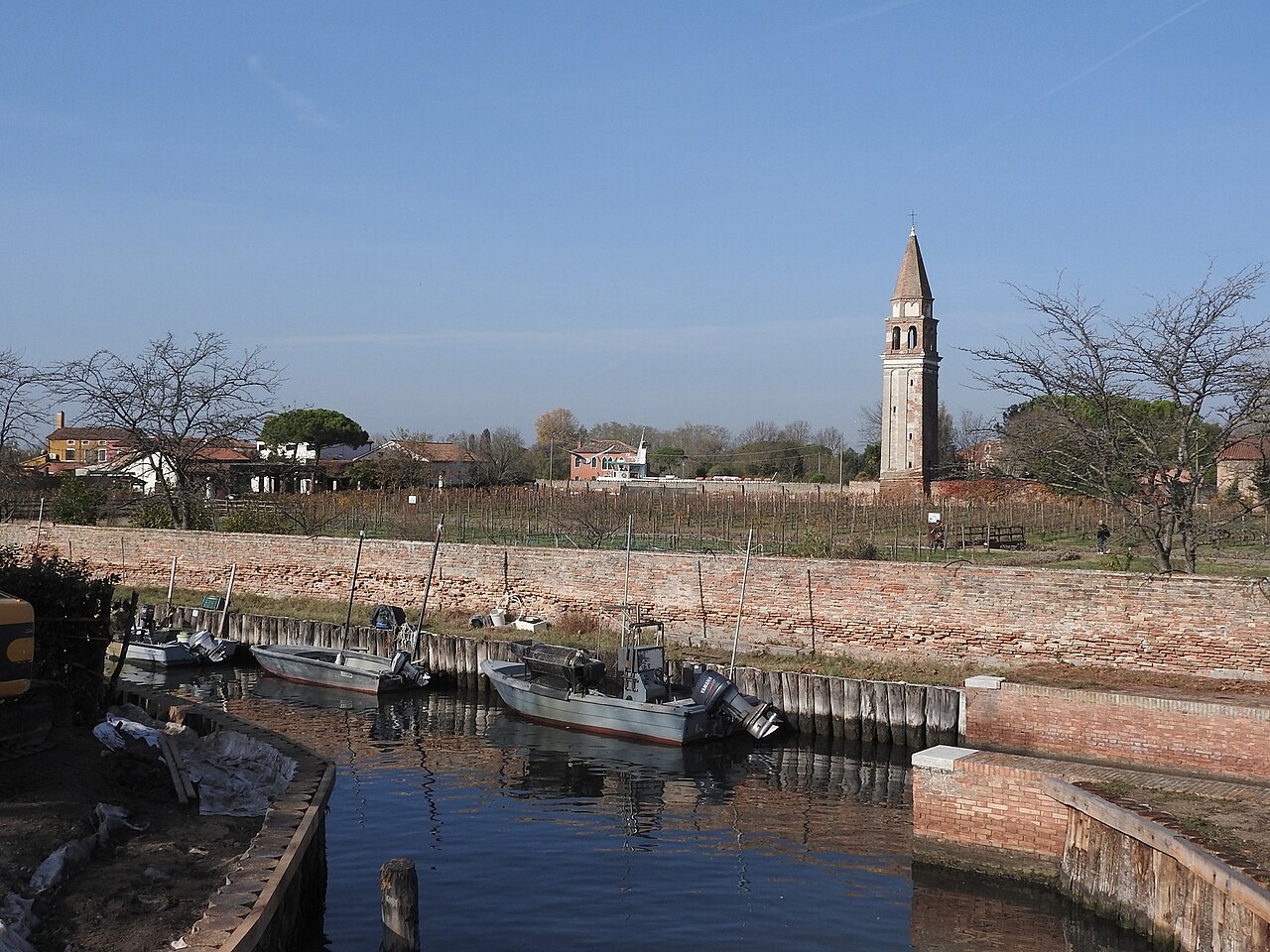
Separately, the solitary fourteenth-century campanile visible among the vineyards is a surviving reminder of another lost church complex. Historical sources describe it with names including San Michele Arcangelo, Valverde and Sant’Angelo, depending on the account.
The isolated tower and the bell in Santa Caterina should not be described as if they were the same monument. Together they make visible two different parts of the island’s medieval religious history.
Why did medieval Mazzorbo decline?
Mazzorbo’s fortunes changed as the administrative and commercial importance of Venice’s central islands increased and the northern lagoon’s older centres lost influence. Its decline was linked to that of Torcello, although the two histories were not identical.
Changes in navigable channels, the attraction of new urban and trading opportunities, and the reorganisation of religious communities all contributed to the gradual transformation. Some buildings disappeared before the nineteenth century, while the Napoleonic suppressions accelerated the closure and demolition of remaining institutions.
This transformation happened across generations, not in a single catastrophic episode. The modern island’s quiet appearance is the outcome of a long process in which the former settlement gave way to smaller residential clusters and cultivated land.
Mazzorbetto: a neighbouring island with another history
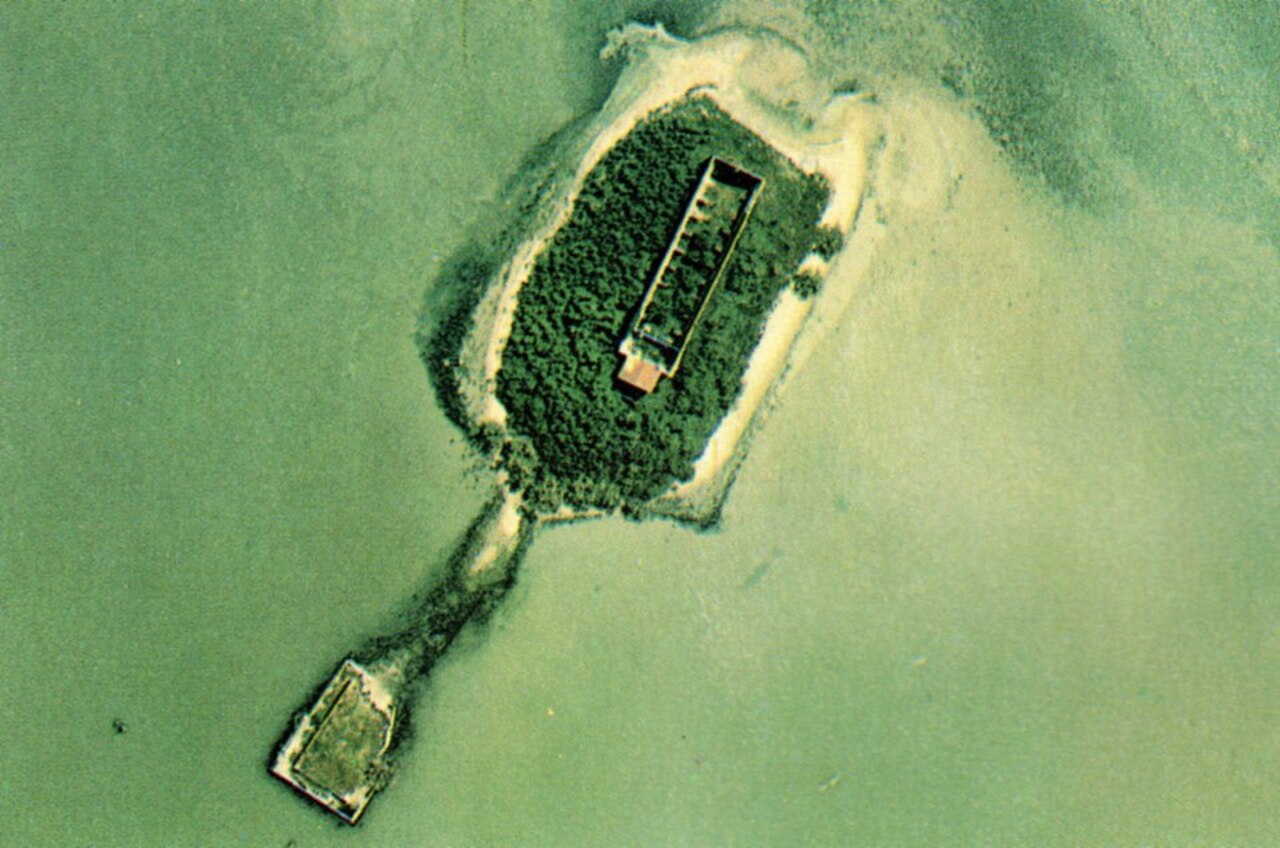
Immediately nearby, Mazzorbetto preserves additional traces of the religious and military history of the area. The monastery of Sant’Eufemia, described in sources from the early medieval period, occupied land later transformed for military use.
The Ridotto di Mazzorbo, a nineteenth-century fortification, was constructed after the older religious buildings had been demolished. It is distinct from the churches and vineyard landscape commonly visited on Mazzorbo itself.
The fort has been associated in more recent times with scouting activities. Access to Mazzorbetto and its buildings should not be presumed to be public; organised visits or activities depend on the responsible organisations.
The agricultural island: gardens, orchards and lagoon crops
As historic religious buildings disappeared, vegetable gardens, orchards and vineyards remained central to Mazzorbo’s identity. Its relatively open land and relationship with the water helped preserve a rural landscape unusually close to Venice.
Seasonal crops have included vegetables associated with the northern lagoon, such as the violet artichoke and its prized early castraure. Fishing and the use of local waterways continued to connect the community with its neighbours.
Unlike heavily visited parts of Venice, many of the island’s green areas remain working plots or gardens. Their value lies not only in their appearance but in the continuity of practices that supported lagoon communities for centuries.
To explore another major agricultural island, read our history of Sant’Erasmo.
Dorona di Venezia: an indigenous grape recovered from the lagoon
One of the most remarkable recent chapters is the recovery of Dorona di Venezia, an indigenous white grape variety associated with the ancient vineyards of the lagoon. This cultivation once formed part of the landscape across several islands.
The great flood of 1966 devastated many surviving vines. According to the producers at Venissa, researchers later located 88 surviving plants in the lagoon, helping provide material for a modern recovery project.
The variety is particularly interesting because it must cope with saline soils, rising water and the difficult conditions of a maritime environment. The story is not a claim that one vineyard has remained untouched since medieval times: it is a documented modern effort to recover a local agricultural heritage.
The walled vineyard of Venissa and the first vintage of 2010
The best-known vineyard on Mazzorbo is the approximately one-hectare walled estate of Venissa, which includes the historic isolated campanile. The site recalls the island’s long connection with viticulture, while the current vineyard represents a carefully planned restoration.
The project was developed by the Bisol family, with agronomists and wine specialists involved in the rediscovery and planting of Dorona. The first modern harvest was in 2010, introducing wine from the revived grape to contemporary audiences.
The estate also includes hospitality and dining facilities, reflecting a modern approach that combines agriculture, heritage and tourism. Its vineyards and production areas are not an invitation to enter at will: tasting experiences and access to working spaces depend on the operator’s rules.
For more information, see Venissa’s account of the Dorona revival.
Can you visit the vineyard and Santa Caterina today?
Venezia Unica describes the Venissa walled estate as accessible for a walk through designated spaces, but that should not be confused with permission to enter all vineyard rows, hospitality areas or private buildings. Tastings, meals and specialist visits may require separate reservations.
The Church of Santa Caterina is a historic religious building, not a museum with a guaranteed daily ticketed timetable. Opening may depend on local arrangements, services and maintenance, so check before travelling specifically to see the interior.
Elsewhere on Mazzorbo, the most rewarding experience is often a quiet walk along public routes, with time to notice the low houses, canals and surviving monuments without entering agricultural property.
How to reach Mazzorbo from Venice and Burano
Mazzorbo has a stop on ACTV line 12, which connects the Fondamente Nove area of Venice with Murano, Mazzorbo and Burano, following the published service timetable. Connections and stopping patterns can change during the year; consult the official ACTV navigation schedules.
It is also straightforward to arrive in nearby Burano and cross the pedestrian Ponte Longo. The short walk offers a striking transition from dense, colourful Burano to the quieter greenery of Mazzorbo.
For practical suggestions, our guide to visiting Mazzorbo by boat complements this historical account.
Explore Mazzorbo and the northern lagoon by private boat
Seen from the water, Mazzorbo’s history becomes easier to imagine: the channels once connected monasteries and trading settlements, while orchards and vineyards still face the lagoon today. Its proximity to Burano and Torcello makes it a valuable stop in an itinerary about the origins and working life of Venice.
Compare its story with Burano’s fishing and lace-making heritage and Torcello’s early history. You can also read our introduction to the quieter side of Mazzorbo.
Discover our private island-hopping experiences or contact us to discuss a personalised boat itinerary. Vineyard visits, tastings and entry to historic buildings need appropriate arrangements and are not automatically included.
Continue with the collection History of the Venetian Lagoon Islands.
Frequently asked questions
Why was Mazzorbo important in medieval Venice?
It belonged to the network of early northern lagoon settlements and developed salt-related trades, churches, parishes and monasteries. The name is traditionally linked with “Maggior Borgo”, or greater settlement.
How many churches did Mazzorbo once have?
Historical accounts describe ten religious institutions across the old island settlement and adjoining area, including five parish churches and five conventual foundations. Santa Caterina is the principal surviving church.
What is the bell tower in the Mazzorbo vineyard?
It is a solitary medieval campanile associated in historical accounts with a lost church, often called San Michele Arcangelo or Valverde/Sant’Angelo. It should not be confused with Santa Caterina’s bell tower, which contains the 1318 bell.
Can you reach Mazzorbo from Burano on foot?
Yes. The pedestrian Ponte Longo links the two islands. Mazzorbo can also be reached by ACTV line 12, subject to its current timetable.
Historical sources and photo credits
Sources: City of Venice – history of Mazzorbo; Venezia Unica – Mazzorbo; Venezia Unica / Centro Studi Torcellani – historical itinerary; Venissa – history of the Dorona vineyard; State Archives of Venice – historical religious foundations; ACTV – navigation timetable. Featured photograph: Jean-Pol GRANDMONT / Wikimedia Commons, CC BY 4.0, resized to 1280 px. Other photographs credited in their captions.