
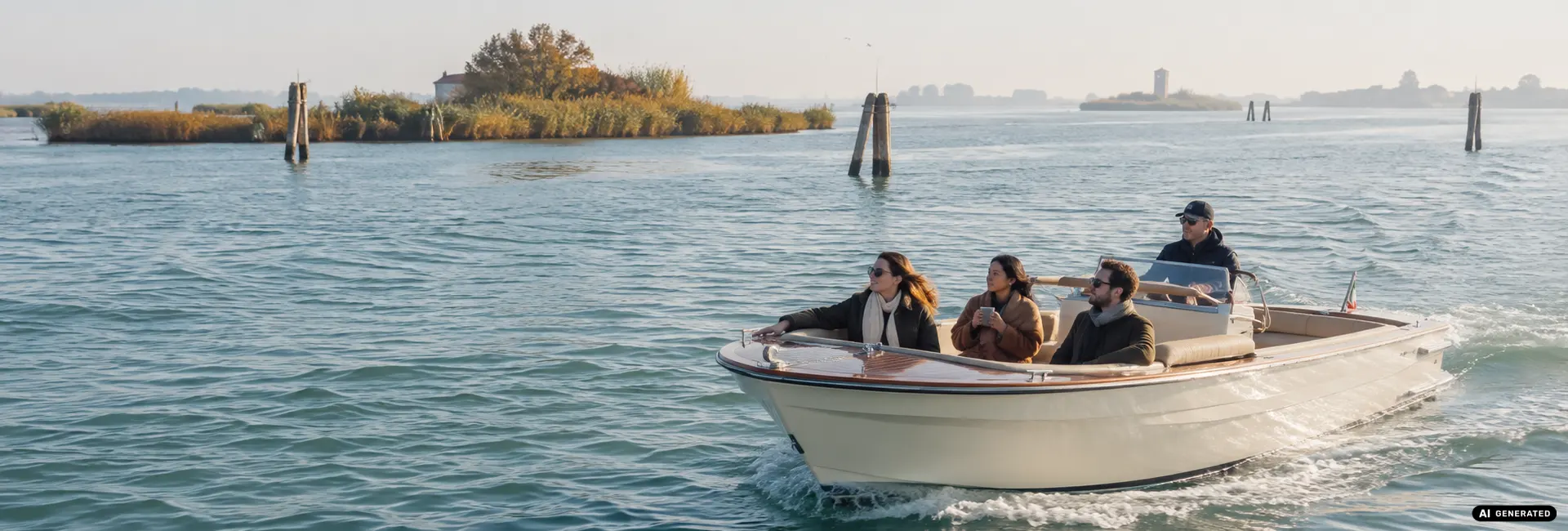
Seasonal Boat Experiences in Venice is designed for travellers who want a private experience shaped around the Venetian Lagoon rather than a fixed checklist. The route, time ashore and navigation should always reflect real conditions, personal interests and the character of the places visited.
Begin with the month, not a fixed circuit
A seasonal approach recognises that the Venetian Lagoon is never exactly the same throughout the year. Daylight, temperature, vegetation, birdlife and visitor patterns can all influence which private experience feels most appropriate.
Spring brings ecological detail into focus
Spring seasonal planning can give more attention to nature. Longer days, fresh vegetation and bird activity make quieter lagoon areas attractive for travellers interested in landscapes rather than only architecture.
Agricultural stops depend on real availability
Sant’Erasmo and other cultivated areas can also fit a seasonal spring route. Stops connected with food or agriculture depend on actual availability, so they should be planned as part of the day rather than promised automatically.
Summer evenings create different possibilities
Summer seasonal experiences benefit from long evenings. Later departures can create a relaxed transition toward sunset, while major dates such as Redentore require specific planning because navigation restrictions can be substantial.
Autumn changes reflections and colour
Autumn seasonal routes often work well for photography. Lower sun, reflections and changing weather create atmosphere, but flexibility is important because visibility and wind cannot be guaranteed.
Food can become the centre of the day
Food-focused seasonal ideas can combine navigation with a restaurant or local-product stop ashore. Fewer destinations often work better when the meal is intended to be a meaningful part of the experience.
Winter rewards a more focused plan
Winter seasonal navigation can reveal a quieter lagoon with low light, mist and open horizons. Shorter daylight makes focused routes particularly useful for couples and small groups.
Winter birdlife adds another reason to explore
Nature remains relevant in winter because the lagoon supports important birdlife. The Comune di Venezia provides institutional background on the lagoon environment and its ecological value.
Nature routes still depend on daily conditions
Our Nature Boat Experiences page offers more ideas for travellers who want nature to be the main theme rather than simply a seasonal detail.
Tell us when you will be in Venice
Tell us when you are visiting and what interests you most. Seasonal planning can then influence timing, route length and stops while the final itinerary remains flexible enough for real weather and navigation conditions.
Four seasons, four different lagoon moods
Spring seasonal experiences can focus on renewed vegetation, longer daylight and active birdlife. It is a good period for travellers who want nature to play a visible role, particularly when the route includes open lagoon landscapes or cultivated islands rather than only architectural stops.
Summer seasonal planning is shaped by long evenings, heat and major celebrations. Later navigation can make the temperature more comfortable and create attractive light, while Redentore requires a completely different level of logistical preparation. A seasonal summer route should distinguish an ordinary evening from an event date.
Autumn seasonal experiences often suit photographers because lower light and changing skies can transform reflections and horizons. Food can also become a stronger theme when a route is built around a meal ashore and local produce. Flexibility matters, because autumn conditions can shift quickly.
Winter seasonal navigation reveals a quieter side of the lagoon. Short days encourage focused itineraries, while mist, low sun and wintering birds can make open landscapes especially atmospheric. Tell us your travel month and interests so the seasonal character supports the route rather than becoming a decorative label.
Seasonal choices also affect the practical rhythm of a private day. In warmer months, a midday stop ashore can provide a useful break from the sun, while cooler periods may favour continuous navigation during the brightest hours. Opening patterns for restaurants, cultural sites and small island activities should be checked before they become essential parts of the plan. Water level, wind and visibility remain day-specific rather than predictable from the calendar alone, so we use the season as a planning framework, not as a guarantee of particular conditions. This keeps the experience grounded in what the lagoon is actually offering on the day.
Frequently Asked Questions
Which time of year is best for nature?
Spring and winter can both be interesting for different reasons, while the best choice depends on the landscapes and wildlife you hope to observe.
Is summer only about sunset trips?
No. Longer daylight creates many possibilities, although heat and major event dates can influence timing.
Does winter navigation still make sense?
Yes. Short focused routes can reveal quiet water, low light and a very different atmosphere from peak season.