The History and Culture of Sant’Erasmo
In the northern Venetian Lagoon, between Murano, Burano, and Punta Sabbioni, lies the island of Sant’Erasmo. During the Middle Ages, the island played an important role as a port town serving Torcello and Murano, and it was during this period that its agricultural vocation began, becoming essential in supplying Venice with fresh produce.
By the 18th century, Sant’Erasmo experienced a drastic population decline, with fewer than 60 inhabitants by 1780. This was due to a lack of resources and recurring epidemics, such as malaria.
After the fall of the Venetian Republic, the island became a site for military installations, including batteries, depots, and forts. One notable structure is the Maximilian Tower, built between 1843 and 1844 under the commission of Archduke Maximilian of Austria. Today, this historical fort has been transformed into a cultural and artistic space.
Thanks to its strategic location and fertile soil, Sant’Erasmo has developed a unique agricultural-lagoon identity. The island is known for its vegetable gardens and vineyards, with one of its most prized crops being the “Castraure”—the first tender artichoke buds of the season, a delicacy in Venetian cuisine.
Another agricultural gem of the island is “Vin Salso”, a wine produced from ancient vineyards. The salty soil of Sant’Erasmo gives its agricultural products a distinct and special flavor, making them highly requested.
A unique feature of Sant’Erasmo is its honey production. An artisan beekeeper cultivates various types of honey, setting up hives in the island’s humid, vegetation-rich areas. Here, bees pollinate artichoke and Barena flowers, producing a rare and exquisite honey known as “Honey of Barena”, which cannot be found anywhere else.
Request information now if you want to organize a private tour to discover the wonders of the island of Sant’Erasmo.
Contact us now!
Foto: Didier Descouens – Wikimedia Commons – CC BY-SA 4.0
Sant’Erasmo can be included in our private Venice islands boat tour. If you prefer a different combination of islands and stops, discover our customizable private boat tours in Venice.
Discovering the island through local traditions
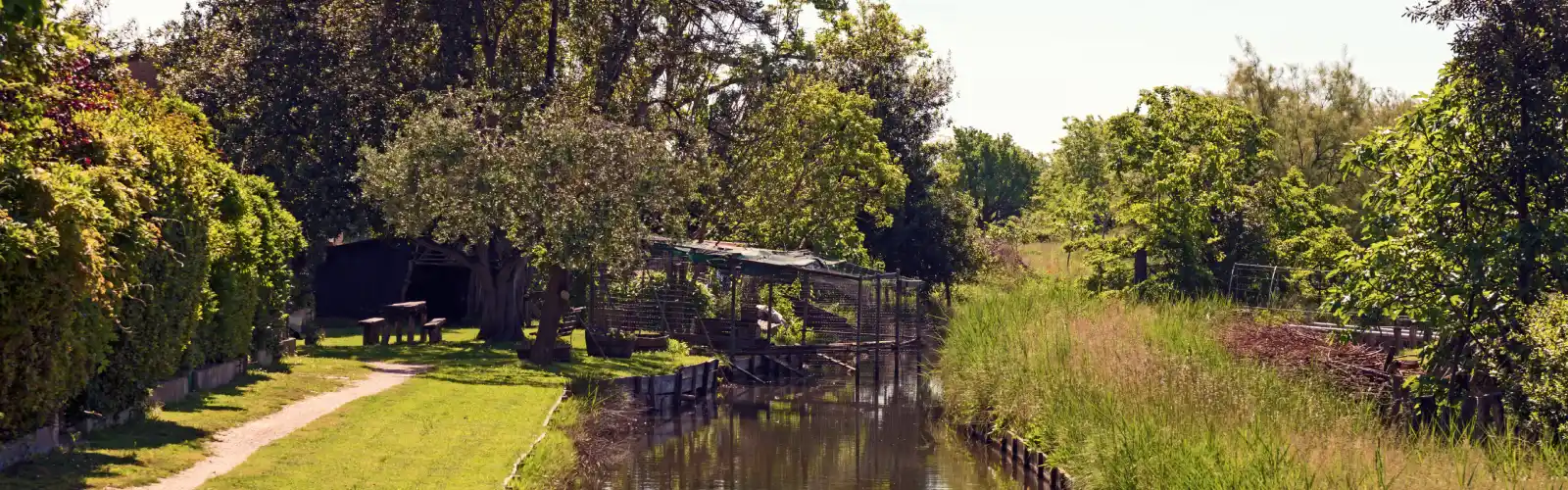
Today, Erasmo represents one of the clearest examples of how agriculture and lagoon life can coexist. The landscape is open and rural, with cultivated fields, narrow roads and long views across the water. For visitors who know Venice mainly through its historic center, arriving here by private boat offers a completely different perspective on the territory.
The products associated with Erasmo are closely linked to the island’s soil and exposure to salty air. Artichokes are among the best-known examples, especially the tender first buds harvested at the beginning of the season. Vineyards, vegetables and honey also contribute to a small but distinctive agricultural culture that has survived because local producers continue to work in direct contact with the lagoon environment.
A visit to Erasmo can be included in a private excursion through the northern lagoon. The experience can focus on rural landscapes, local products and the contrast between cultivated land and open water. Depending on the chosen itinerary and opening times, it may also be possible to plan a stop ashore for lunch or an aperitif at a local venue.
One of the most interesting aspects of Erasmo is its quiet rhythm. There are no monumental attractions comparable to St Mark’s Square, and that is precisely part of its appeal. The island helps explain another side of Venice: a city that has always depended on surrounding communities for food, materials and practical knowledge of the lagoon.
Guests interested in photography, food culture or lesser-known Venetian landscapes can ask us to include Erasmo in a customized route. Our staff will explain how much time is available and which nearby destinations can be combined without making the day feel rushed.
If you would like to discover Erasmo as part of a private boat experience, contact us with your preferred date and interests. We can help you build an itinerary that connects agriculture, local traditions and the natural landscape of the Venetian Lagoon in a relaxed and authentic way.
The excursion is particularly interesting for visitors who want to move beyond the best-known Venetian sights and understand how the lagoon has supported everyday life for centuries. Open fields, cultivated plots and wide horizons create a setting that feels surprisingly distant from the crowded historic center, even though it remains part of the same extraordinary ecosystem.