Islands give families several different versions of Venice
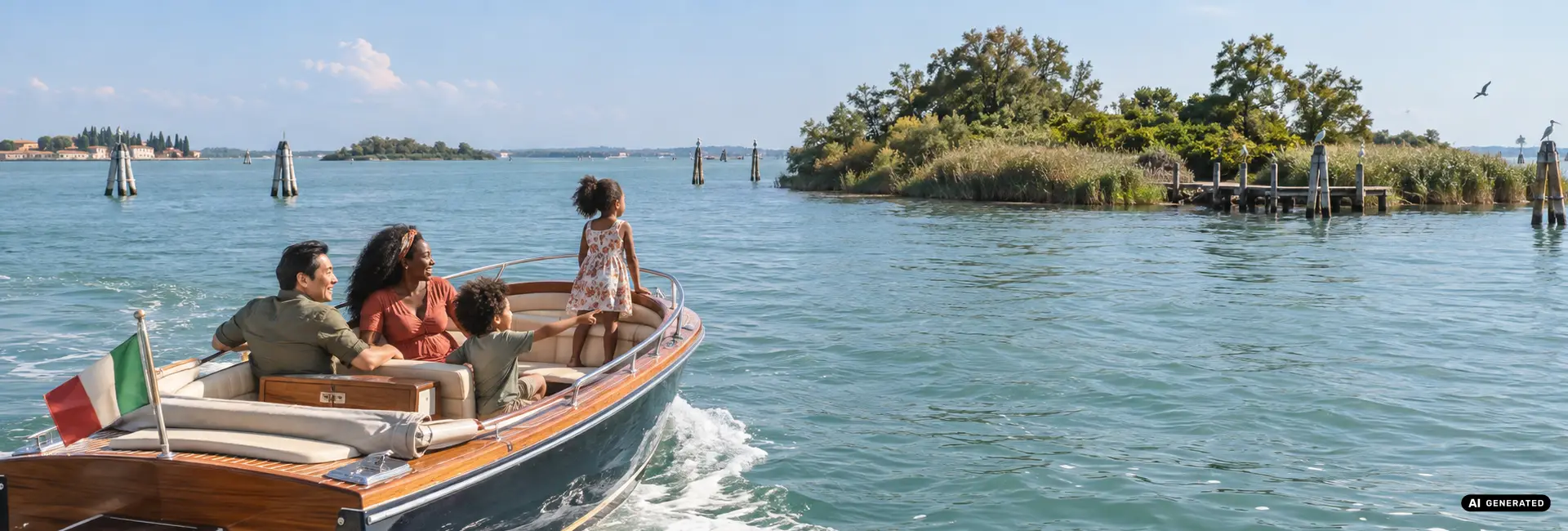
Venetian islands with kids are useful because each place can offer a different reason to stop. Murano brings glass and craft, Burano colour, Torcello space and early history, Sant’Erasmo agriculture and open landscape. A private boat allows the family to combine only the places that match the children’s interests.
Murano for craft and demonstration
Murano is often strongest when the family has a clear activity in mind. The Glass Museum offers family programmes with interactive material and, in some cases, furnace visits. For children who enjoy making things or seeing how materials change, this can give the island a purpose beyond shopping.
Burano for colour and easy exploration
Burano works well when children need something visually immediate. The coloured houses make photography and walking more playful, while the Lace Museum offers an on-demand family activity for ages 6 to 12 based on knots, weaving and an island discovery route.
Torcello for space and contrast
Torcello is quieter and more open. It can be valuable for older children who enjoy history or for families who simply need a slower stop after busier islands. Because it adds travel and walking time, it is better included when the total duration allows the visit to remain relaxed.
Sant’Erasmo for fields and lagoon landscape
Sant’Erasmo shows a different relationship with Venice. Agriculture, canals and open views make it possible to talk about food, cultivation and how people live within the lagoon environment. It can be combined with a meal or a nature-focused route when seasonal opening times and distances work.
Certosa and other quieter stops
Not every family needs the famous trio of Murano, Burano and Torcello. Certosa, quieter lagoon channels and other less-visited places can create more time outdoors and less pressure to tick off sights. The right choice depends on age, weather and what the family wants to remember from the day.
How many islands should children visit?
Usually fewer than adults think. With younger children, one or two strong stops may be enough. Older children can handle a more varied day, but navigation and lunch still need time. A private boat is useful because the route can prioritise quality of experience rather than the maximum number of islands.
Plan around interests, not fame
Before choosing, tell us whether the family cares most about craft, colour, food, nature, photographs, history or simply being on the water. We can then compare the islands and suggest a realistic sequence. Official museum information is available through the Murano Glass Museum and Burano Lace Museum.
How to plan a balanced family day
The value of island hopping is contrast, not quantity. Moving from a craft-focused stop to a colourful village and then to open landscape can keep attention alive because each place asks children to look for something different. If the family is already tired, the route can stay compact. If everyone is engaged and the day is long enough, another stop can be added when navigation and opening times allow. The objective is to finish with memories of distinct places, not simply a count of destinations.
When islands is the priority, the route should still leave enough time for breaks and unplanned discoveries. Good islands planning compares navigation time with the attention span of the youngest traveller. islands works better when one strong activity is protected instead of filling every available hour. Season and weather can change how islands should be organised, especially in summer heat or windy conditions. Parents should tell us which part of islands matters most before we suggest additional stops.
A private format makes islands easier to adapt when the family needs a slower or faster rhythm. Food reservations and museum times should support islands rather than force the entire day into a rigid schedule. For younger children, islands is usually more successful when walking time stays realistic.
Frequently Asked Questions
Which islands are best with younger children?
Murano and Burano often work well because they offer visible craft and colour, but the best choice depends on the child.
How many islands should we visit in one day?
For younger children, one or two may be enough. A longer day can include more when everyone is enjoying the pace.
Can the route include quieter islands?
Yes. The itinerary can include less-visited places when access, timing and navigation conditions make sense.