Things to do in Venice with children beyond standard sightseeing
Things to do in Venice with kids become much easier to choose when you stop thinking in terms of monuments alone. The city and lagoon can be experienced through boats, colours, craft, nature, puzzles, beaches, wildlife and islands. The strongest family days usually combine only a few of these rather than trying to fit everything into one itinerary.
Make the boat part of the experience
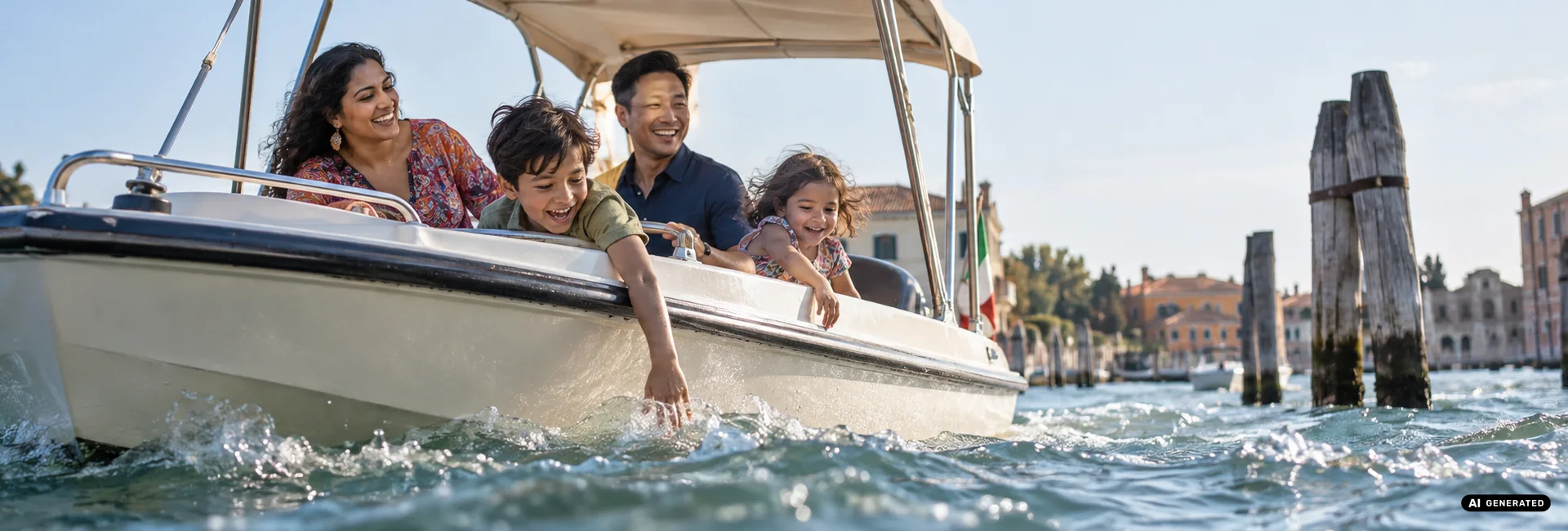
For many children the boat is not simply transport. Watching channels open into the lagoon, passing fishing boats, seeing islands appear and noticing how roads disappear from daily life can be part of the discovery. A private boat also gives families more control over duration, breaks and the order of stops.
Glass, colour and craft
Murano can be engaging when children see a furnace demonstration or use one of the official family programmes at the Glass Museum. Burano offers a different sensory experience through colour and the history of lace. The Lace Museum’s family activity for ages 6 to 12 uses knots and weaving as a practical way to explain the craft.
Treasure hunts and playful learning
A treasure hunt can transform the lagoon into a game with clues, observation and small challenges. Families often report that this type of activity works well because children have a reason to look closely rather than simply follow adults. Our own Lagoon Treasure Hunt is one option when the age and mood of the group fit the game.
Nature and open spaces
Families who need a break from dense urban sightseeing can look toward Sant’Erasmo, Certosa, Alberoni or Ca’ Roman. The official municipal pages for Alberoni and Ca’ Roman describe dunes, beaches, wetlands, pine woods and birdlife. In 2026 the Municipality and WWF have continued to organise guided activities specifically for families and children at Alberoni, confirming the area’s educational value.
Beaches and lagoon landscapes
Alberoni and the southern lagoon can introduce children to a different Venice, where the landscape includes sand, wind, dunes and open horizons. These places should be approached respectfully because some habitats are protected and nesting areas are sensitive. Observation can be more valuable than trying to turn every natural area into a playground.
Ideas for teenagers
Older children often respond better when they are given some ownership of the day. Photography, a food stop, a more challenging treasure hunt, nature, a longer boat route or choosing one island themselves can make the experience feel less like a children’s programme. We treat teenagers as participants rather than passengers.
Choose by age and interest
The official family information from Venezia Unica is useful for current ideas. For a private day, tell us the ages, what the children already enjoy and what tends to make them tired. That is enough to begin shaping the route.
How to plan a balanced family day
A practical way to plan a family stay is to alternate concentration with movement. After a museum or craft demonstration, time outdoors or on the water can reset attention. After a long walk, an island transfer can become the rest period. Parents should also protect one part of the day for themselves: a meal, photography, history or simply a beautiful stretch of lagoon. Children usually respond better when the adults are enjoying the experience too, rather than managing a programme built only around them.
When things is the priority, the route should still leave enough time for breaks and unplanned discoveries. Good things planning compares navigation time with the attention span of the youngest traveller. things works better when one strong activity is protected instead of filling every available hour. Season and weather can change how things should be organised, especially in summer heat or windy conditions. Parents should tell us which part of things matters most before we suggest additional stops. A private format makes things easier to adapt when the family needs a slower or faster rhythm. Food reservations and museum times should support things rather than force the entire day into a rigid schedule.
For younger children, things is usually more successful when walking time stays realistic. For older children, things can include more independence, photography or a choice of destination. The best things plan gives adults and children something to anticipate. If the family is tired, things can be simplified without losing the main idea of the experience. If everyone is engaged, things can be extended when navigation and opening times allow. We prefer to discuss things as a flexible experience rather than a fixed package. Any structured activity inside things should be agreed before departure so the route remains coherent. Clear information about ages and interests helps us make things more realistic and enjoyable.
Frequently Asked Questions
What are the best activities for children in Venice?
Boat time, Murano glass, Burano colour, treasure hunts and nature can all work well. The best choice depends on age and interests.
Is Venice difficult with children?
It can be tiring if the day is overloaded. Private planning helps reduce unnecessary waiting and lets the family control the pace.
Can one day include both islands and nature?
Yes, when distances and timing make sense, but fewer well-chosen stops are often better for younger children.