Food in the lagoon begins with the places that produce it
Food and wine in Venice is not only about choosing a restaurant. The lagoon has agricultural islands, vineyards and products shaped by salt, water and local tradition. A private boat can connect those places and turn lunch or a tasting into part of a wider story.
Sant’Erasmo is known as the garden of the Serenissima, with vineyards and vegetable plots. Official Venice tourism material highlights its artichokes, cardoons and asparagus, while Mazzorbo preserves a strong relationship with gardens and vines.
Sant’Erasmo, vegetables and the northern lagoon
The violet artichoke is one of the products most closely associated with Sant’Erasmo and the northern lagoon. Season matters: a route inspired by local produce should respect what is actually available rather than promise the same ingredients throughout the year.
Vignole and other cultivated areas add context to this agricultural landscape. Even when the day does not include a farm visit, seeing these islands from the water helps explain why Venetian cuisine developed in such a close relationship with the lagoon.
Mazzorbo and the return of the Dorona grape
On Mazzorbo, the walled vineyard of Venissa has helped recover the native Dorona di Venezia grape, adapted to saline lagoon conditions. The vineyard gives a strong geographical meaning to wine: it is not simply something to drink, but part of the island landscape.
A route can combine Mazzorbo with nearby Burano, allowing a contrast between colourful streets, quieter agricultural space and a meal or tasting booked on land. Availability and opening times always need to be checked for the specific date.
Lunch, aperitivo and local flavours without a fixed package
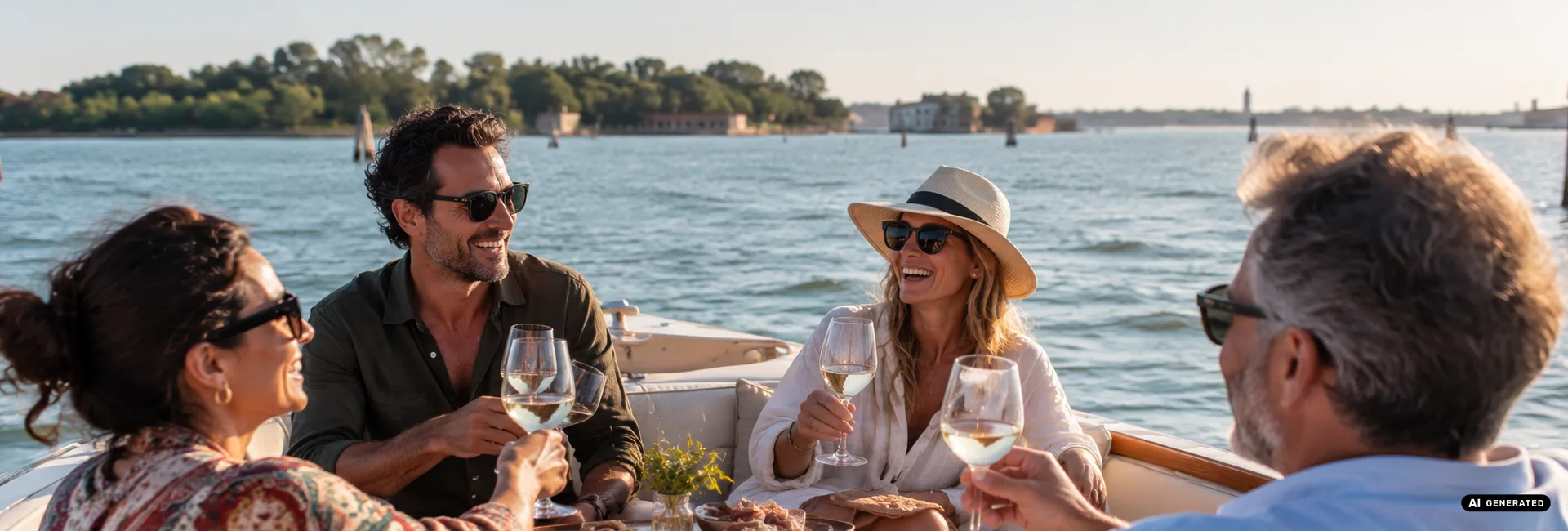
Our approach is to use the boat to connect the experience. We can discuss a lunch stop, an aperitif or a tasting on land, but we do not present standard onboard catering on our launches. This keeps the route flexible and lets the culinary part happen where it makes most sense.
A gastronomic day can also be combined with photography, a couple’s occasion or an island itinerary. The important point is not to add as many stops as possible, but to leave enough time to enjoy both navigation and the places chosen for eating or drinking.
Our existing Flavors of Venice tour can provide inspiration, while this page is designed for broader custom requests.
For official information about Sant’Erasmo and the Venetian islands, consult Venezia Unica.
From lagoon landscape to the table
A food experience is more interesting when the route explains where flavours come from. A food itinerary can connect cultivated islands, local products and a meal on land without becoming a checklist of tastings. A food stop may be the centre of the day, or it may support a wider island route. A food plan should always respect opening times, reservations and navigation times.
A food route around Sant’Erasmo can highlight the agricultural side of the lagoon, while a food stop near Mazzorbo can introduce the story of local wine and cultivated land. A food experience can also combine Burano or another island when distances remain comfortable. A food day does not need many stops to feel complete. A food itinerary often works better when one meal or tasting is given enough time.
For travellers interested in food, the boat is the connection between landscape and table. A food experience becomes more authentic when the setting, season and local production are part of the story. A food route can be adapted to lunch, aperitivo or a later meal according to the date. A food day should feel coherent from navigation to the final stop on land.
From lagoon landscape to the table
A good culinary itinerary should explain why a product belongs to a place. Salt, shallow water, cultivated islands and centuries of exchange shaped the local table long before tasting experiences became a tourism product. Seeing the distance between cultivated land and inhabited islands gives context to ingredients that otherwise appear only on a menu.
For this reason we prefer to discuss the sequence of the day before suggesting a stop. A late lunch may work with one route, an early aperitivo with another. Seasonal availability, restaurant days off and reservation policies can all change what is possible. The boat remains the thread connecting the landscape with the places where you choose to sit down and taste it.
Before contacting us, note the date, number of people, approximate duration and whether there is a producer, restaurant or island you already want to include. We can then compare the idea with navigation times and actual availability. If you have no specific venue in mind, describe the type of meal or tasting you enjoy and how important the culinary stop is compared with time on the water. This gives us enough information to suggest a coherent direction without turning the day into a rigid package.
Frequently Asked Questions
Is food served on the boat?
Normally no. Our launches are used for the private navigation experience; meals, aperitifs and tastings can be planned as stops on land.
Can we visit a vineyard or arrange a tasting?
Potentially yes, subject to availability, opening times and advance booking with the venue.
Can a culinary route include Burano or other islands?
Yes. The itinerary can combine food, wine and island visits when the available time makes the route comfortable.